Zonal Defending: A System Outmatched by Arsenal's Corners
 By Shady Elabody
December 10, 2024
By Shady Elabody
December 10, 2024
The Premier League’s most prolific team in set-piece scoring over the last two seasons has been unstoppable so far. With 15 games into the current campaign, Arsenal have already netted eight goals from set-pieces. Their latest victim? Fulham FC, who relied on a zonal marking system to try and contain the Gunners’ set-piece prowess.
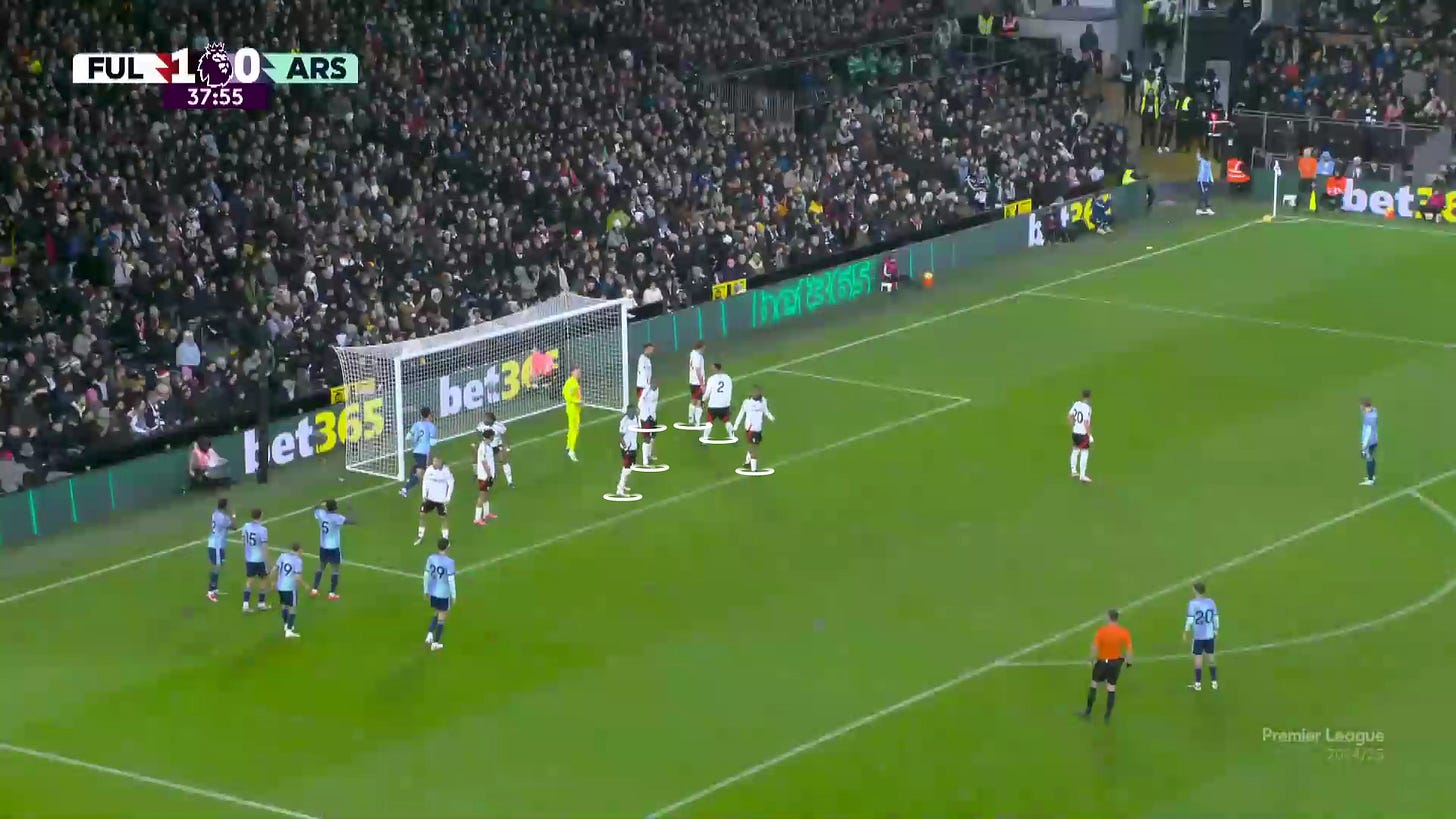
Let’s start with Fulham who defended with 7 zonal players are positioned between the posts and mainly concentrated at the near post with different heights and distances, while Raúl Jiménez was tasked with guarding the far post.
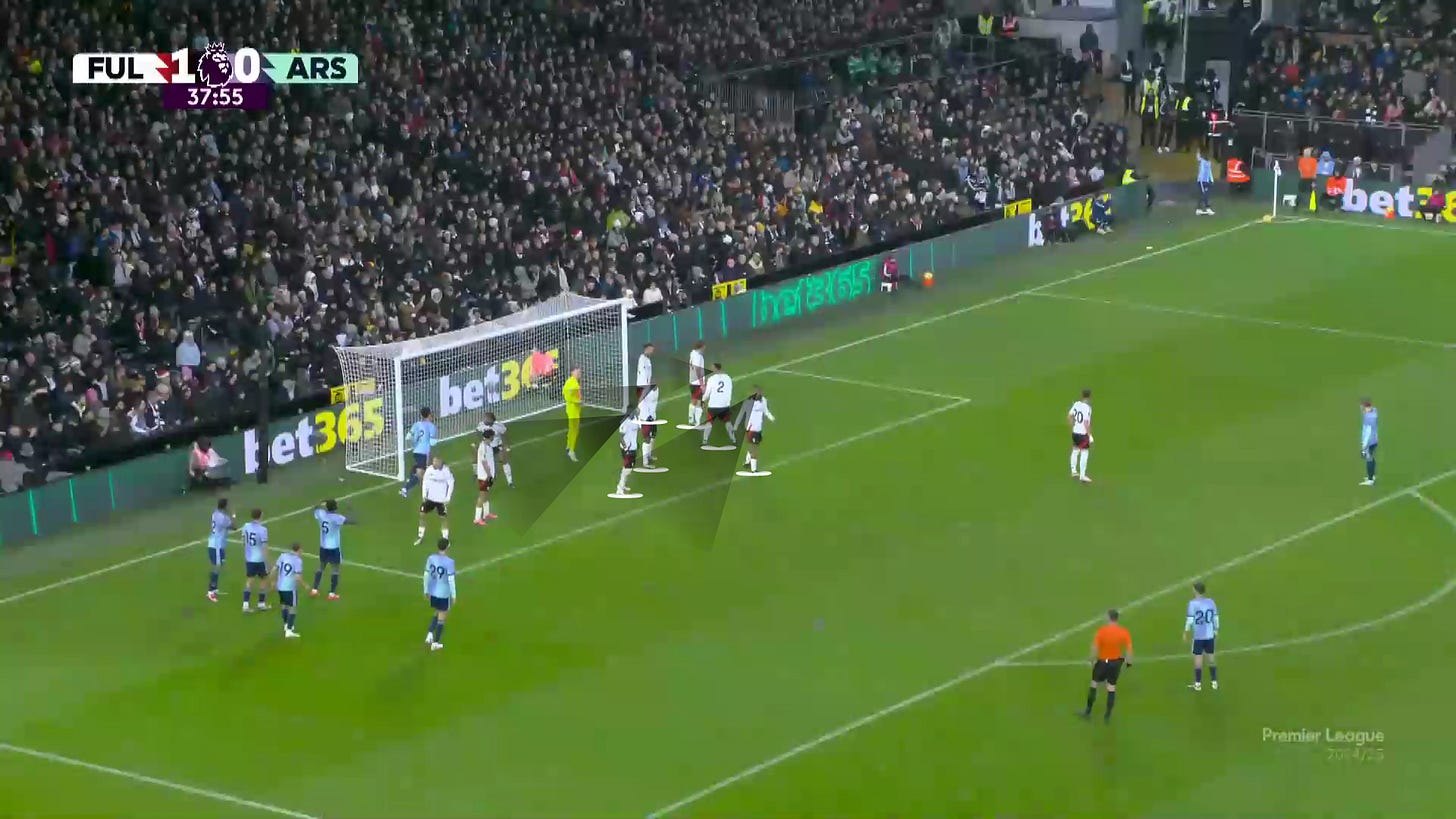
And to solve the problem of Back Post starting position, the zonal defenders were checking their shoulders continuously to be able to see Arsenal’s players movements.
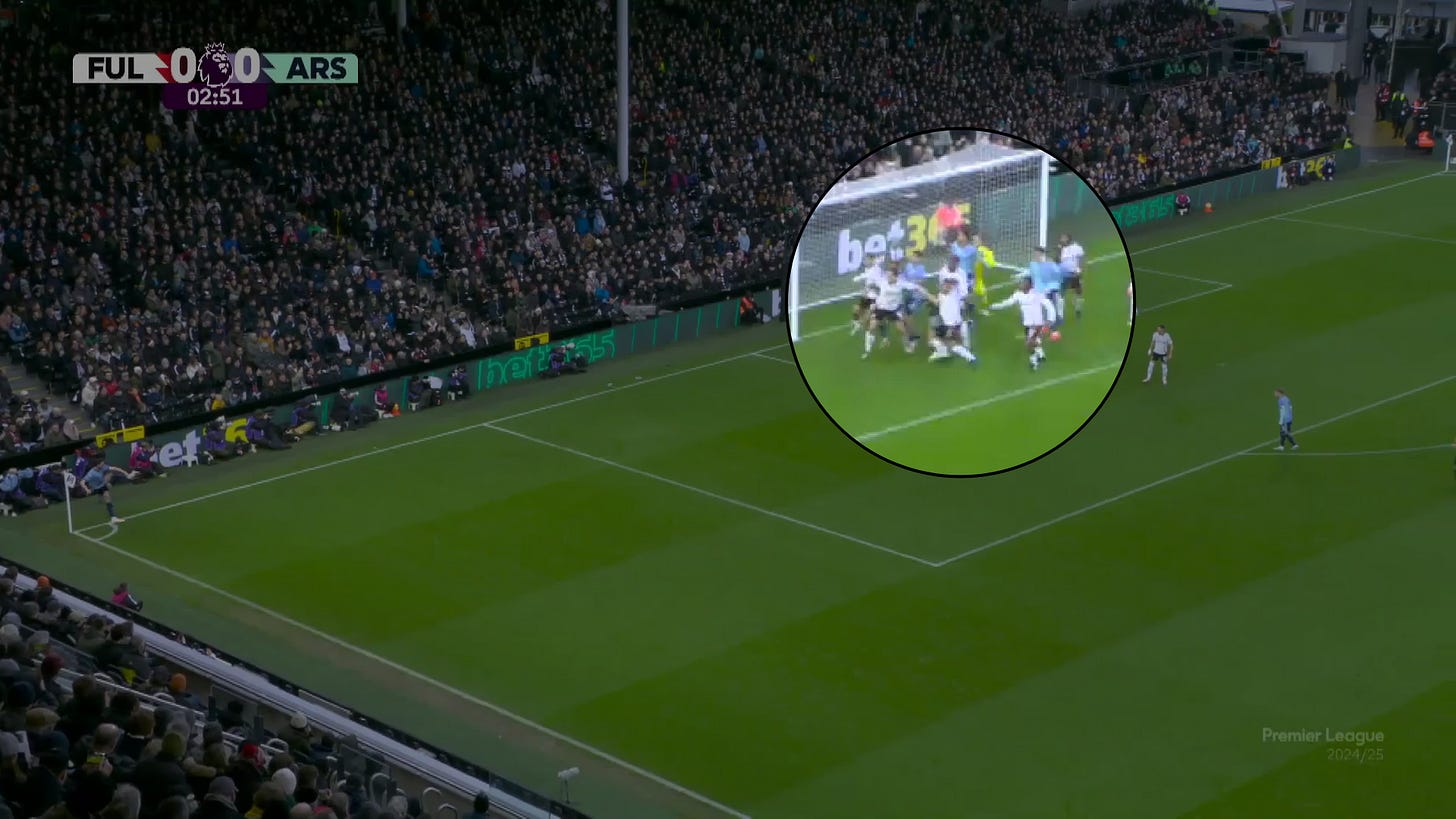
The reason behind the near post coverage was strategic, aimed at preventing Arsenal players from flicking the ball or directing it goalward from close range. Fulham’s defenders maintained tight spacing between themselves to slow Arsenal’s runs and neutralize their dynamic advantage from starting positions.
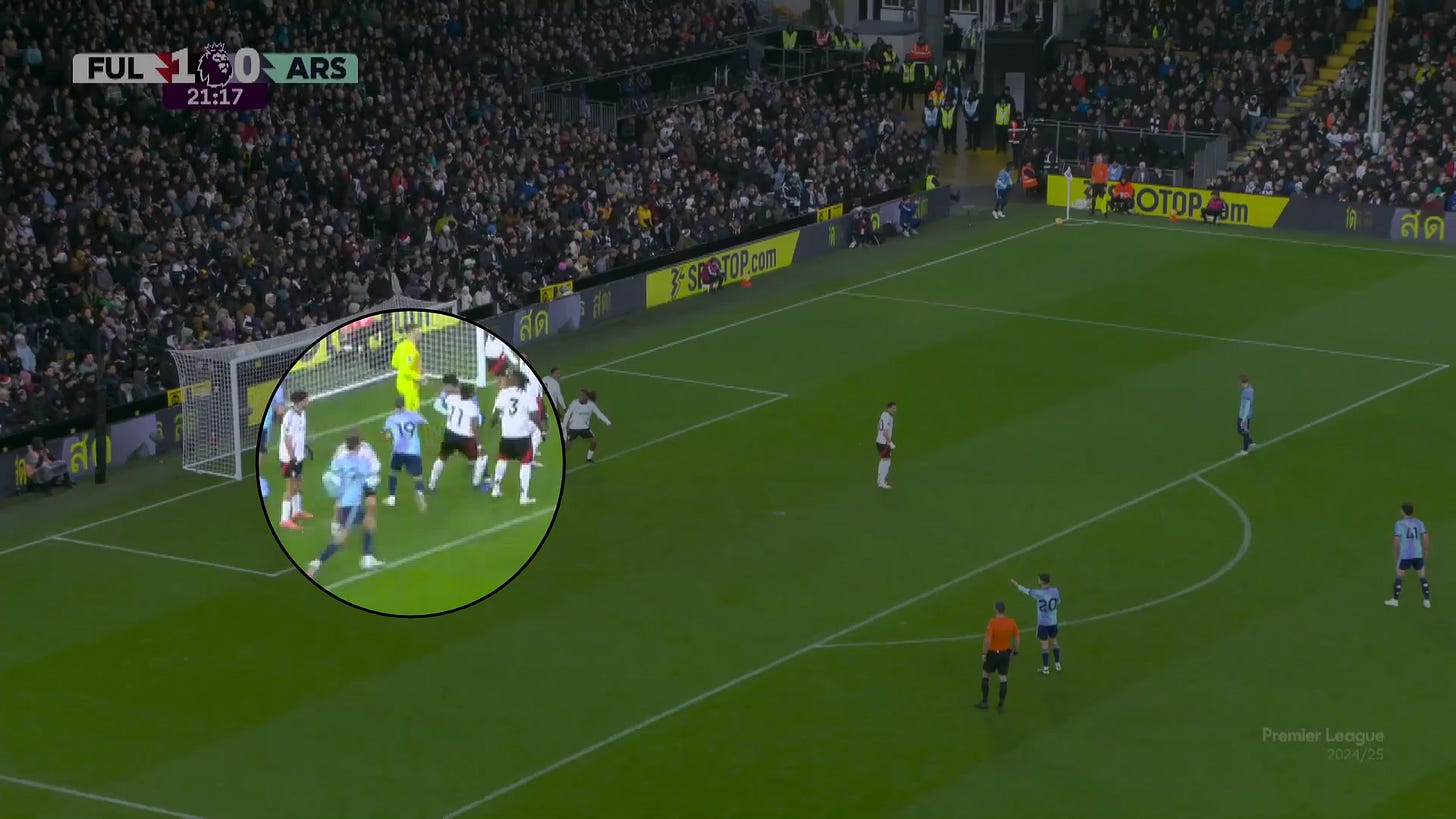
And to disrupt Arsenal’s dynamic advantage, Fulham positioned Adama Traoré and Emile Smith Rowe as blockers to delay Arsenal’s most dangerous aerial threats, William Saliba, Thomas Partey, and Kai Havertz, from reaching the near post, which means that Fulham’s near post zonal defenders will clear the ball away first.
Solving the Problems
Despite Fulham’s setup and the ideas they came up with to not to conceded a goal, Arsenal showcased their tactical adaptability, solving the defensive challenges
1.Near Post
Arsenal wanted to win the first contact from the near post even after all the details that Fulham worked on.
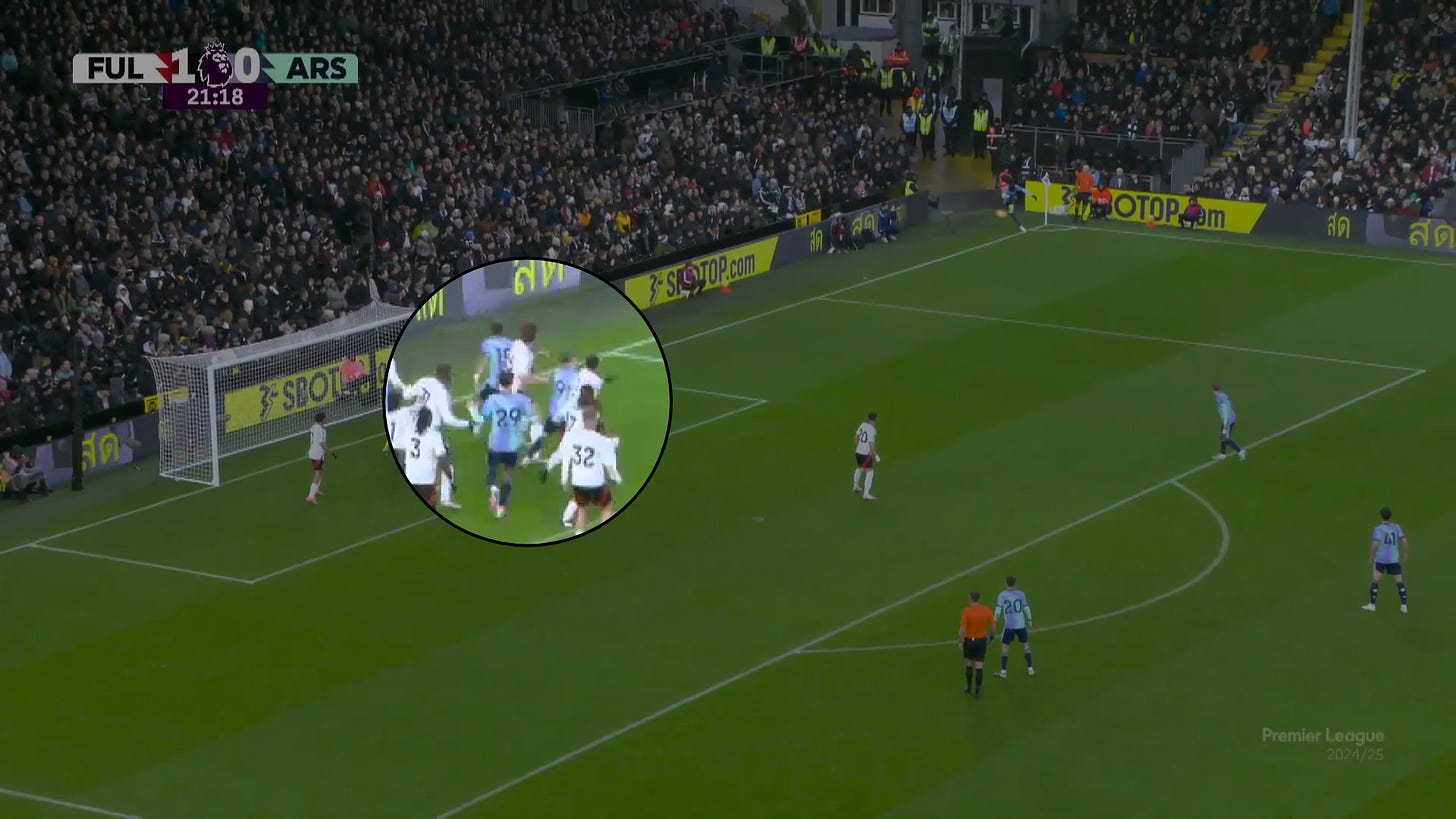
Using Kiwior and Trossard to start their run earlier than the rest of the players to block the first two zonal defenders to just let the cross pass towards the goal without clearing it for Havertz who came in a different timing ensuring either a direct goal attempt or a deflection into the net.
2.Far Post
Arsenal’s second solution targeted Fulham’s far post: a vulnerable area due to less protection
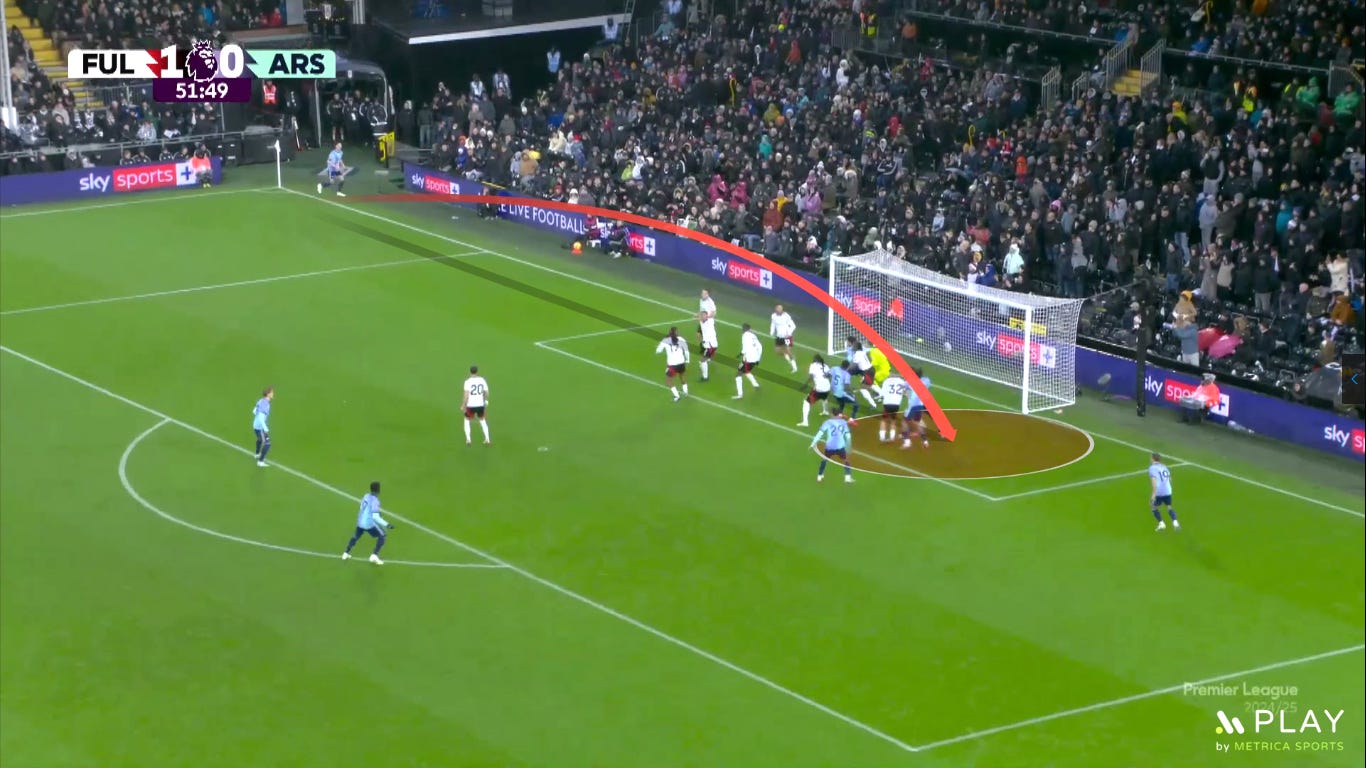
Using the same starting positions but with adjusted roles
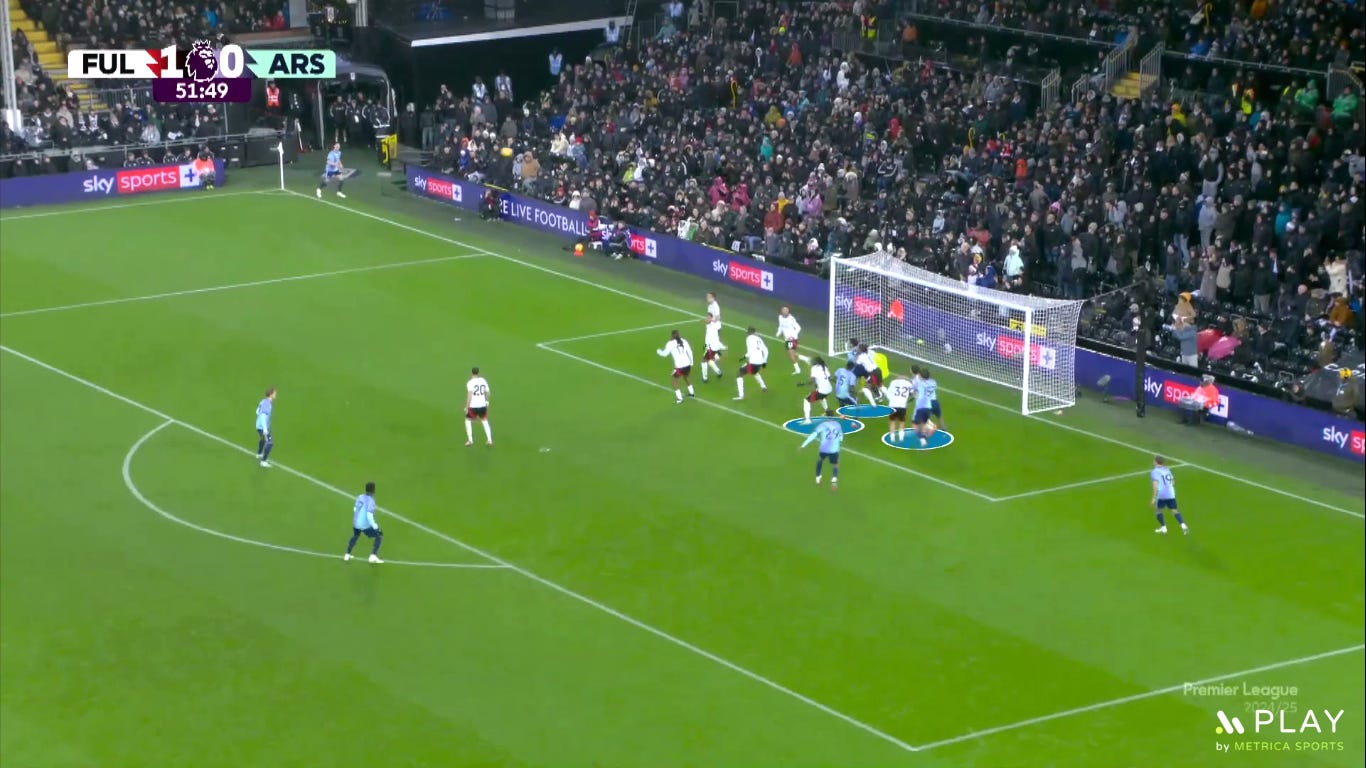
Timber and Kiwior were blocking Jiminez and Smith Rowe from their back, also Partey did the same with Bassey, and Saliba was only focusing on preventing Leno from catching or punching the ball away.
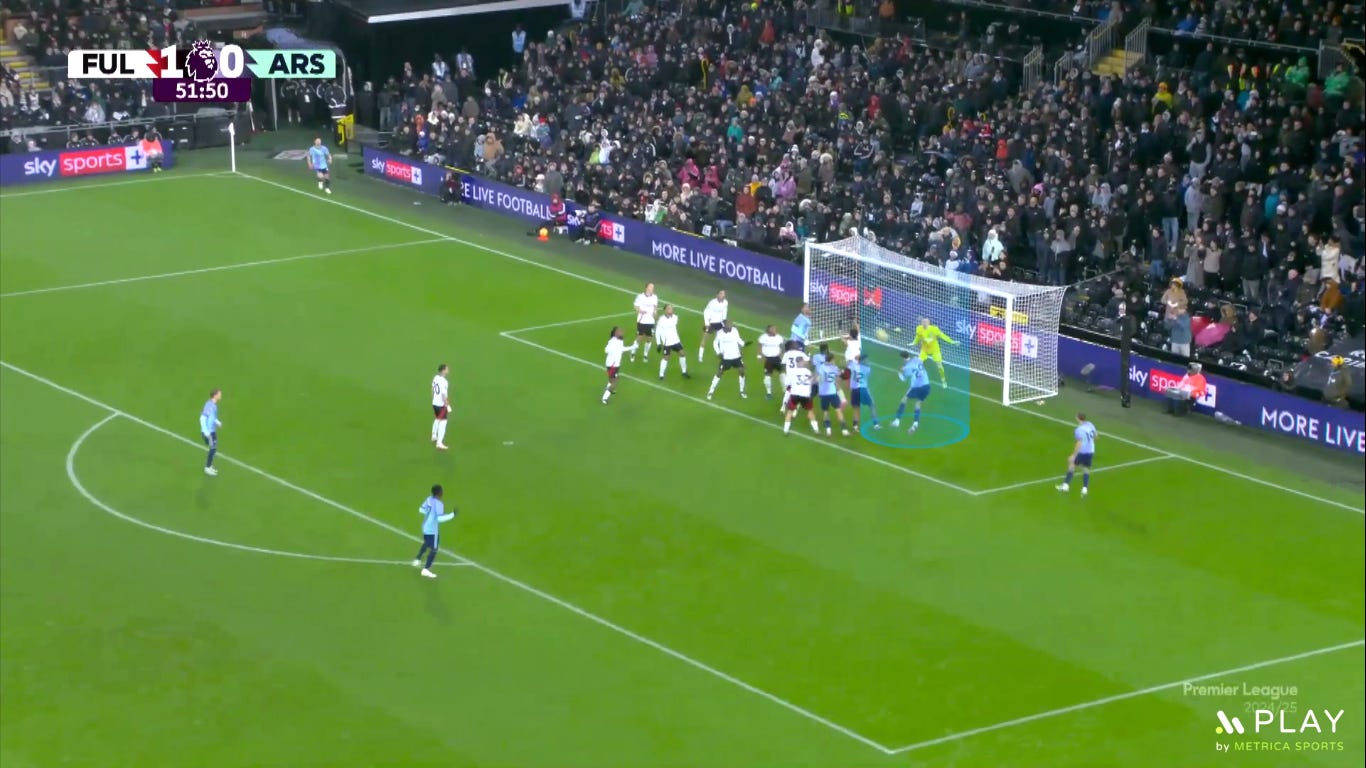
Havertz’s late movement to the far post made him able to win the first contact, while Trossard’s well-timed arrival ensured any overhit cross could be recycled back into the danger zone.
Arsenal’s ability to adapt their set-piece strategies to counter specific defensive systems is what sets them apart. Against Fulham’s zonal marking system, they demonstrated not just tactical intelligence but also precise execution, leaving their opponents scrambling for solutions
Browse our collection of football analysis insights.