 By Hassan Beltagy
This is not one of those analyses made to prove that the Manchester United defender Lisandro Martinez is a short player who cannot make it in the Premier League. Neither is it here to prove that he is aggressive enough to win headers. The purpose here is to investigate how Ten Hag is dealing with defending crosses, because, like it or not, teams facing United have been trying to deliver more crosses in recent weeks.
According to Fbref, Southampton averaged 10.2 crosses per game this season, but in their game against Manchester United they delivered 17 crosses (source: instatscout.com) into De Gea's box. This has also been a consistent trend against Leicester and Arsenal, who averaged 9.17 and 12 crosses per game respectively. Against United, Arsenal delivered 14 crosses (2 over average), while Leicester delivered 14 (almost 5 above their average). Whether teams are doing this because of Martinez or not, and whether Martinez is weak in the air or not, it seems teams will identify United as vulnerable from crosses regardless of how true that last statement is.
The McTominay blueprint
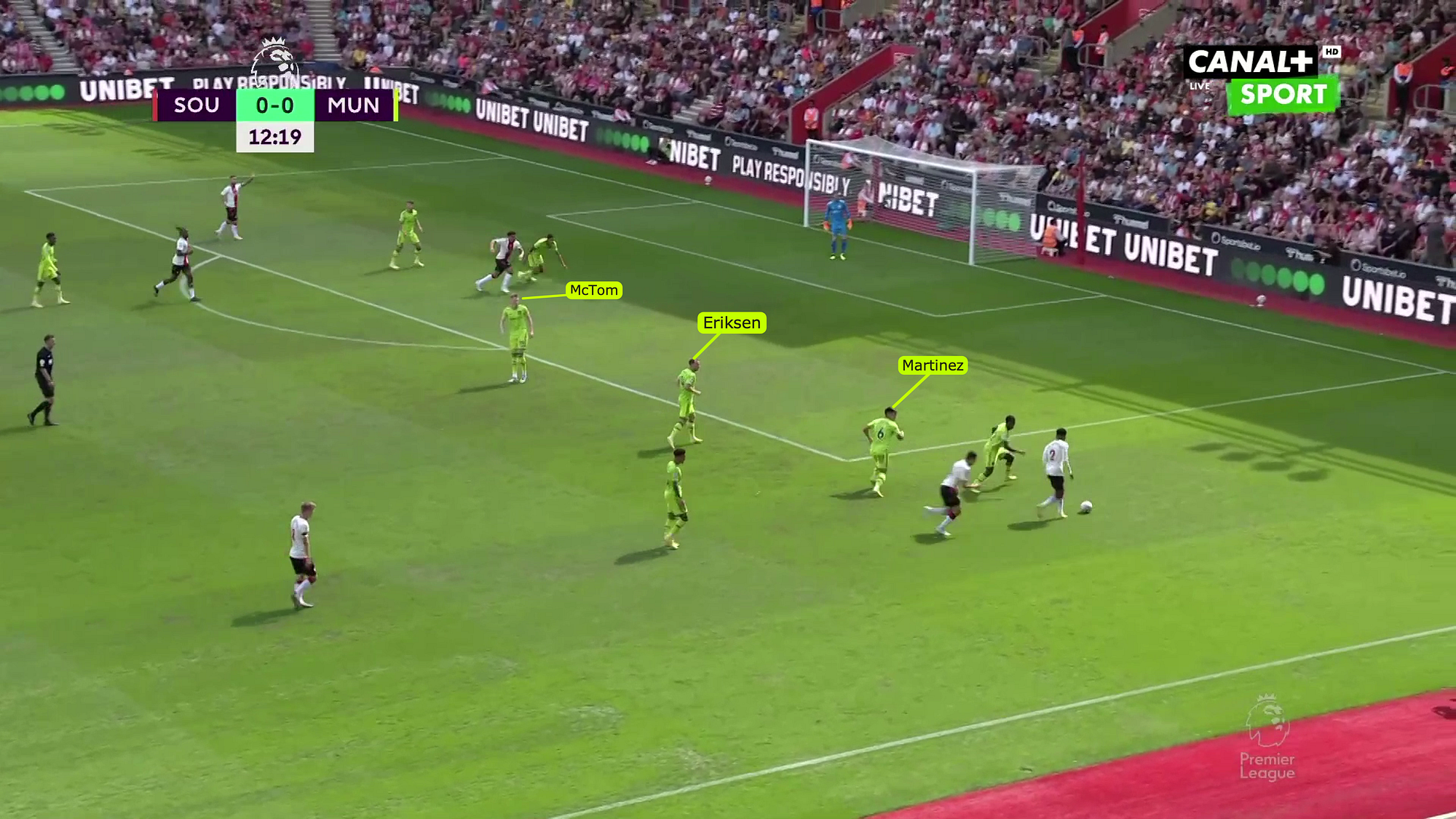
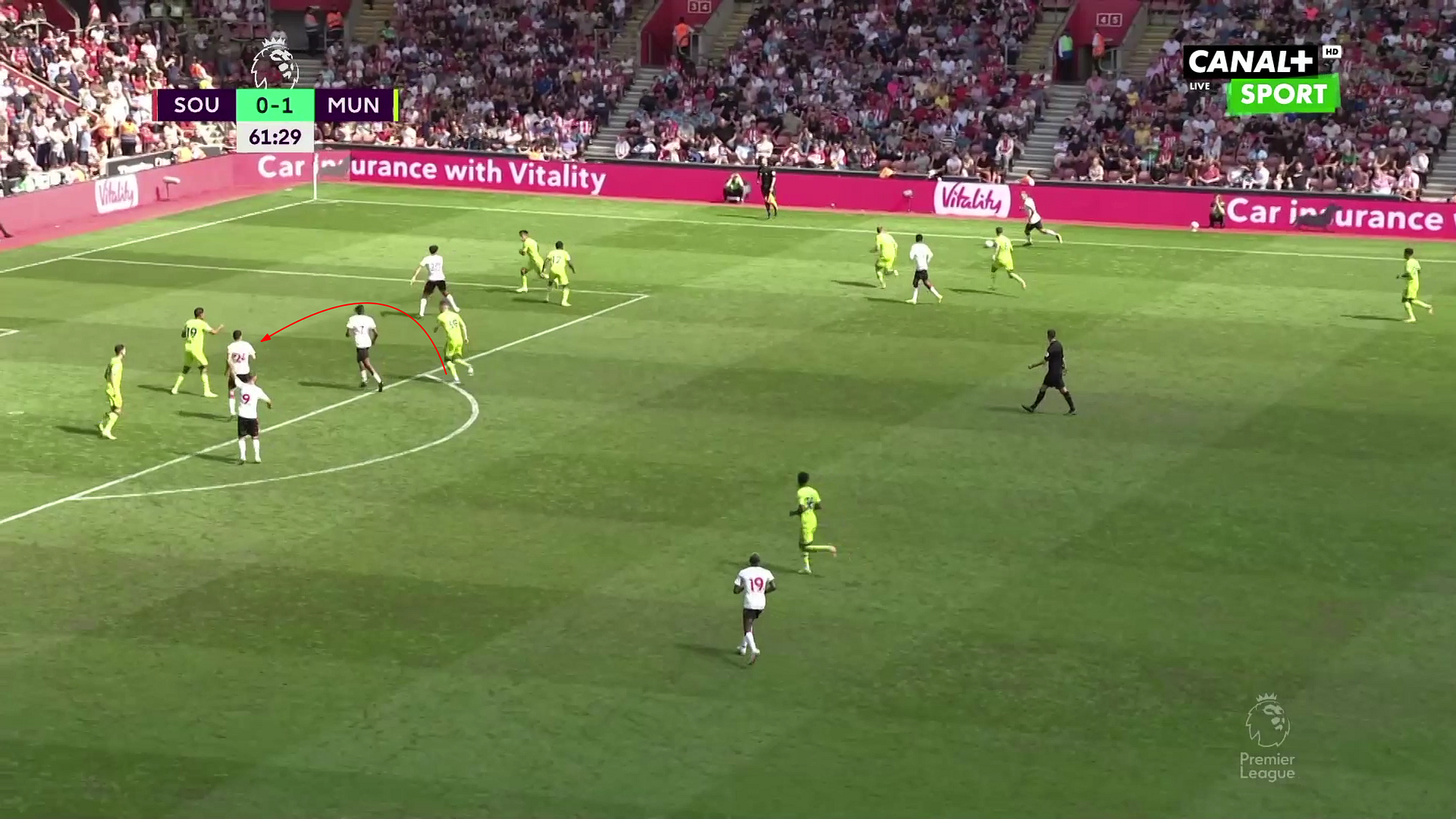
Surprisingly, Manchester United were very prepared for the amount of crosses they faced. The main man, and the main weakness, in the Red Devils' cross-defending game plan was not Martinez. In the picture below Martinez is out wide covering Malacia to defend the Southampton wing-play. Meanwhile Eriksen and McTominay are in their usual midfield positions, just in front of the back four.
McTominay did a shoulder check to get information about the environment behind him. He collected two pieces of information at this point. First, the space between Varane and Martinez is big. Second, there is an unmarked Southampton attacker who can run into this space.
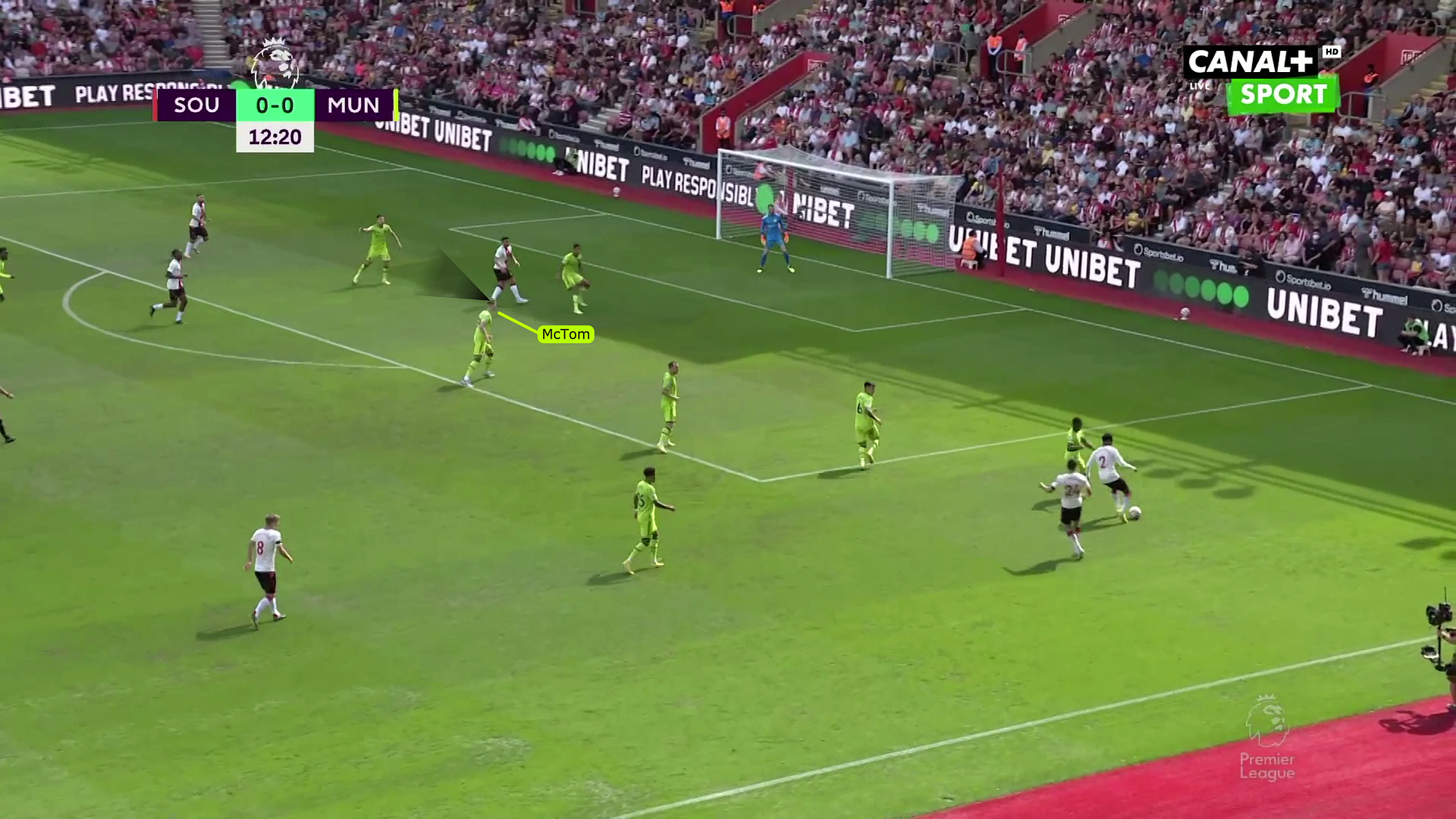
McTominay dropped back and opened his body so he could see the ball and Aribo, the Southampton attacker, at the same time.
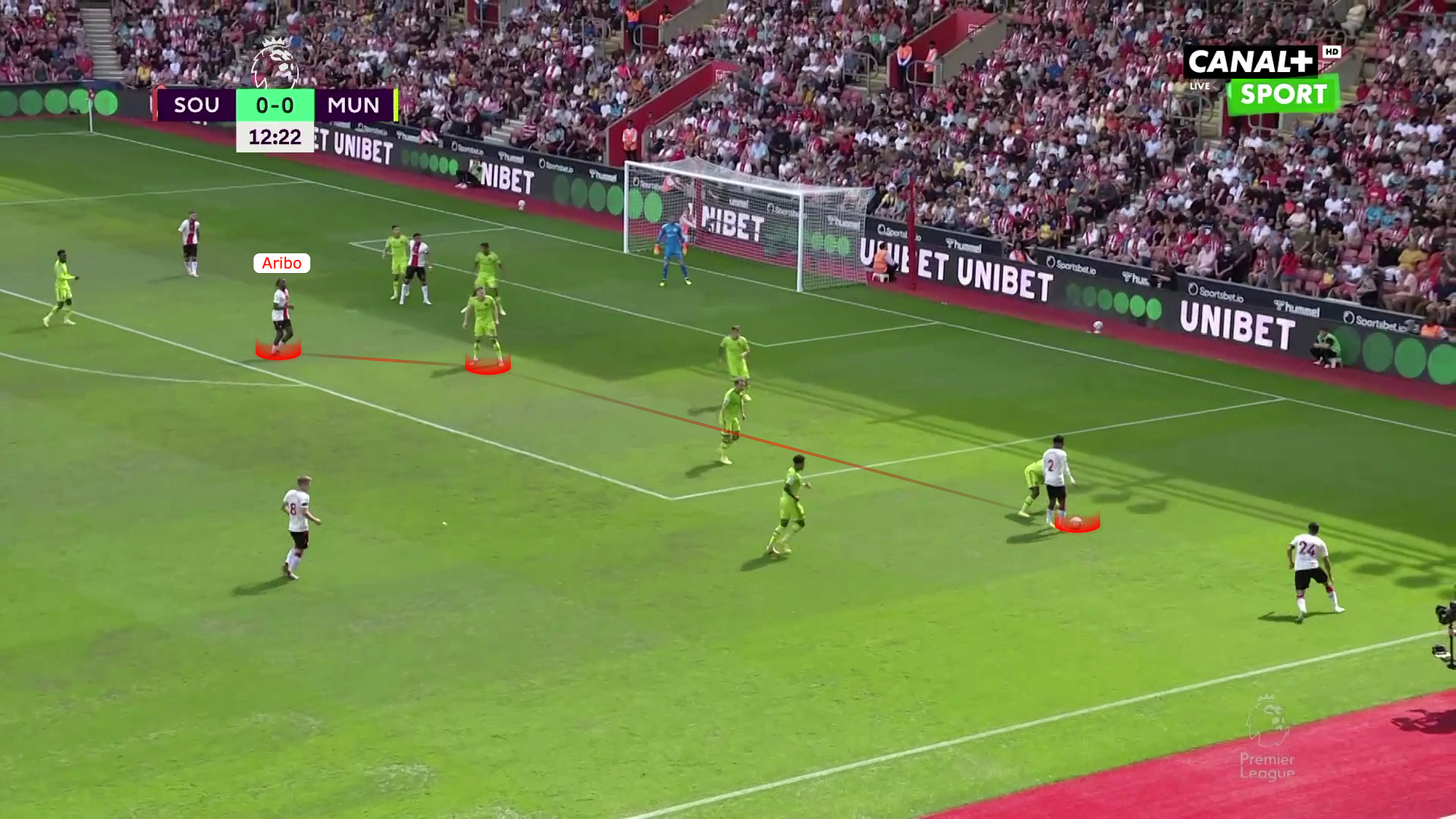
Until the danger was cleared, McTominay stayed very focused on his man while remaining conscious of the space in the backline. The question is, what did McTominay do when there were no attacking players lurking outside the box?
In the image below Martinez is again out wide tracking Aribo's run, while McTominay is filling the space between the two centre-backs.
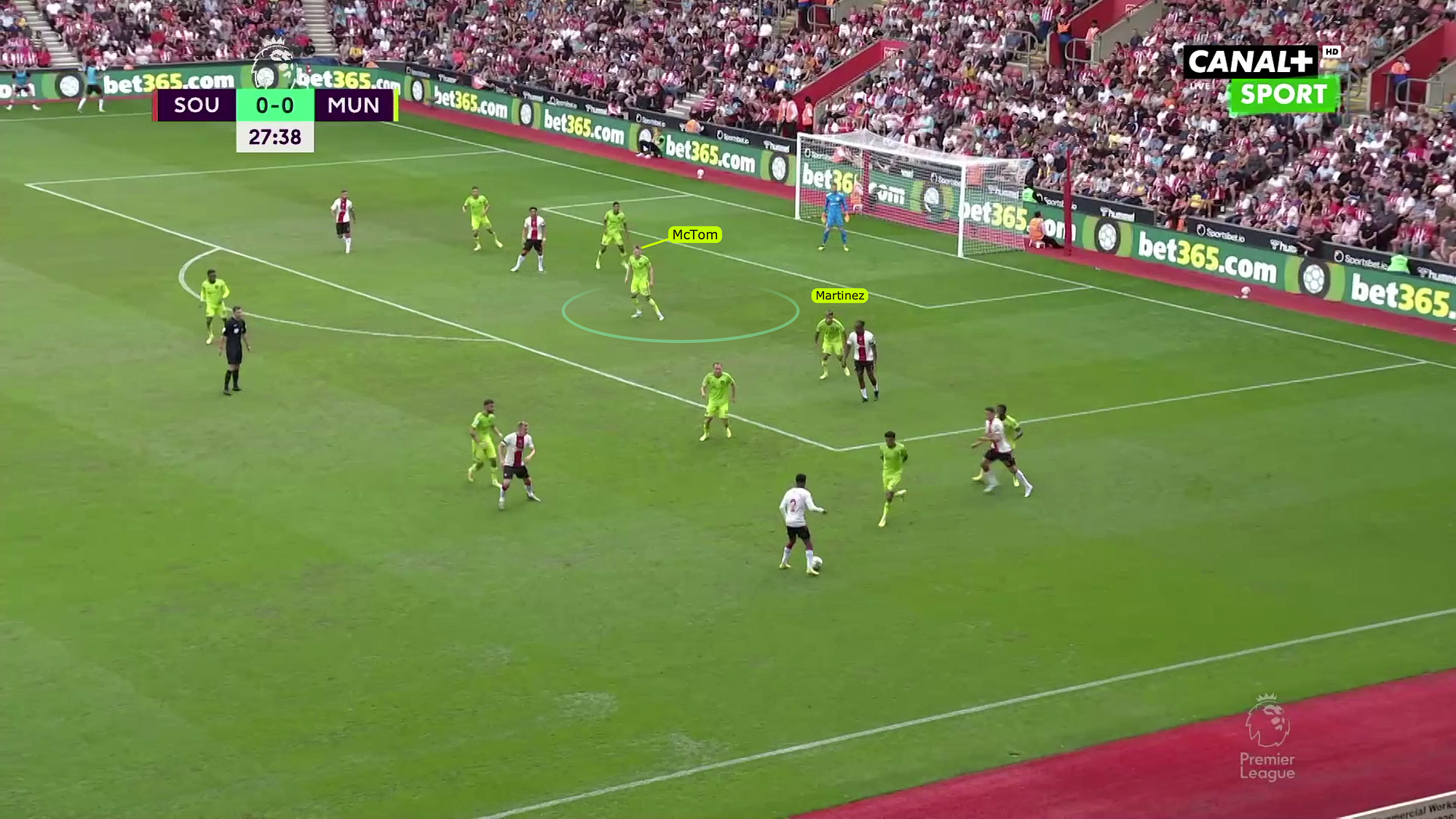
This position was a lot better for McTominay than being outside the box waiting for second balls, for two reasons. First, by filling the space between the centre-backs, it allowed him to hinder the run of any player into that space. Second, he could still follow players who might move to the edge of the box, and the ball, at the same time.
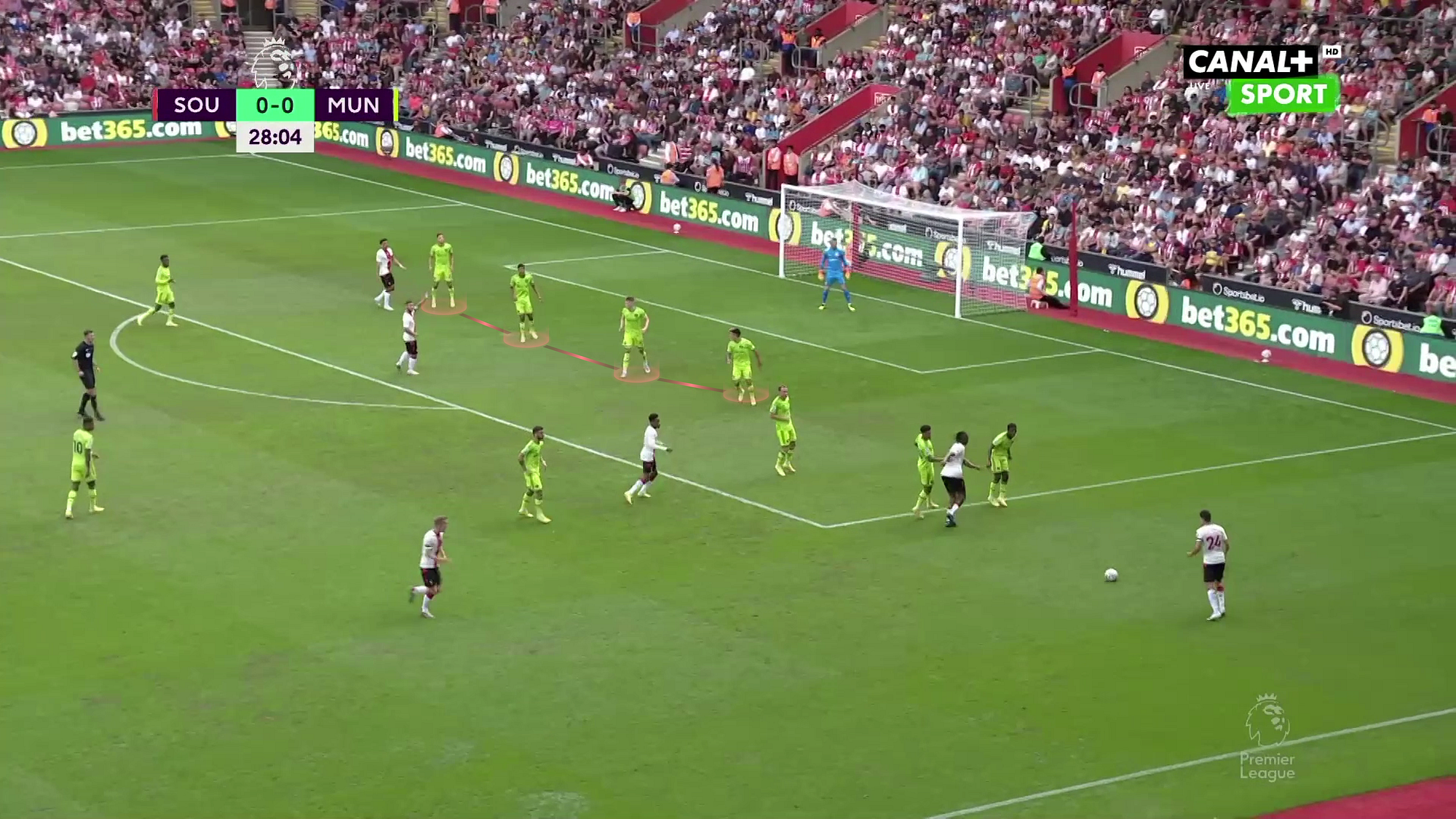
The special skill about McTominay is his ability to always scan his environment and stay updated on any changes happening around him.
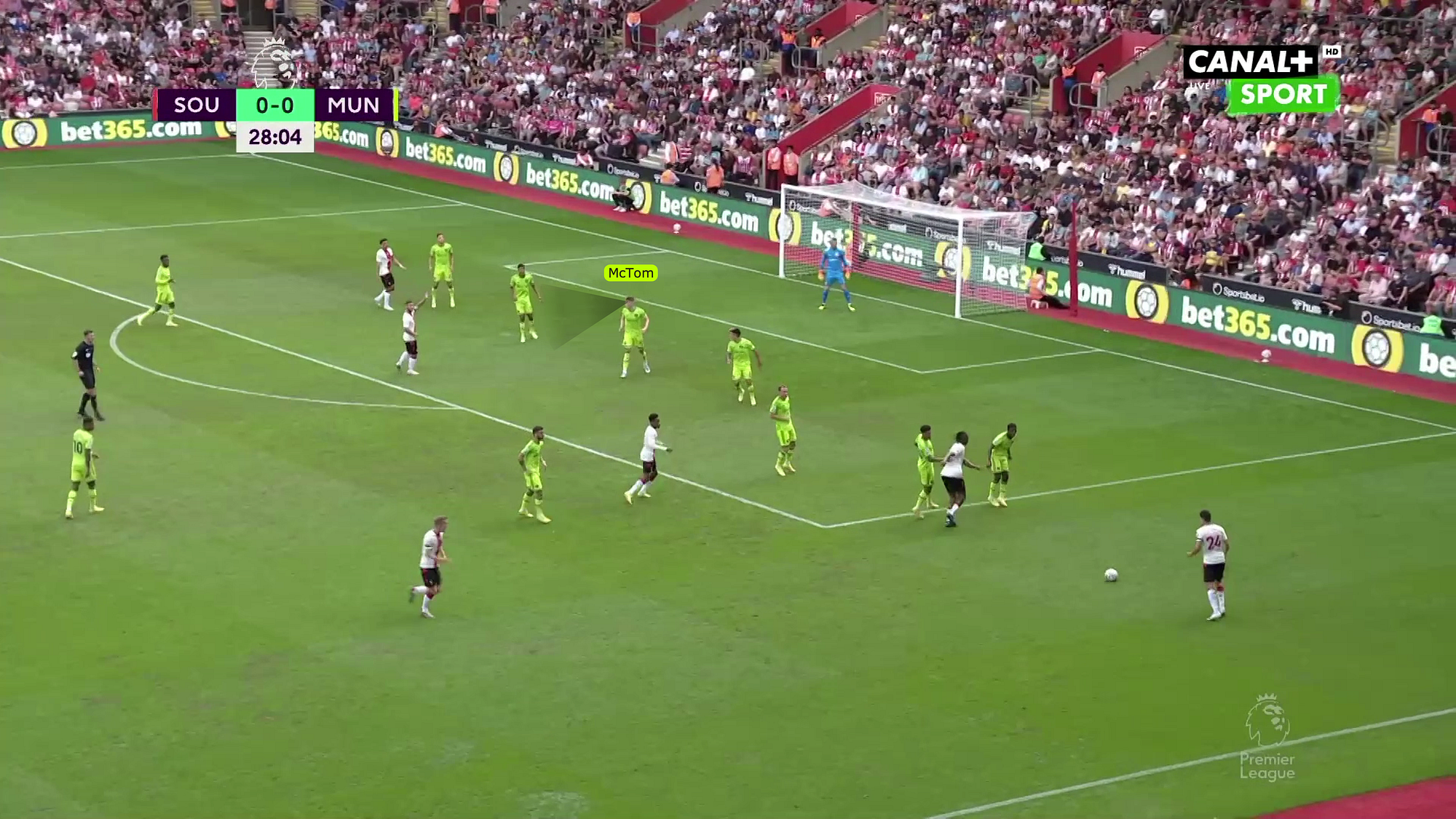
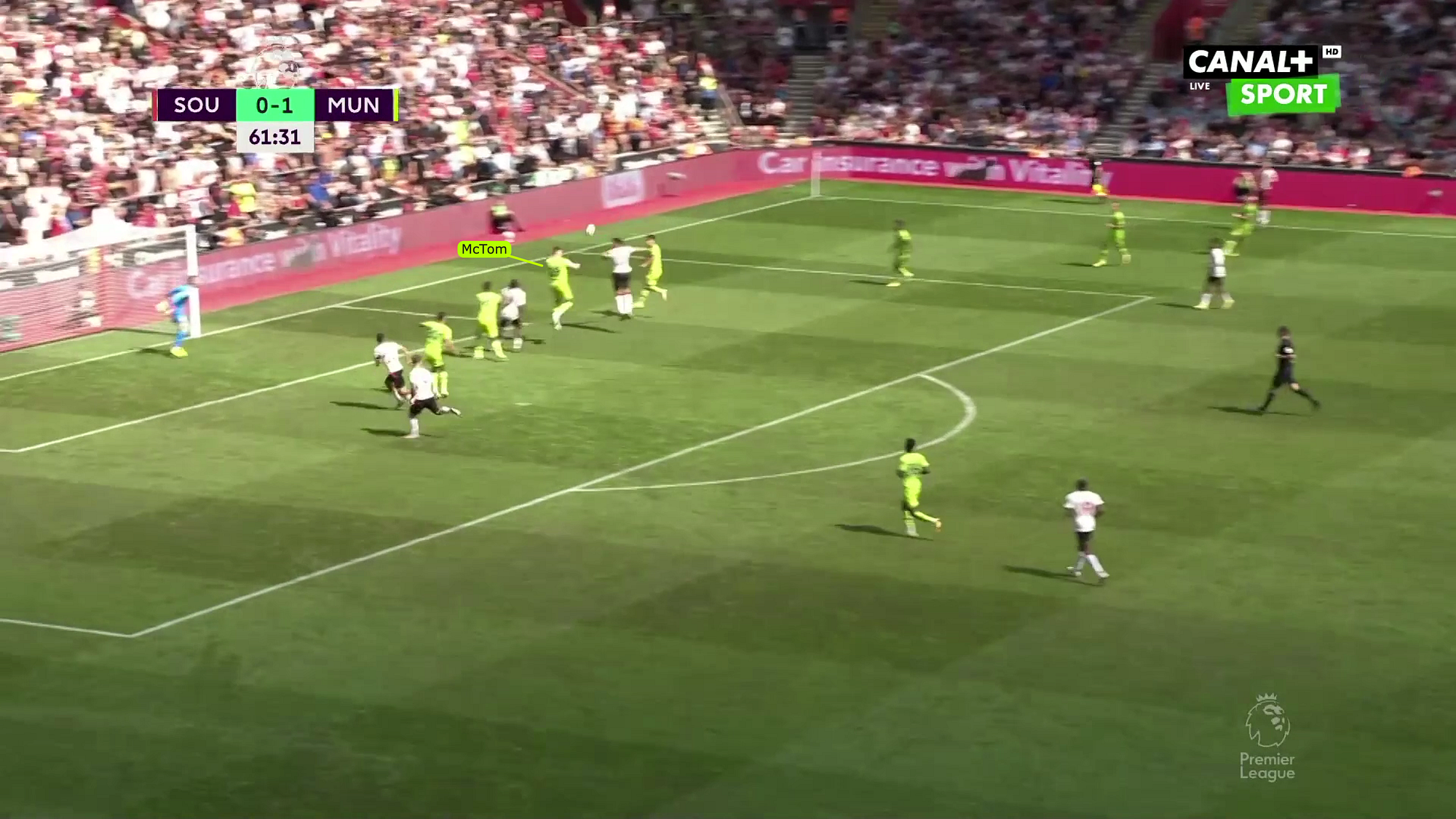
On the same play McTominay won the header inside the box, in a position that might have been very dangerous if he was not there.
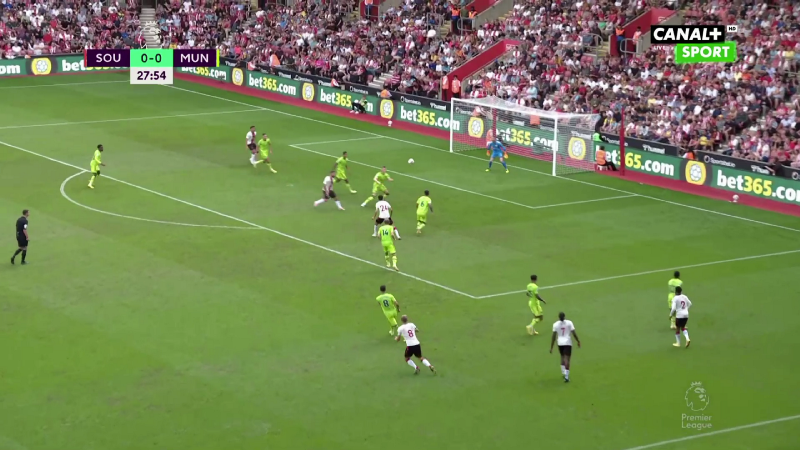
On the next three pictures, the same steps McTominay was always taking are clearly shown: first, he scanned his environment and collected information about Aribo; second, he ran into the dangerous space between the two centre-backs; and finally, he won a crucial header in the box.
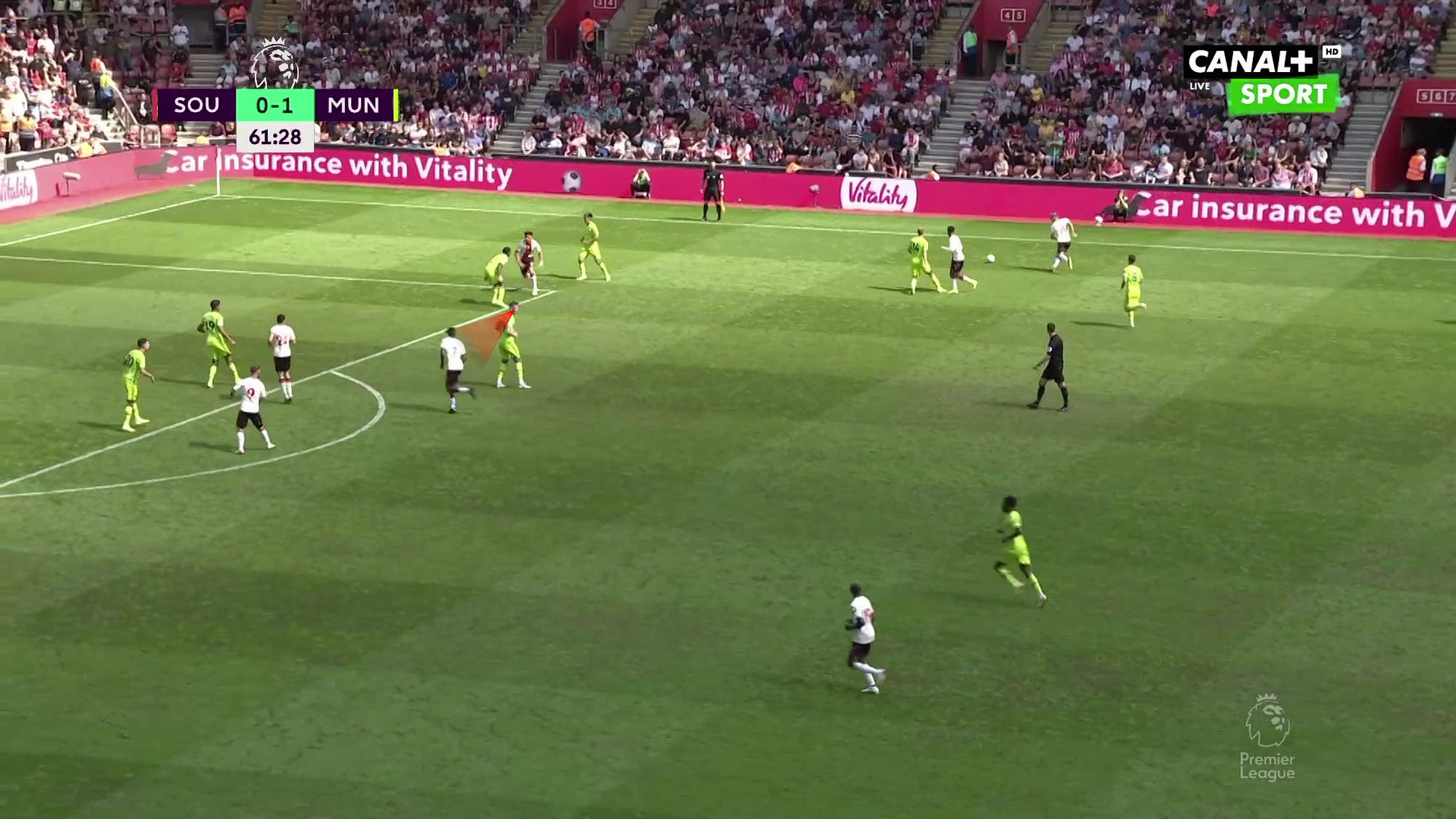
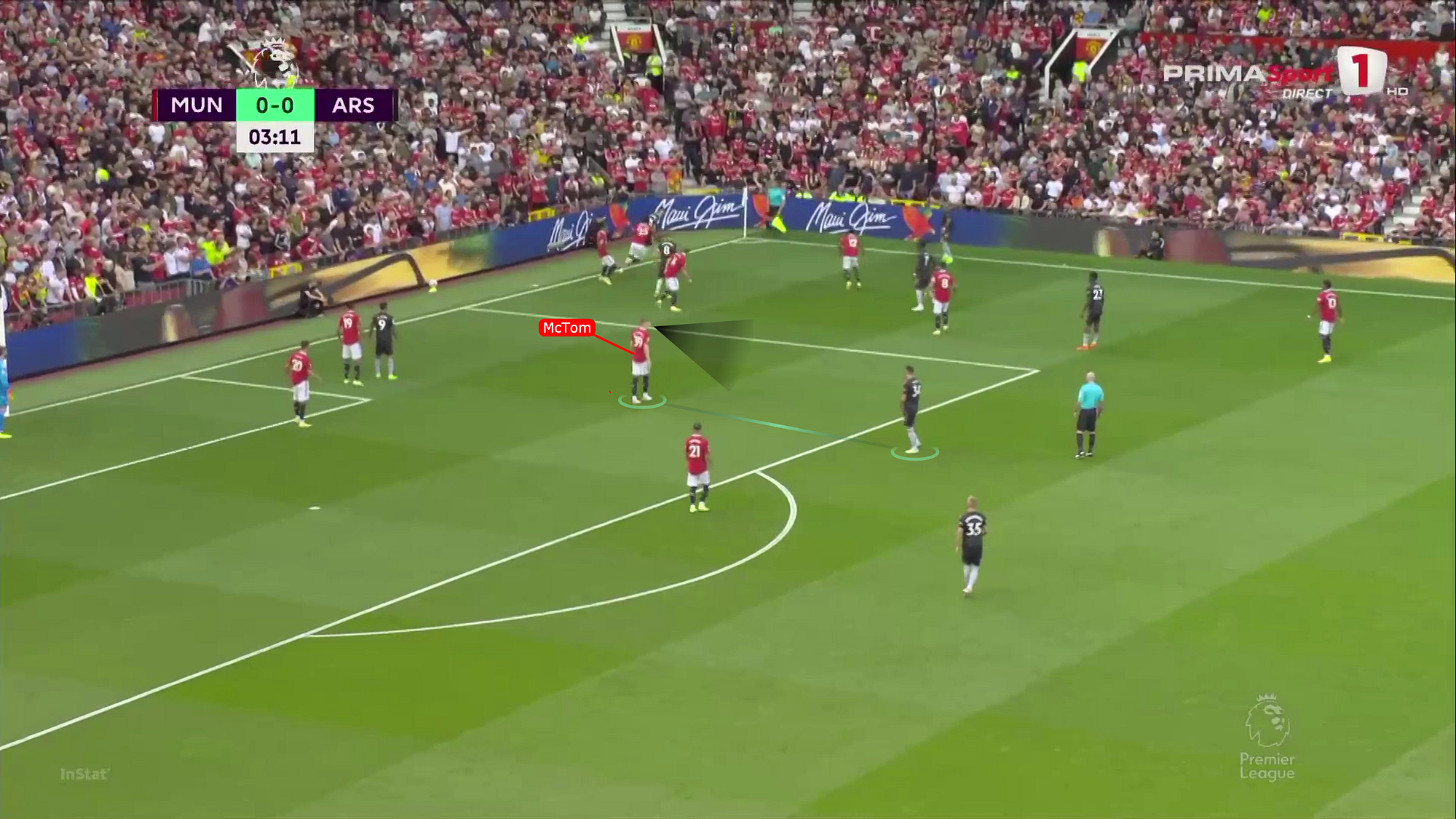
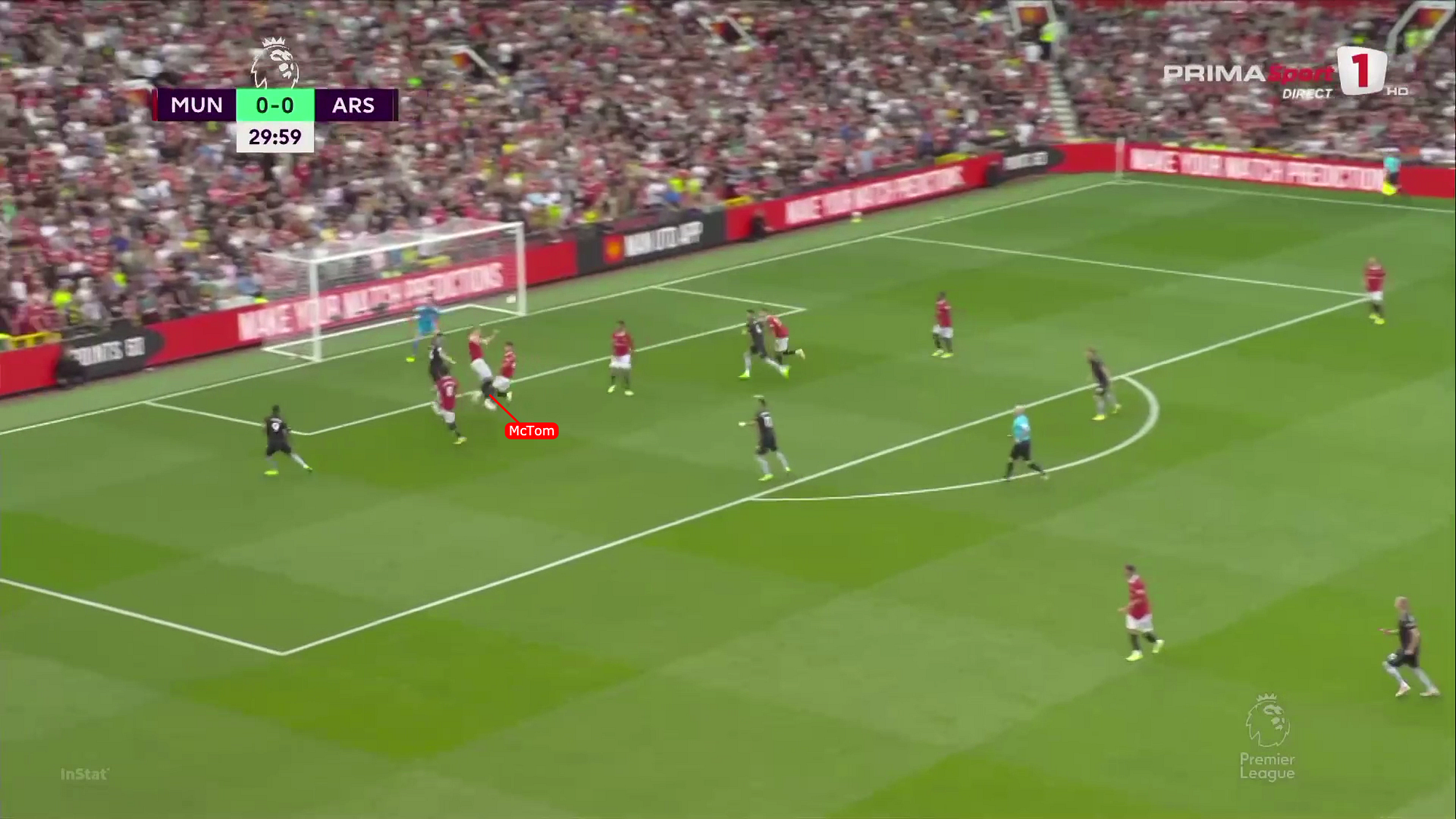
Against Arsenal, McTominay was asked to mark Xhaka. In the image below it is clear the Manchester United midfielder is again in a perfect position, where he can easily see the ball and Xhaka. And again, always checking his environment.
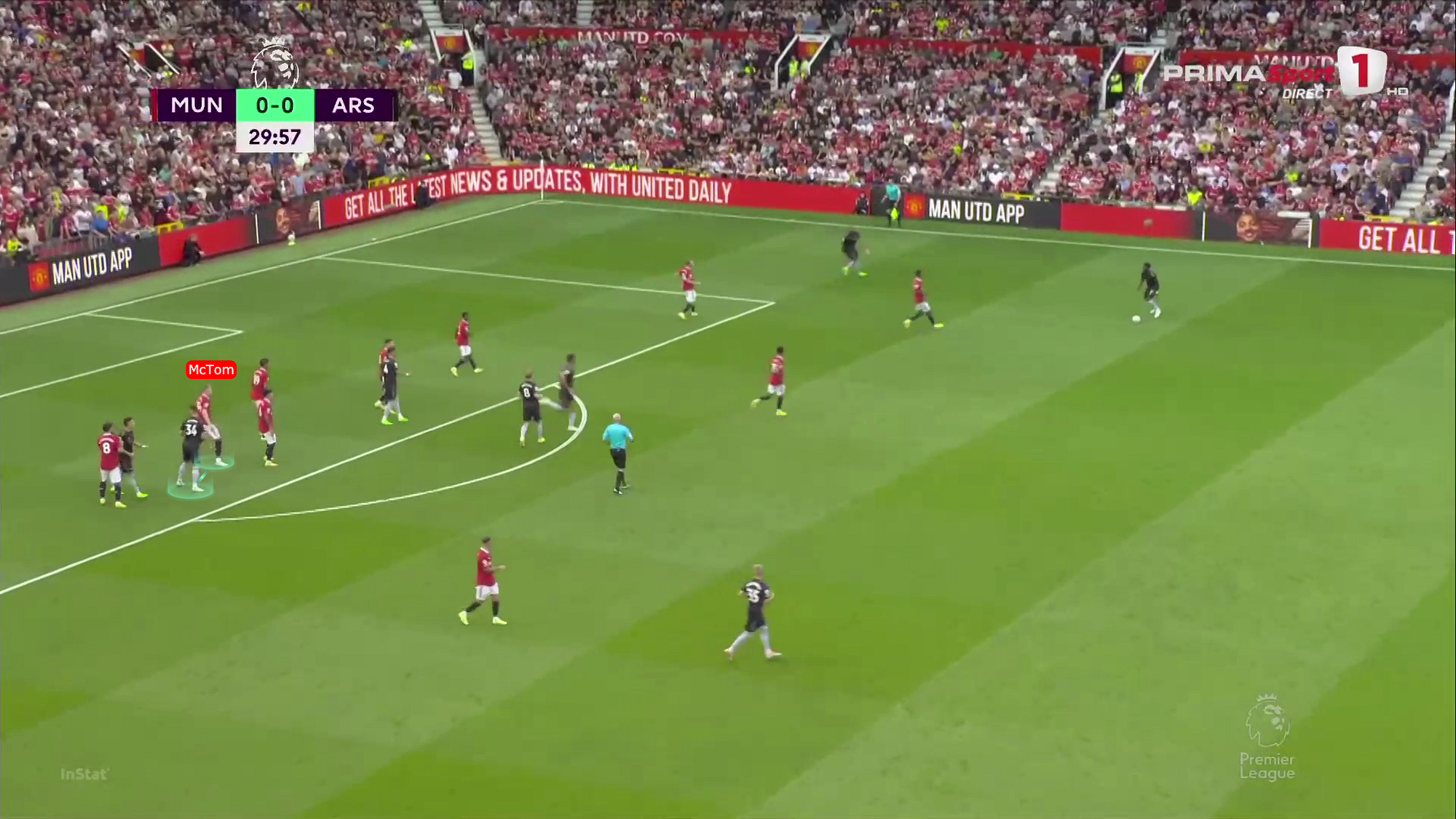
In the two pictures below, McTominay tracked Xhaka, this time behind Varane, and won a crucial header in the box.
The tall defenders' problem
So, finally, Manchester United have no problems from crosses and will never concede a header in the box again. The reality is far from that, because United had two main weaknesses alongside the Martinez saga. The first is the French defender, Varane, whose body position is more often than not in the wrong direction.
In the picture below Varane was following the ball, with his body position facing the ball, instead of being open to see the ball and the opponent easily. Aribo was in his blind side, about to run to the front post.
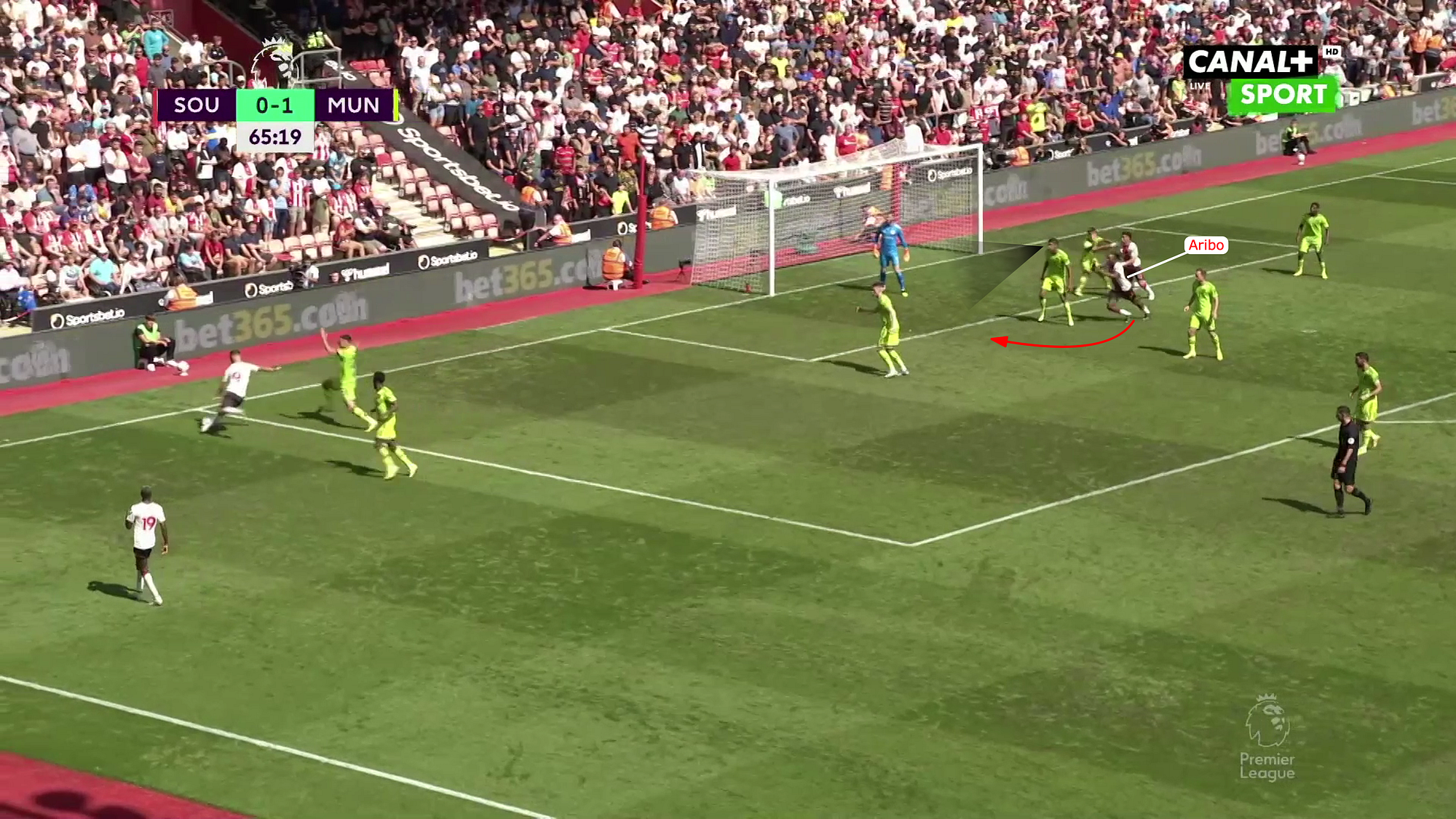
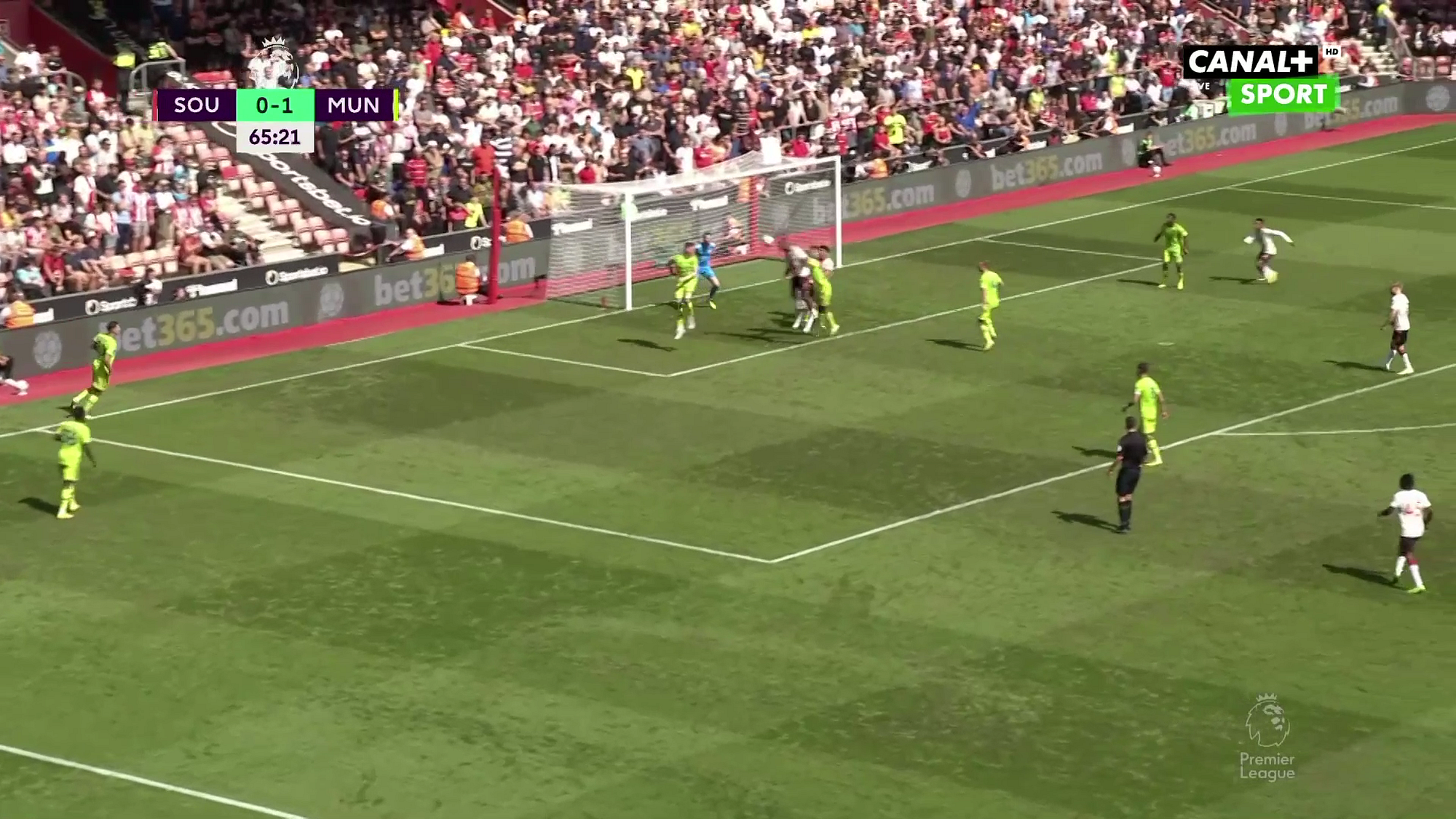
Then Aribo managed to arrive unmarked first at the near post, and had a free header that, if not for De Gea, would have been a goal.
The second weakness from crosses for Manchester United is Dalot. The Portuguese right-back is regularly losing aerial duels on his blind side. This has happened at least twice per game in the last three games.
In the image below Dalot is man-marking the Leicester attacker. He is aware of the attacker and went out of his position to mark him, which was perfectly fine. His body position could be a bit more open, but he was still fine.
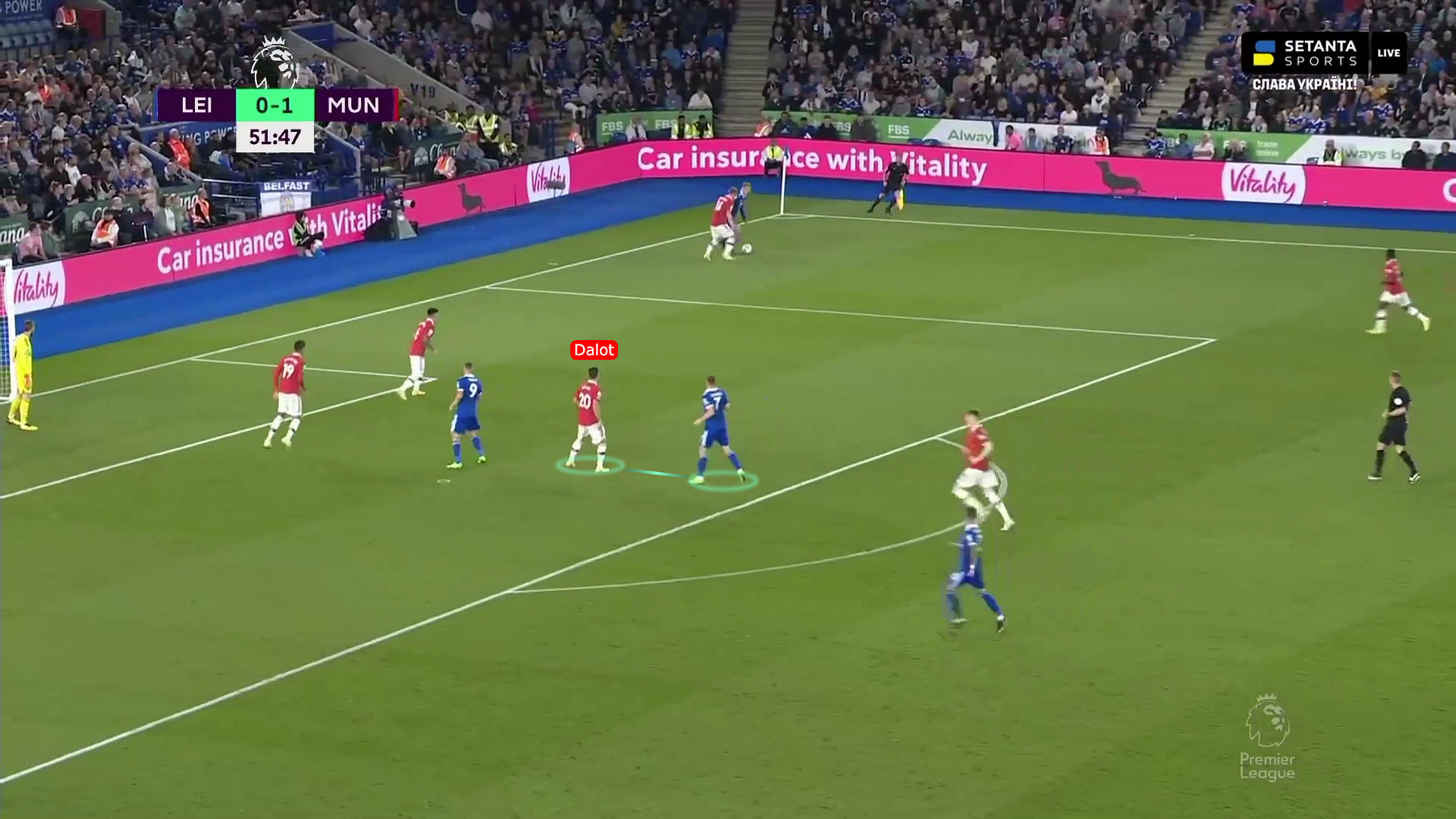
Then Dalot followed his man to the far post and, as shown in the picture below, did not collect information about his environment and was about to lose his man. He is following the ball with a closed body position facing the ball.
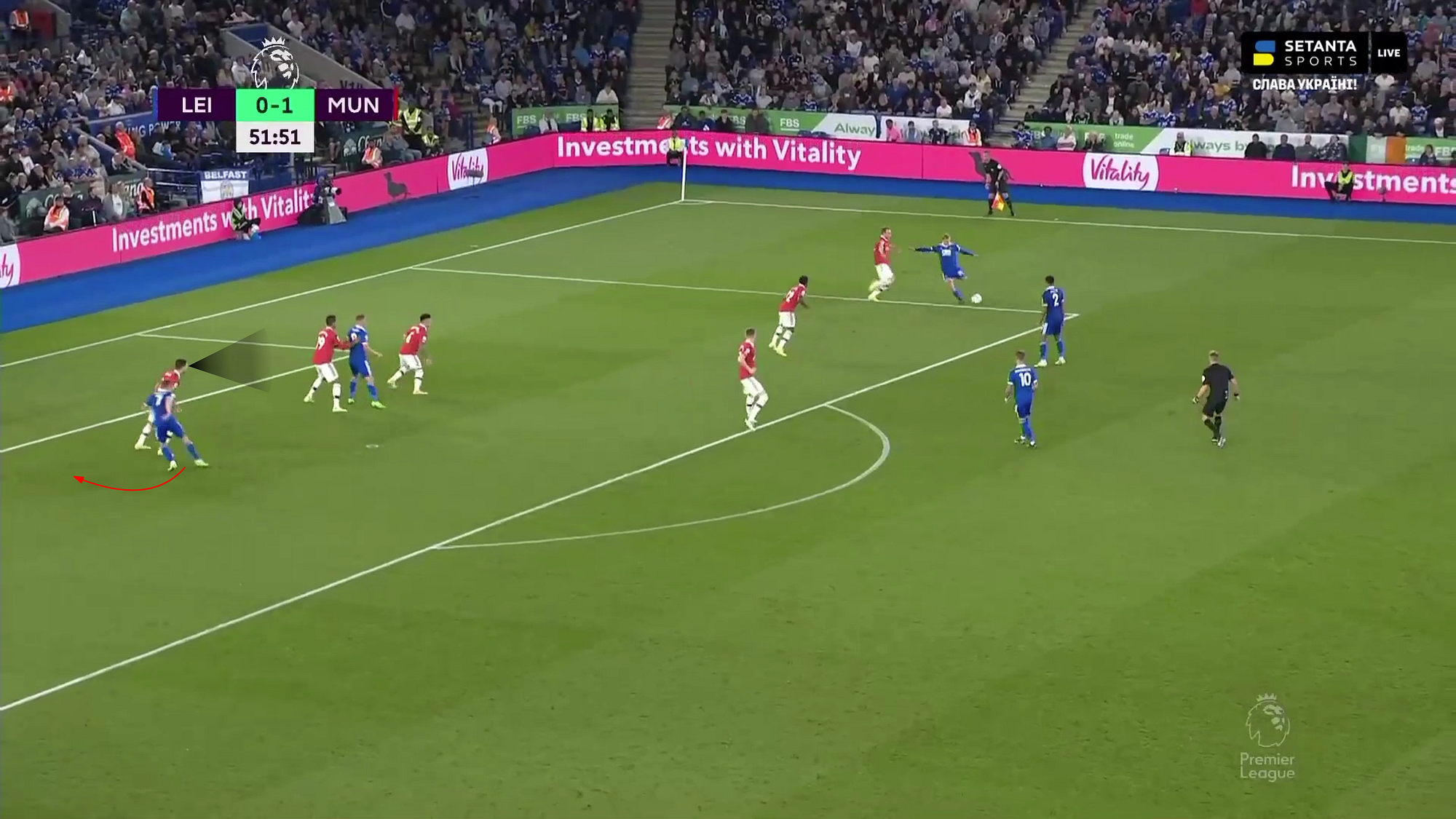
In the end he completely lost his man, who had a free header and put it outside the goal frame. This type of action is a recurring problem for Manchester United and needs to be addressed soon.
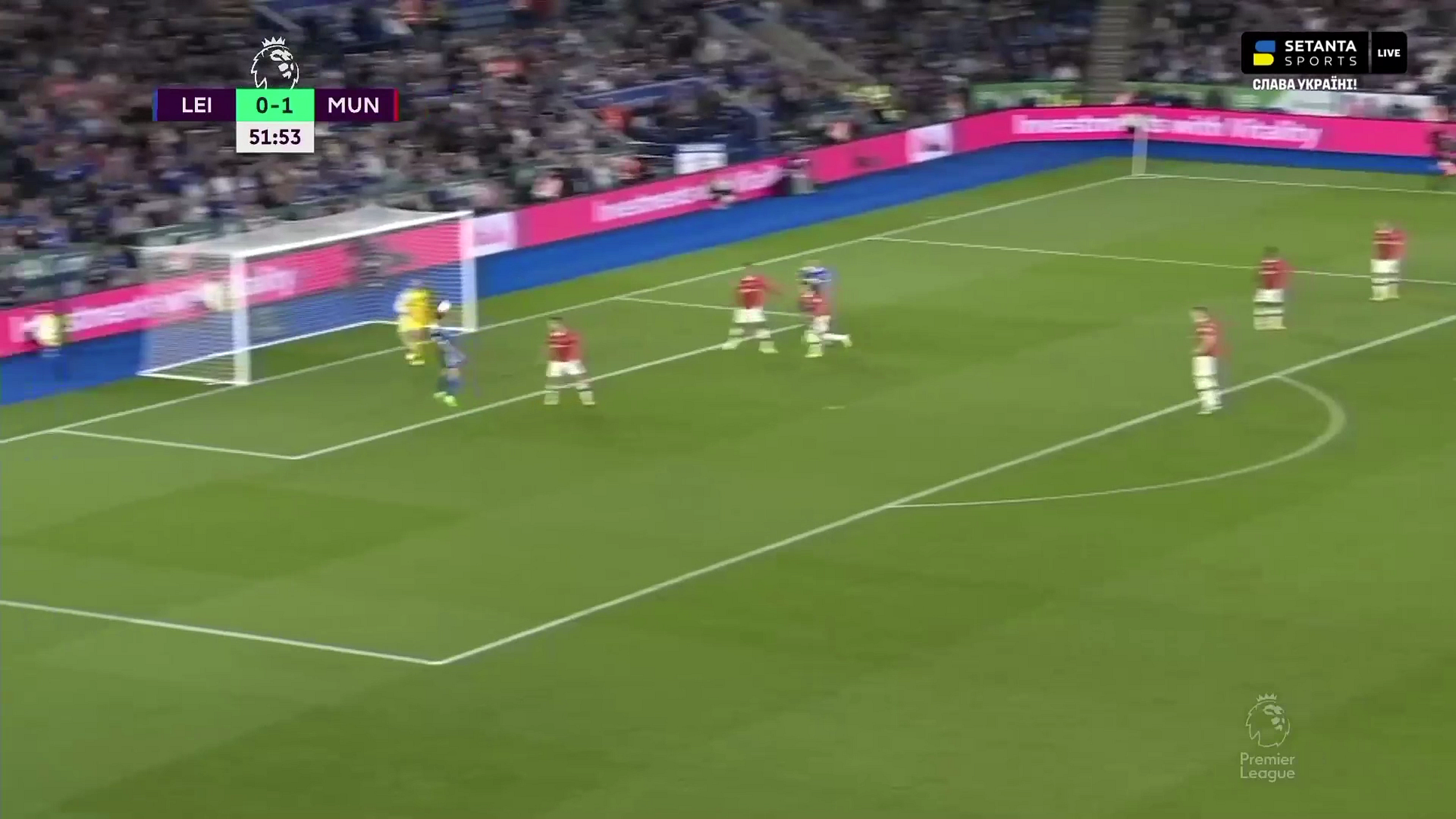
Manchester United might have a problem during crosses because of Martinez's height, and Ten Hag has tried to solve it by giving McTominay more responsibility to defend crosses. But United are still vulnerable defending crosses, and this time not because of the short Martinez, but because of his fellow tall defenders.
Browse our collection of football analysis insights.