 By Hassan Beltagy
Tottenham scored 8 times from set-piece routines last season. This season, after appointing a new set-piece expert, Giovani Vio, they have already scored 6 goals after 7 games. Vio, the former set-piece expert of the Italian national team, has managed to make Spurs one of the dominant forces in the Premier League from set-pieces. They are the third most dangerous team in the league from corners, with around 0.07 xG per corner attempt.
Tottenham entered the game against Leicester City using their normal corner routine. The routine varied from game to game depending on the opponent, but it still maintained the same principles and the same big idea. Additionally, Tottenham had a short corner routine, which they used to equalise against Leicester City through their first corner of the game. The remarkable point was the importance of the goals. Of all 6 goals Spurs scored against Leicester City, the two corners were the first two. That gave them extra importance for the North London side, not only because they were the first two goals, but also because the first one was the equaliser and the second one gave Spurs the lead.
Surprisingly short
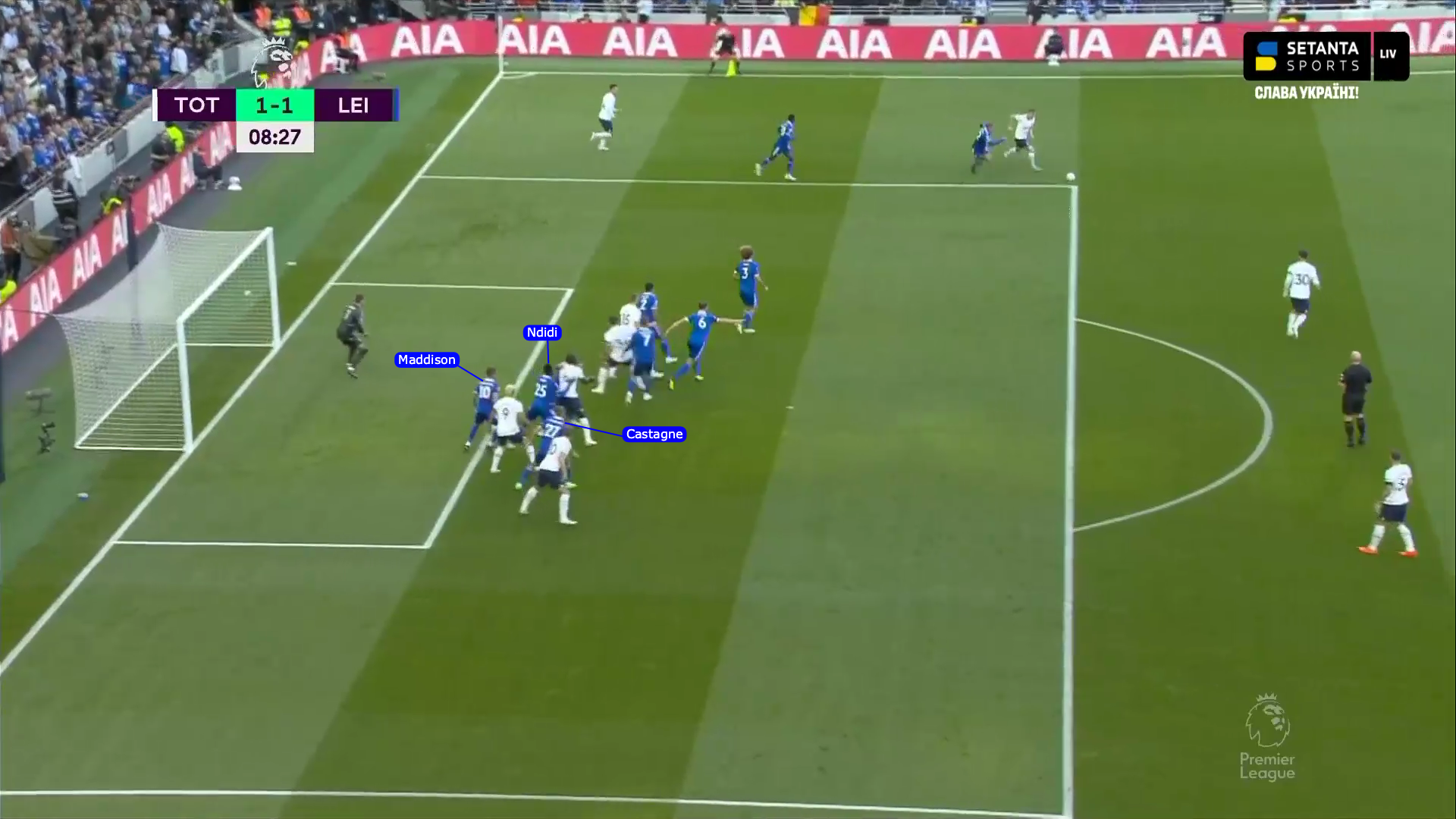
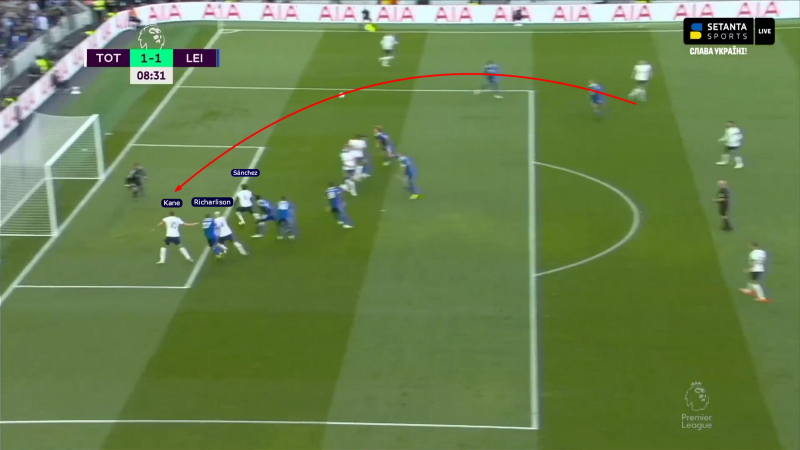
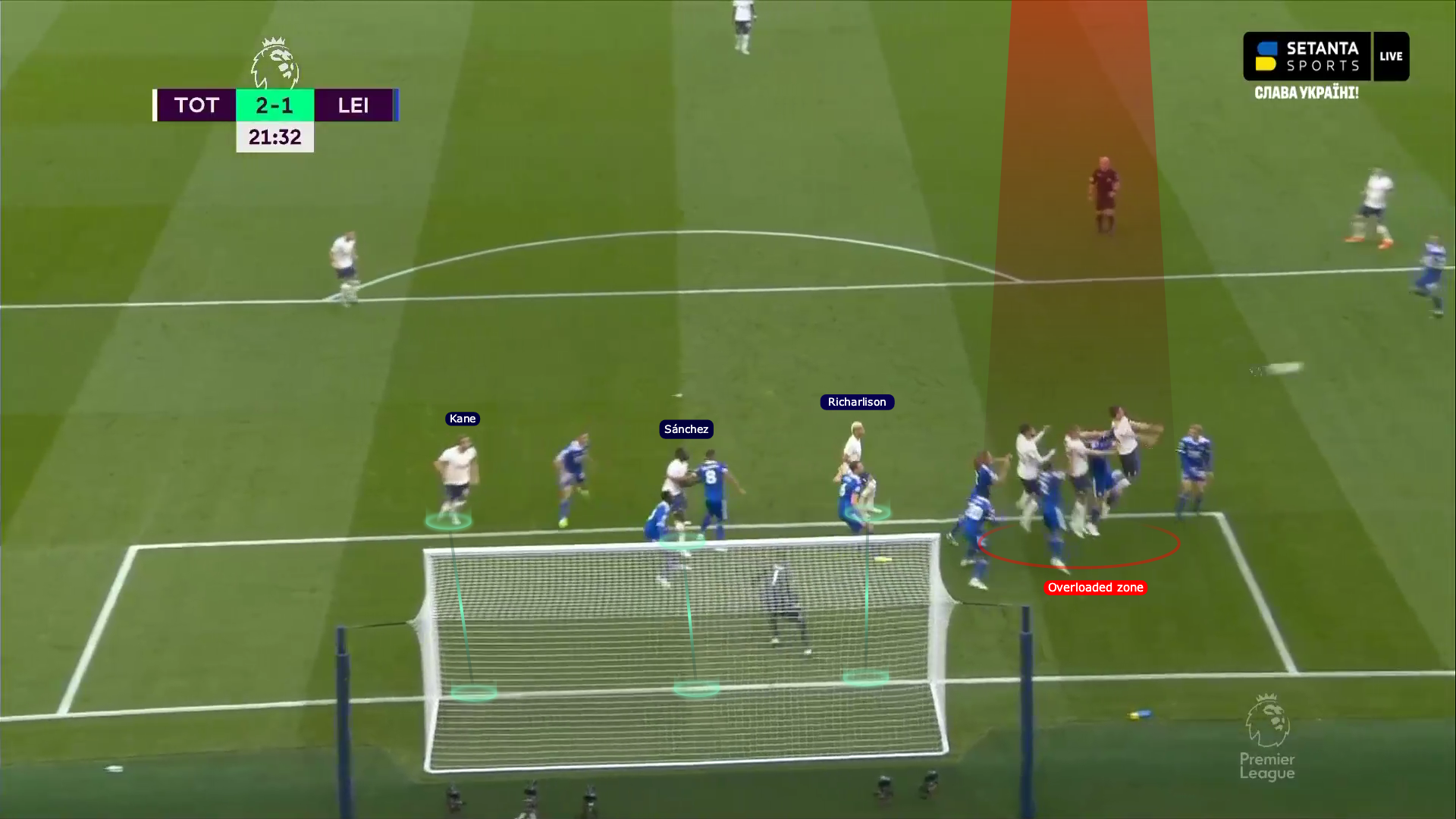
The first goal for Spurs came from a short corner, which was also their first corner. The main outcome here, as shown in the image below, is that Spurs managed to have 3 of their best headers of the ball (Kane, Richarlison and Sánchez) against 3 of Leicester City's worst defenders (Ndidi, Castagne and Maddison) at the back post.
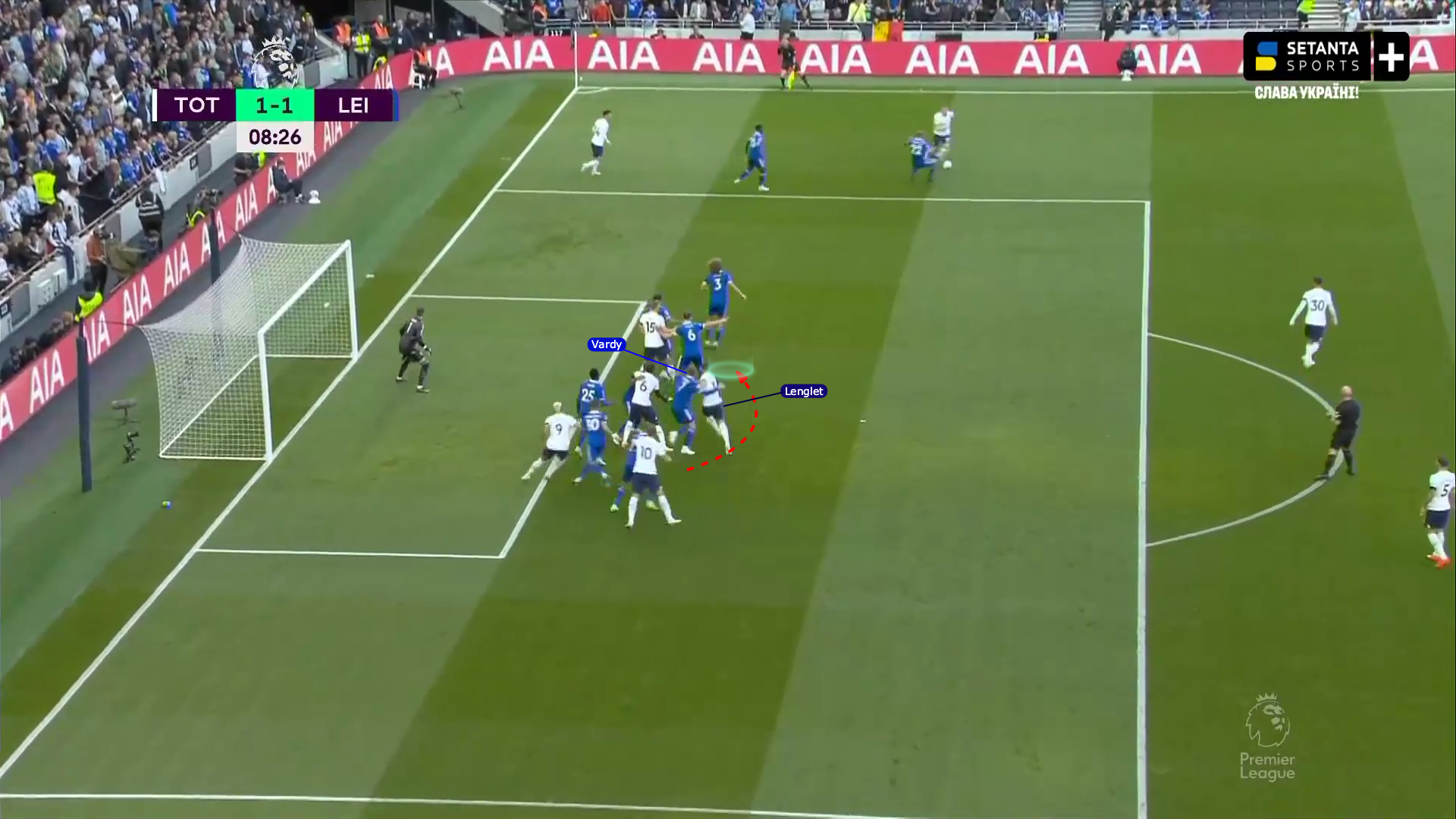
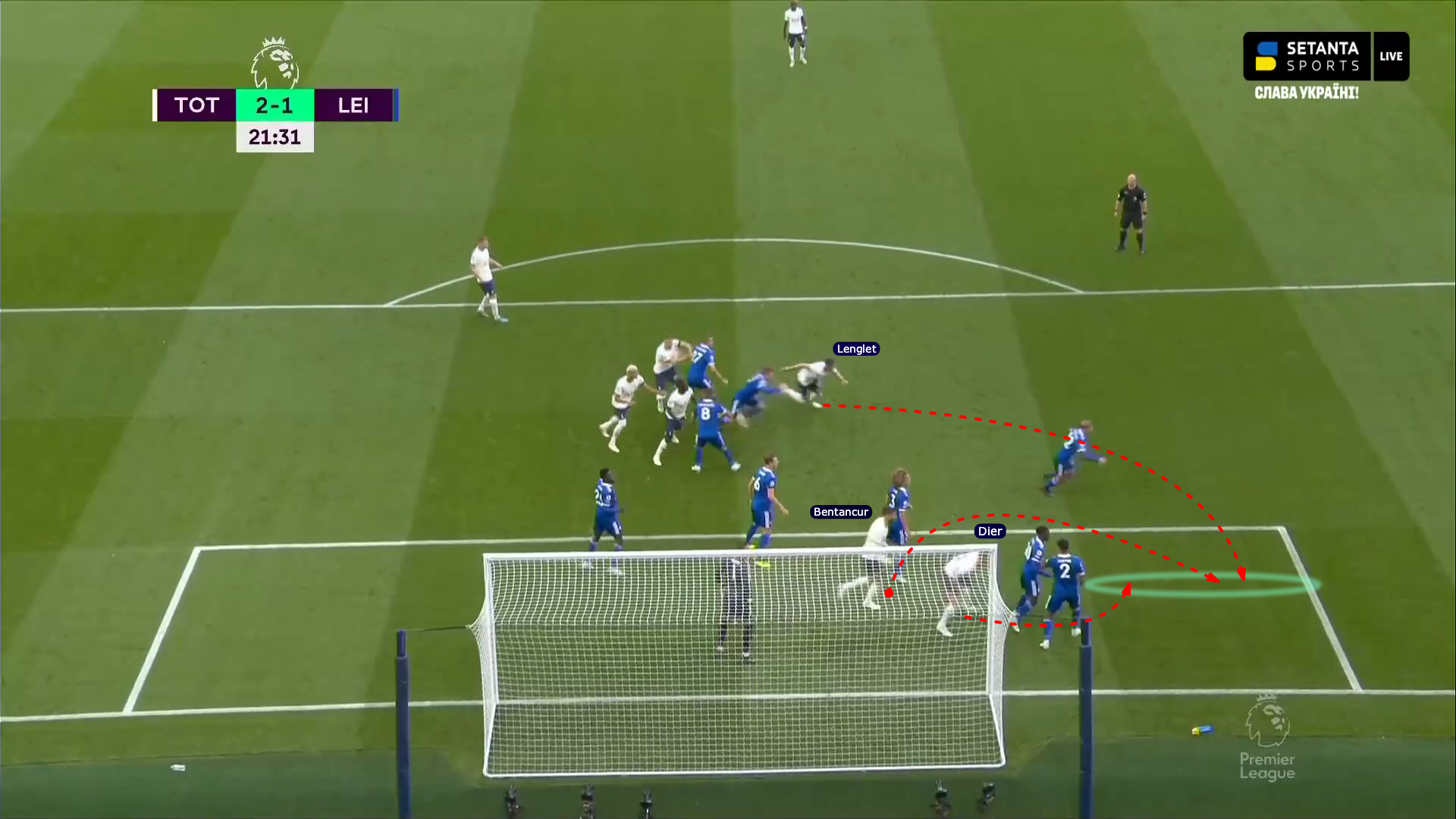
To force Leicester City into the situation in the picture above, it took Vio a lot of preparation. The short pass was played to Lenglet, who, as the picture below shows, is in the 6-yard box.
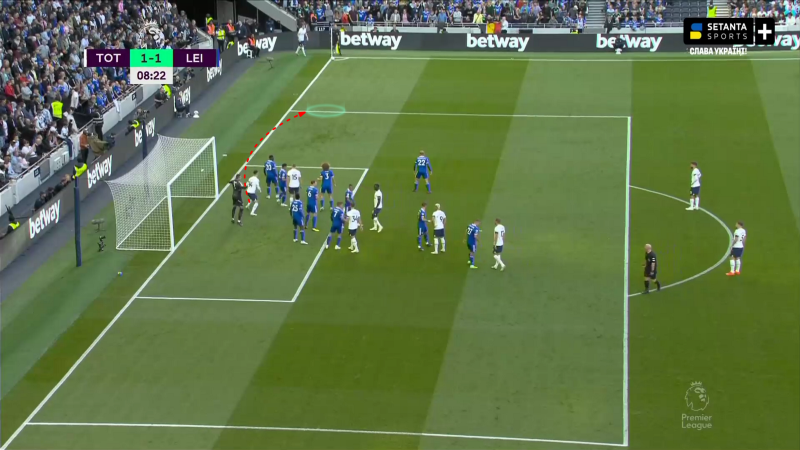
This meant that Leicester pulled out their two players supposed to protect the flick zone. Leicester understandably pulled out 2 players to form a 2v2.
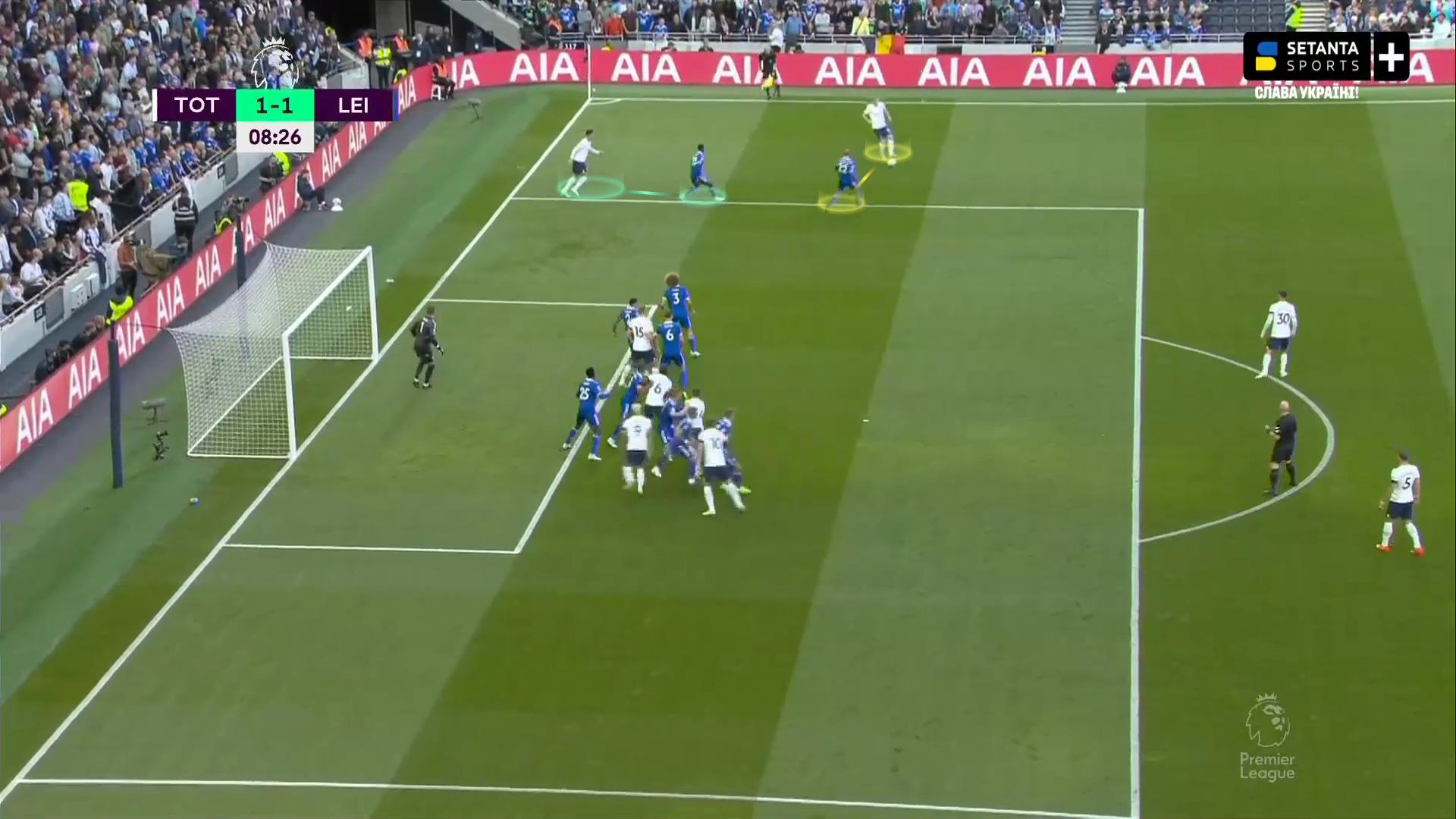
By pulling 2 players out of the flick zone, Dier faked a run into this zone to attract Evans and Faes to the front post. Here, Evans is also worried about a pass to the edge of the box, the thing that pulled him further forward.
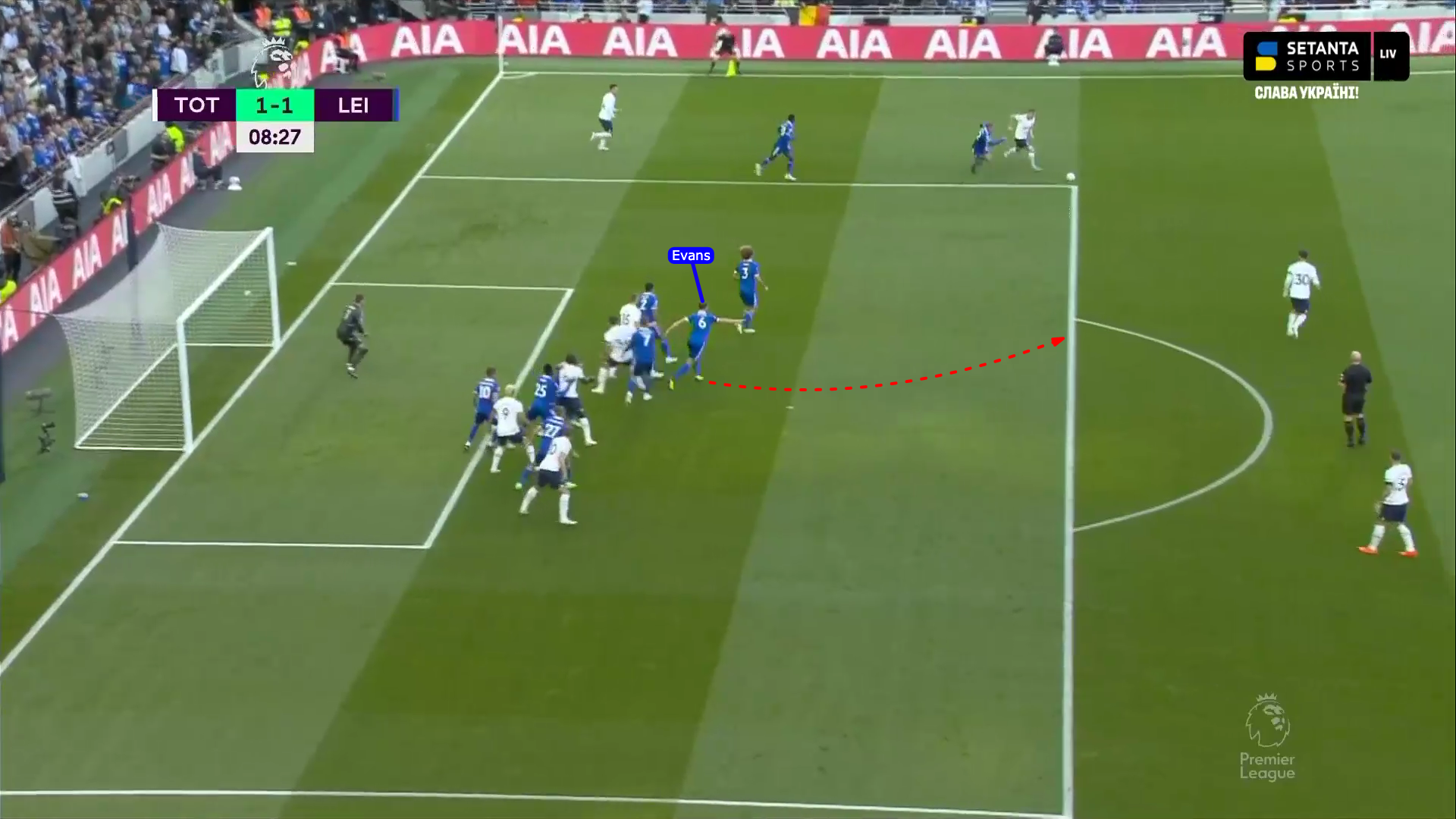
Additionally, Lenglet started the corner on the back post, the area the ball was going to be delivered into. But once the ball was delivered he made sure to run centrally, to attract his marker, Vardy, away from the targeted zone.
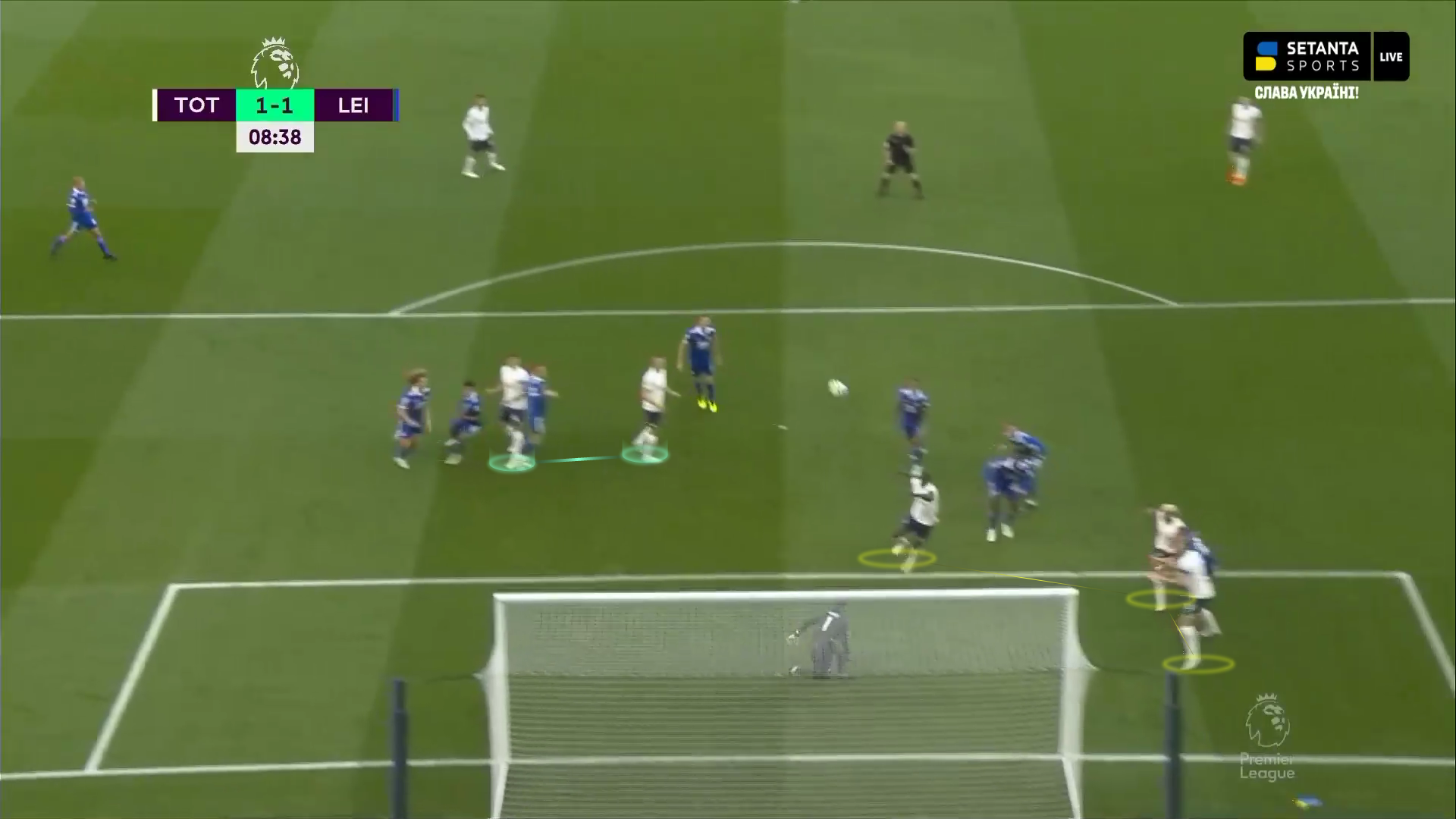
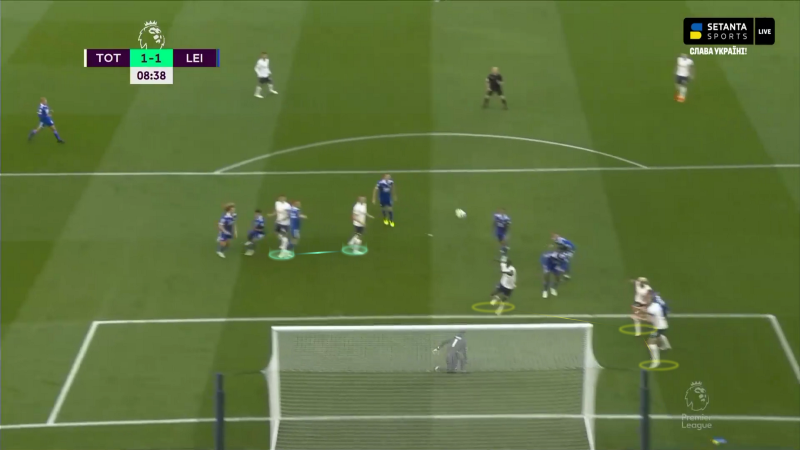
Finally, the ball was delivered to Harry Kane, Richarlison and Sánchez against Maddison, Ndidi and Castagne. It is worth mentioning, before moving to the next goal, that Kulusevski insisted on delivering the cross instead of making the extra pass. This allowed Spurs to benefit from their players' momentum into the box, while not giving Leicester City a chance to reorganise or risking an unsharp delivery through Bentancur.
My normal corner, can you stop it?
The second goal is the usual Tottenham routine, with some extra tweaks. The ball was delivered to the flick zone (the overloaded zone), where Spurs had numbers, while other players were "framing the goal", putting numbers in the areas with higher scoring value.
But Vio lies in the details, so let's first take a look at the overloaded area. Three players ended up arriving there: Dier, Lenglet and Bentancur.
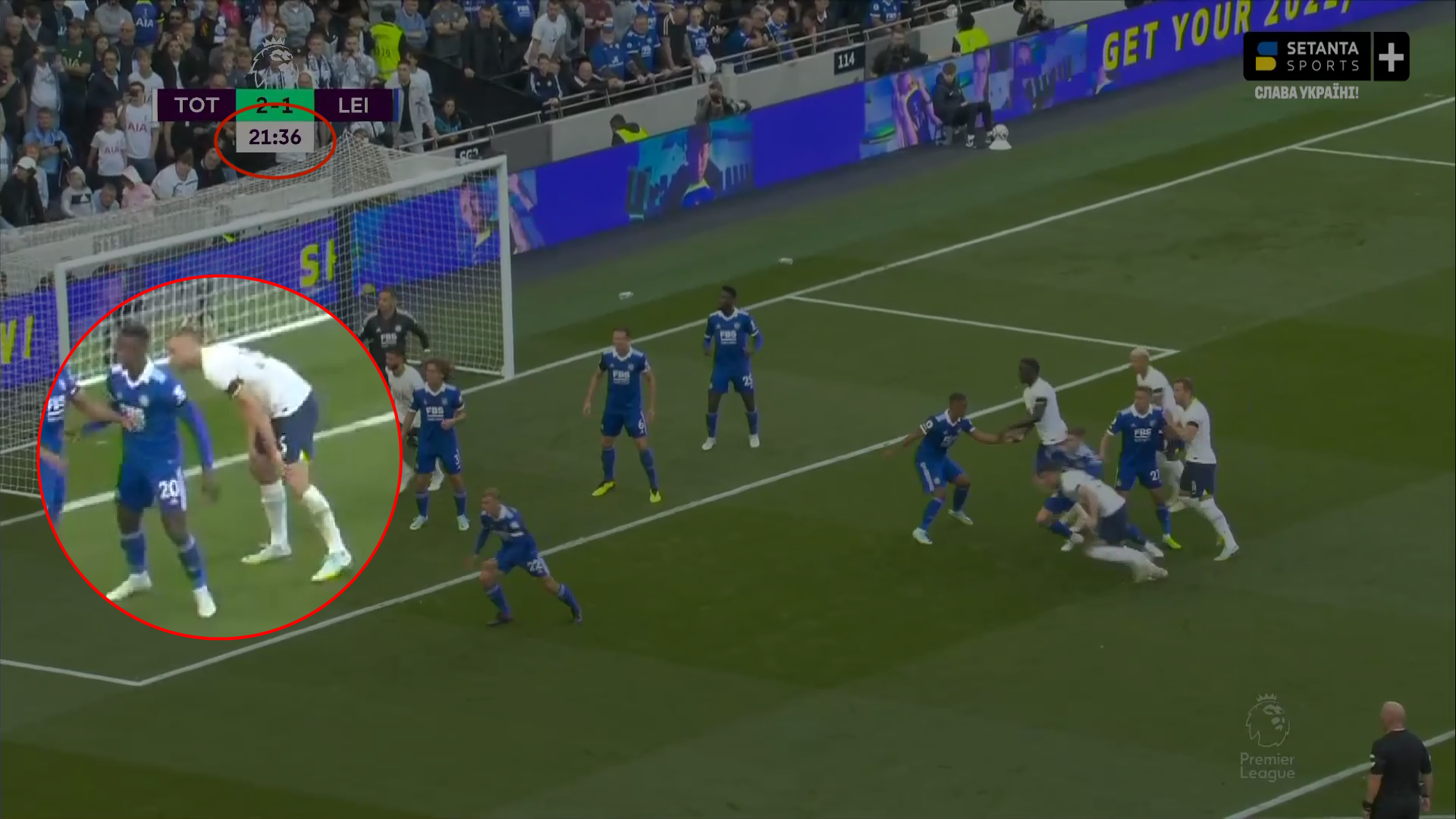
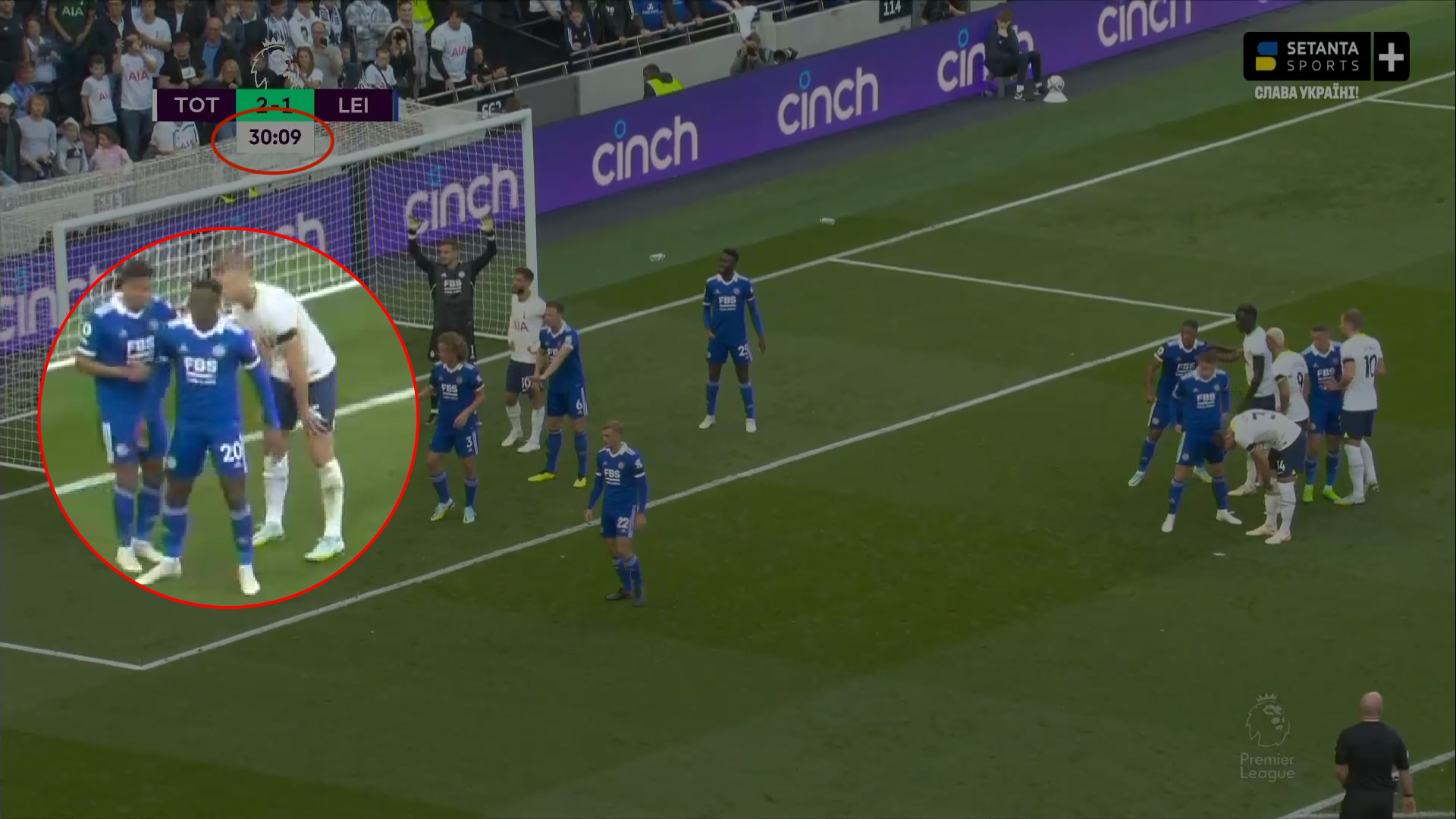
First, Dier arrived from the near post. He was positioned just behind the player who would run to be closest to the ball and win the first contact. He kept hiding behind his marker. Personally, I have no explanation for this, especially as it has been repeated in other routines, as shown in the pictures below.
Second, Lenglet's movement: he came from the penalty-spot area into the overloaded area, as shown below. He is benefiting from Dier's movement and tries to win a first contact if the ball is under-hit.
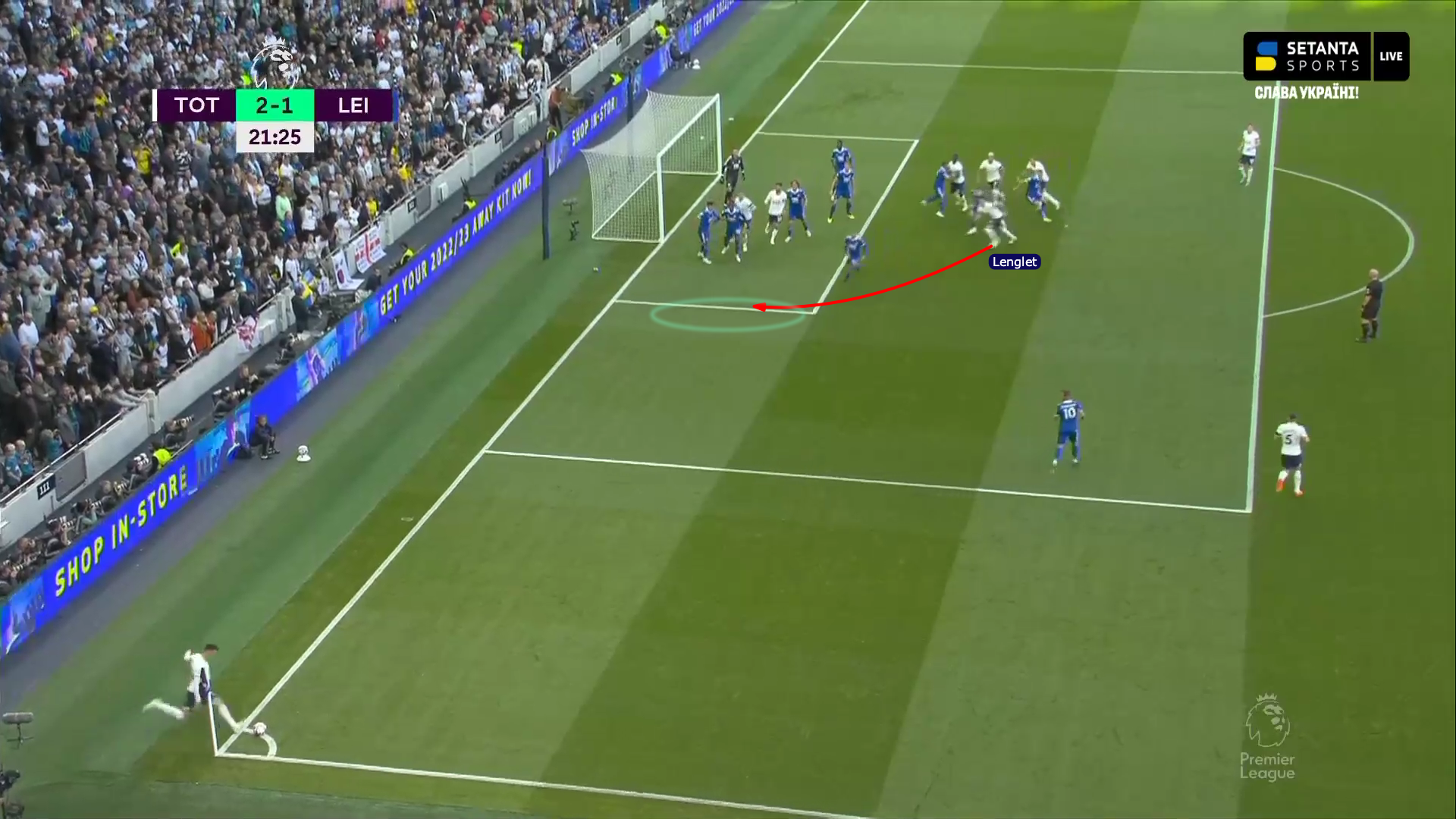
Third is Bentancur, who also moved towards the overloaded area, as shown below, this time from inside the 6-yard box.
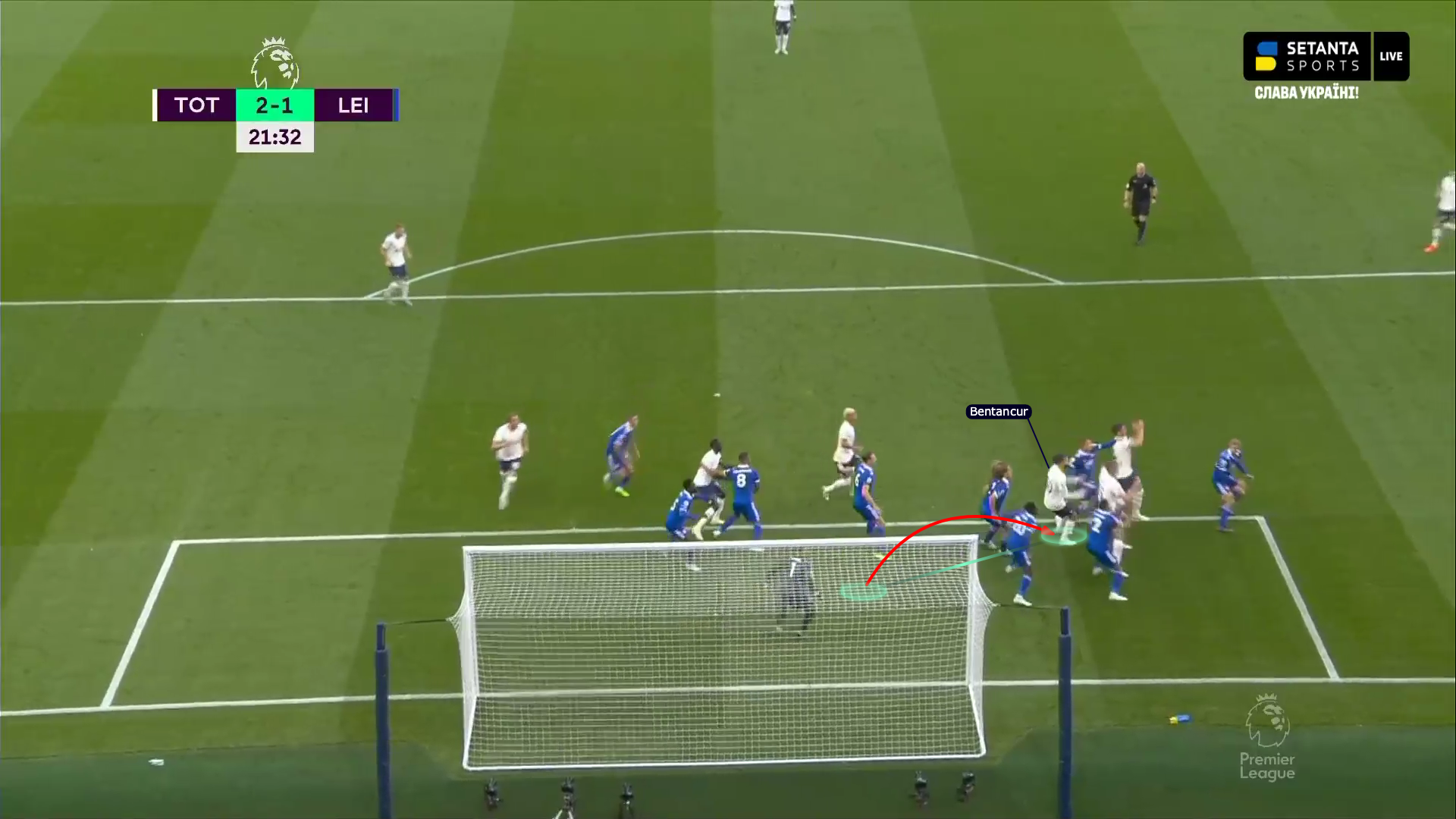
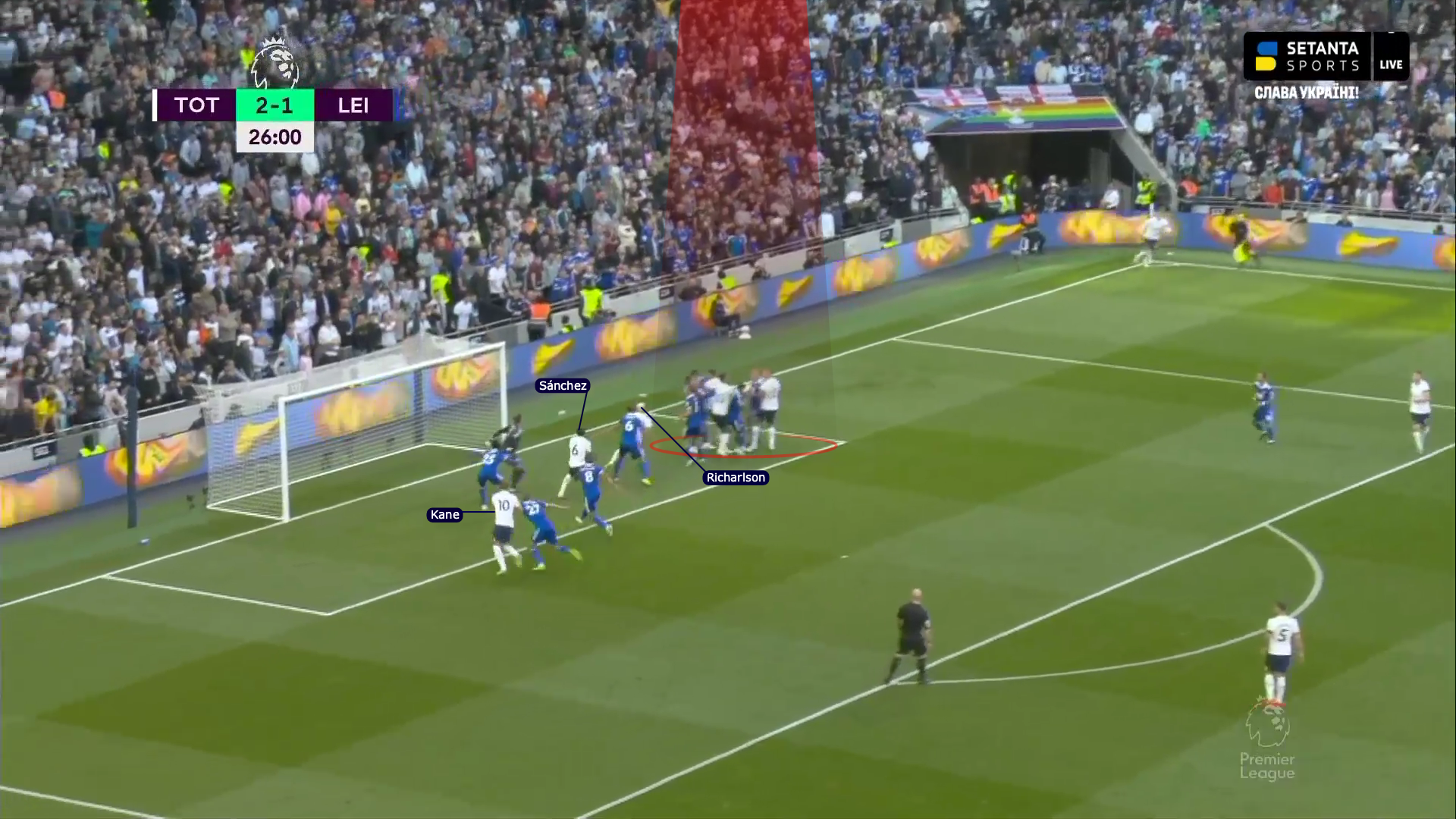
All those movements painted the picture we saw above: three Spurs players in a very tight space, ready to flick the ball towards the back post. If it is under-hit there is Lenglet, and if it is over-hit Bentancur is waiting for it. The closest player to the overloaded area is Richarlison, who arrived from the penalty spot to the near post. The picture below shows the players who framed the goal, there to maximise their chances of getting a second touch or getting on the end of a loose ball.
Kane and Sánchez are also there for the same reason. In the picture below, the situation of the third corner, which got disallowed, it was more likely that the ball had been over-hit and ended up being delivered to Sánchez, before the referee ruled the goal out.
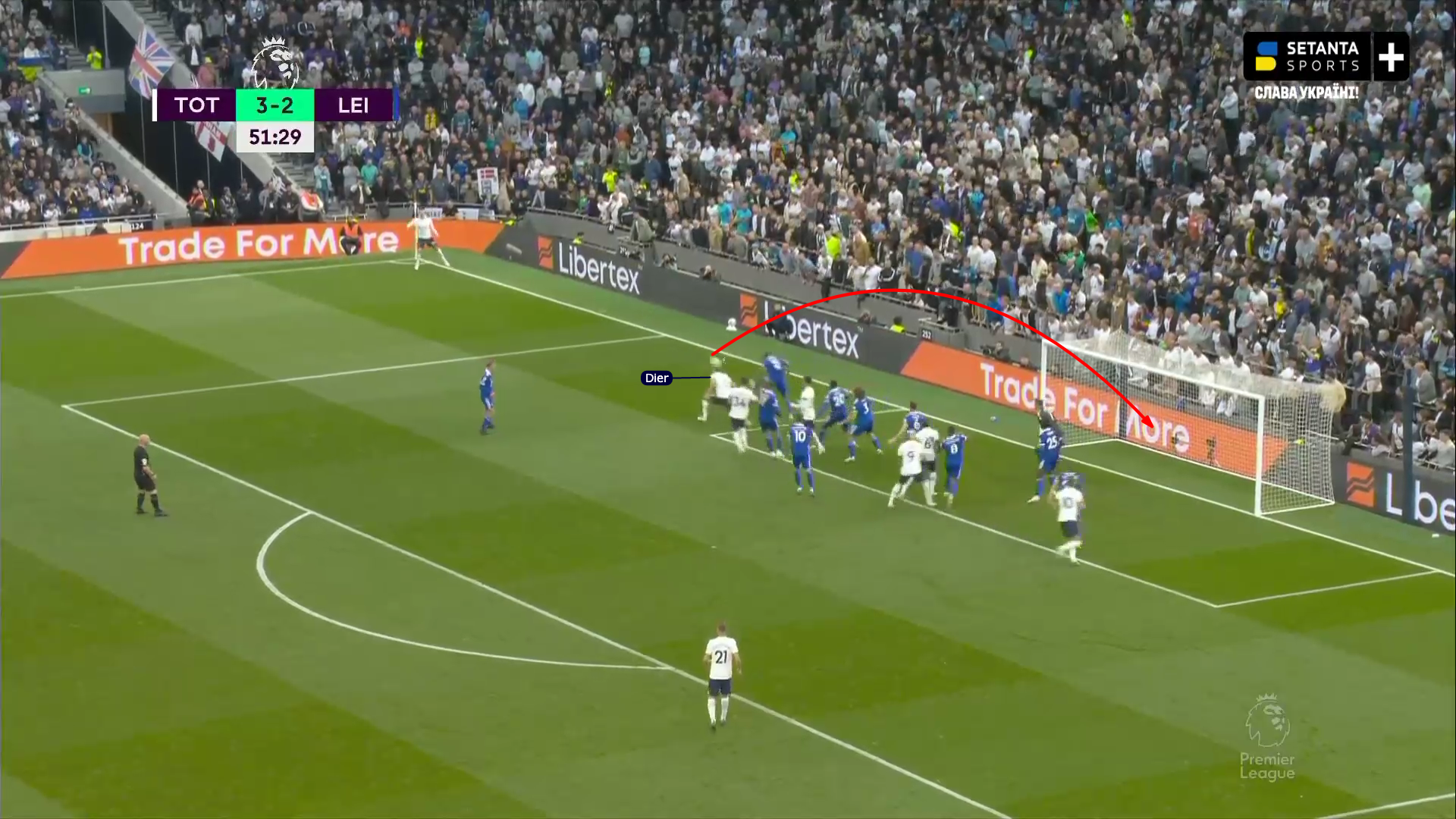
In the picture below is the situation where the ball was under-hit. Dier here was trying to flick the ball to the back post.
Zooming out, Tottenham used the same routine over and over. But whoever knows how set-pieces work will see a change of details. The familiarity of the scheme made it easier for Spurs players to know their roles, especially in an environment where they have to play every 3 days and have no time to learn new routines. But changing the details made it very unpredictable for opponents to know what was coming next.
Browse our collection of football analysis insights.