Should Barça Be Worried to Concede a Corner Against Inter?
 By Hassan Beltagy
October 4, 2022
By Hassan Beltagy
October 4, 2022
In 2010 Barcelona FC played against Inter Milan in the San Siro. That game was the first step in Jose Mourinho's revenge against his former employer, Barcelona. In the 32nd minute Inter got a free-kick that looked more like a corner-kick than a free-kick, during which a not very tall player was waiting for a second ball on the penalty spot. He was playing in a complete zonal marking system. That player was Xavi.
His coach back then, Pep Guardiola, once said that defending in a complete zonal marking system at set-pieces is much better than man-marking, as he believed it made his players accountable for their zones.
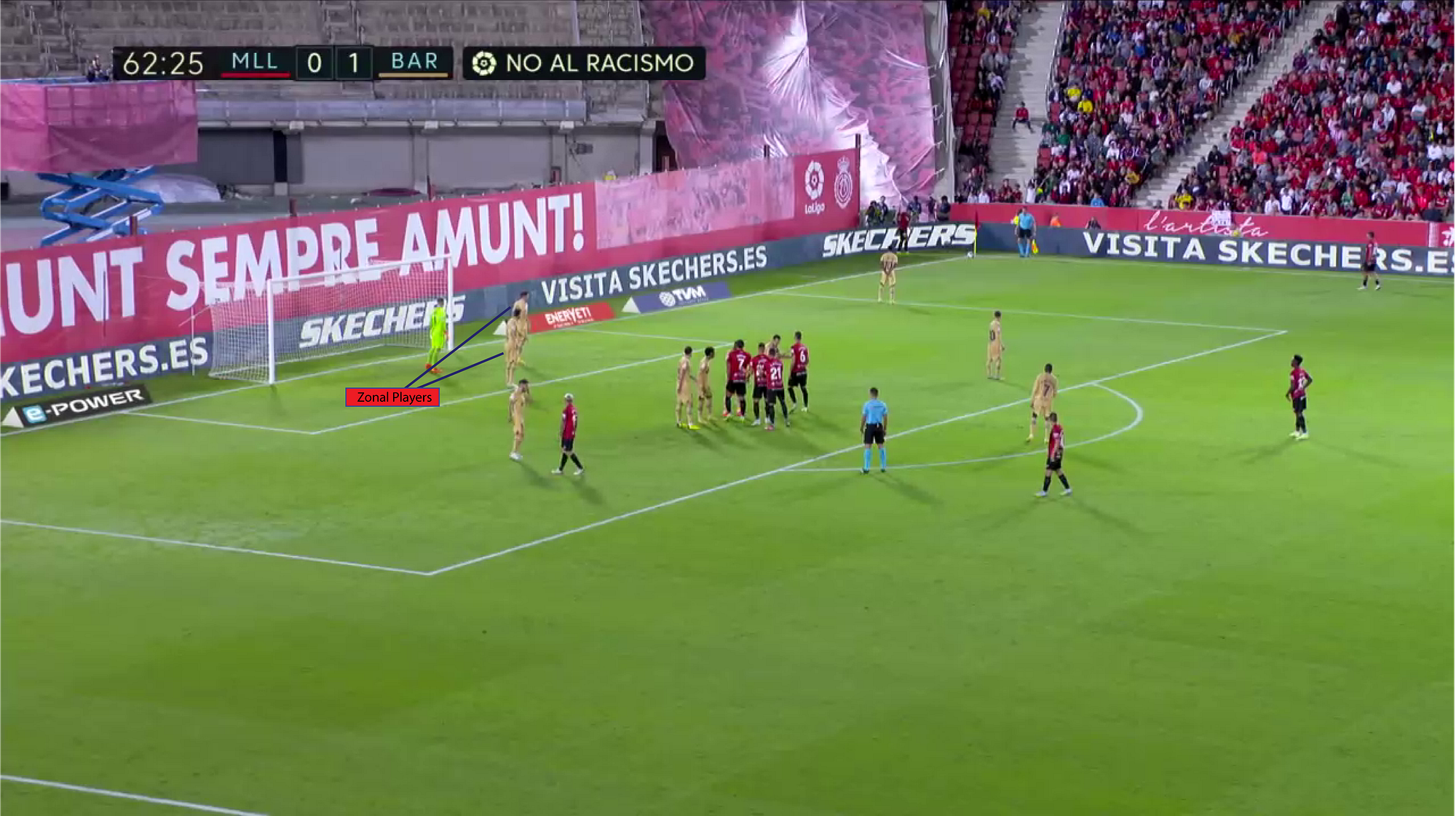
Despite Xavi's tendency to thoroughly emulate his footballing godfather, Pep, he did not copy his corner defensive system. Except for the two zonal players on the near post, so far Barcelona have been defending with a heavily man-marking-oriented system.
The picture below was taken last weekend during the Barcelona–Mallorca game. It shows that Barcelona had just 2 players at the near post and the rest of the team was man-marking.
The same structure was repeated in both the game against Cadiz in La Liga and the one against Bayern München in the Champions League. In the latter, Bayern scored from a corner. As shown below, Marcos Alonso was responsible for marking Lucas Hernandez.
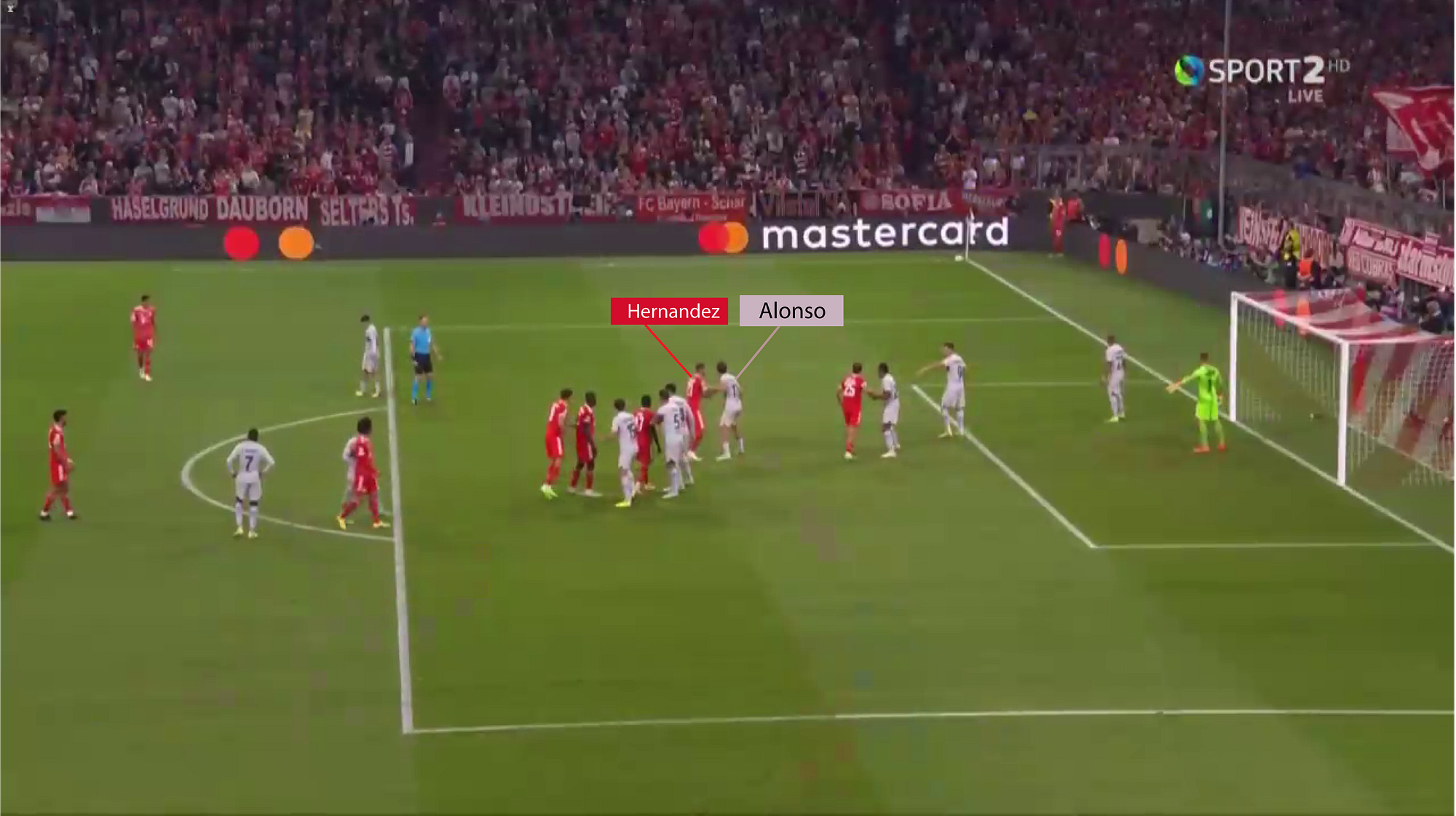
By making a simple body feint, Hernandez managed to create an orientation problem for Alonso. As a result, this put Alonso in a tricky position to track the ball and Hernandez at the same time.
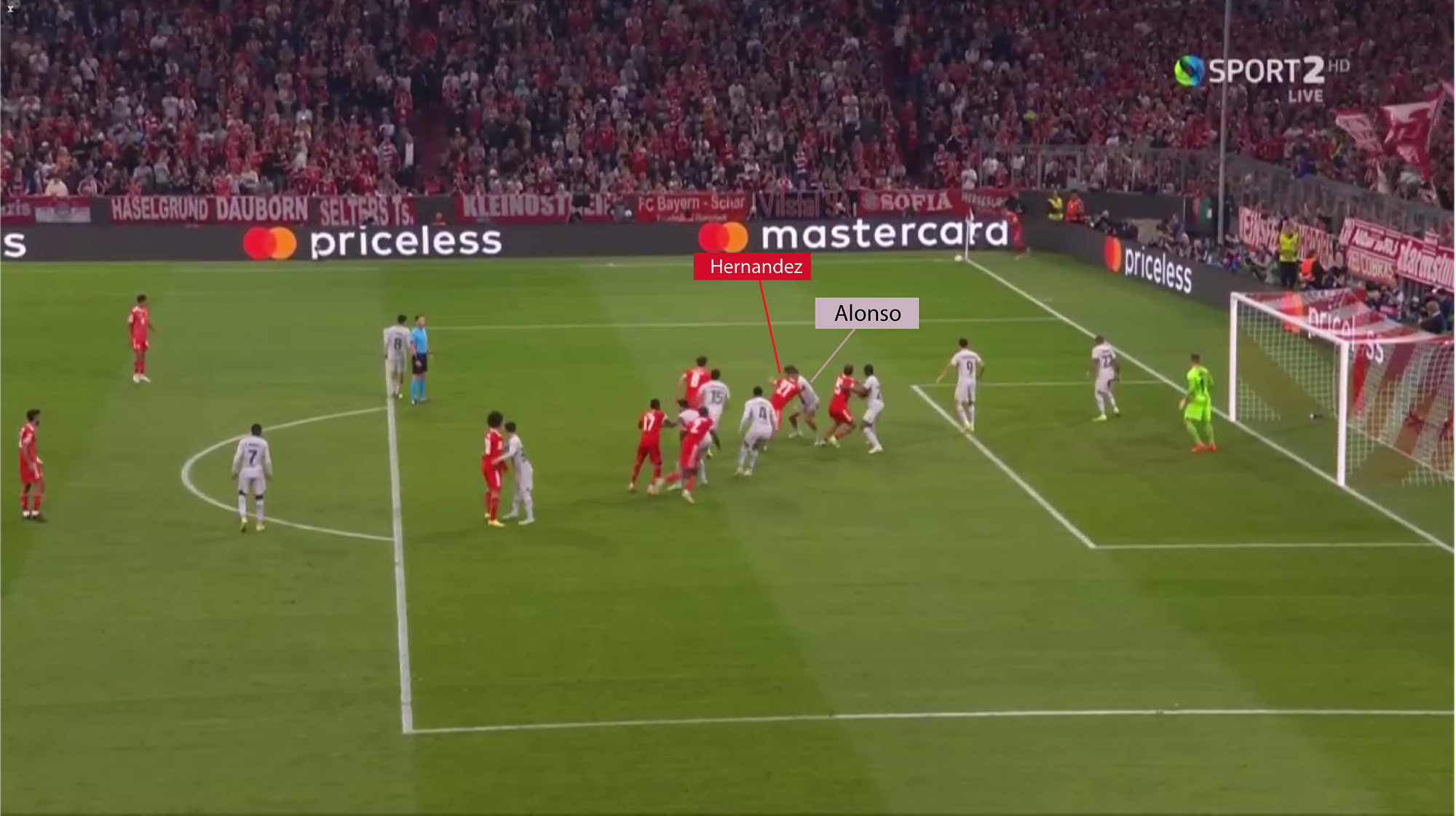
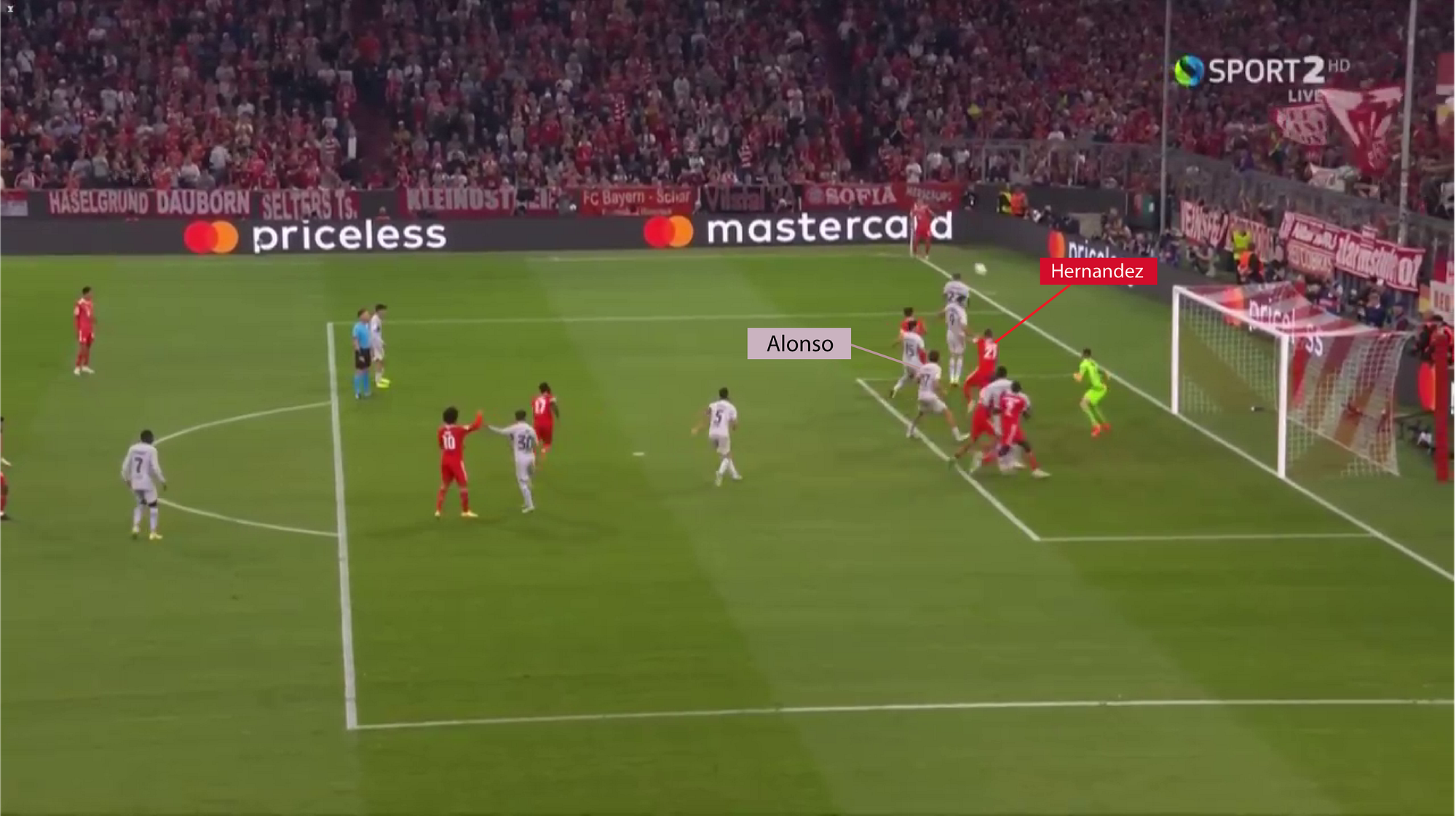
Here one can see how a fraction of a second helped Hernandez get a free header inside the 6-yard box.
Enter Inter
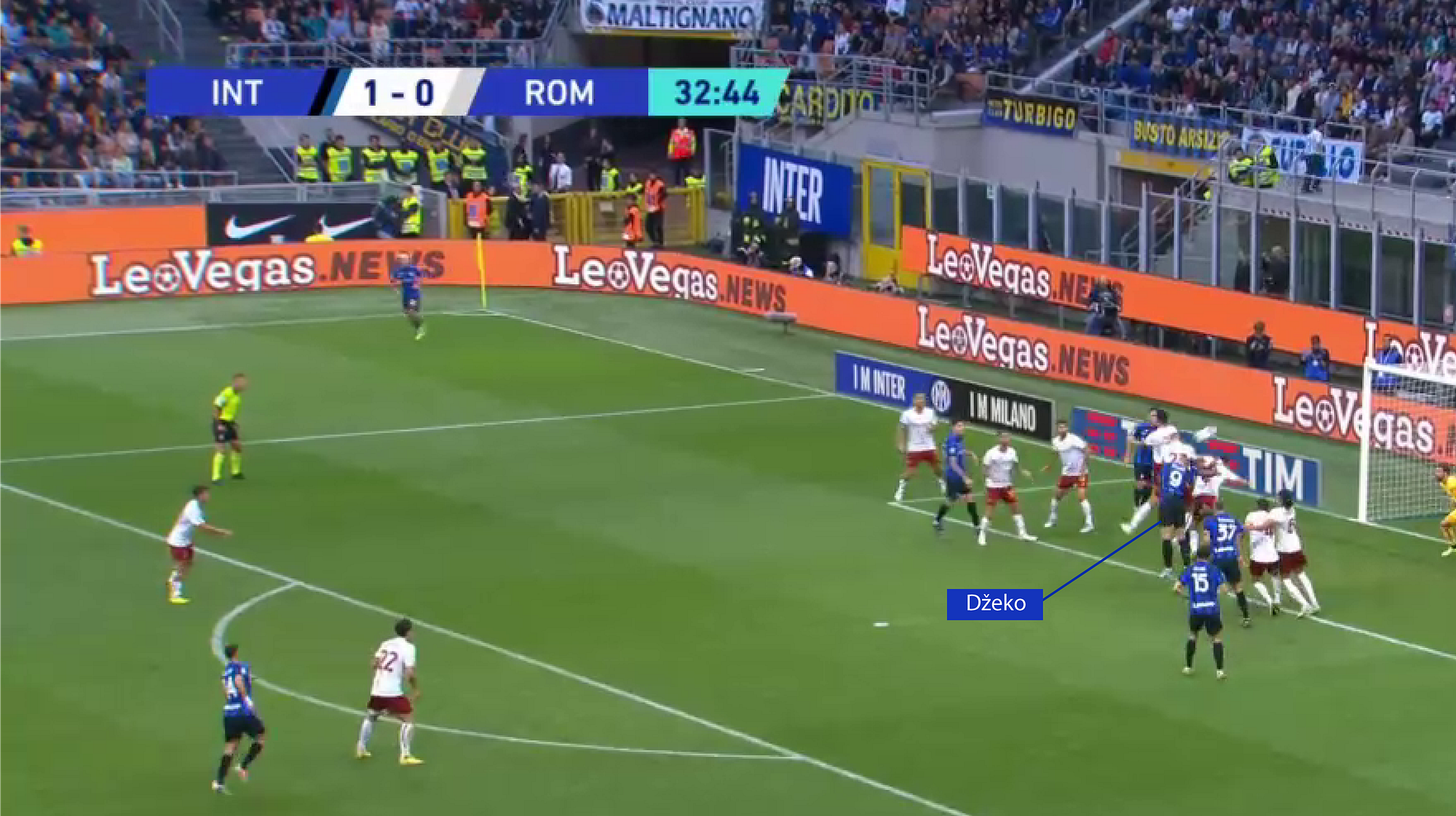
But how does this relate to Inter Milan? The Italian team are one of the best teams from corners in Serie A, second only to Roma, creating 3.95 xG from set-pieces. Last weekend Inter faced Roma, who coincidentally play the same system as Barcelona. In the two pictures below there are apparent similarities between Barcelona and Roma in the way they defend a "stack".
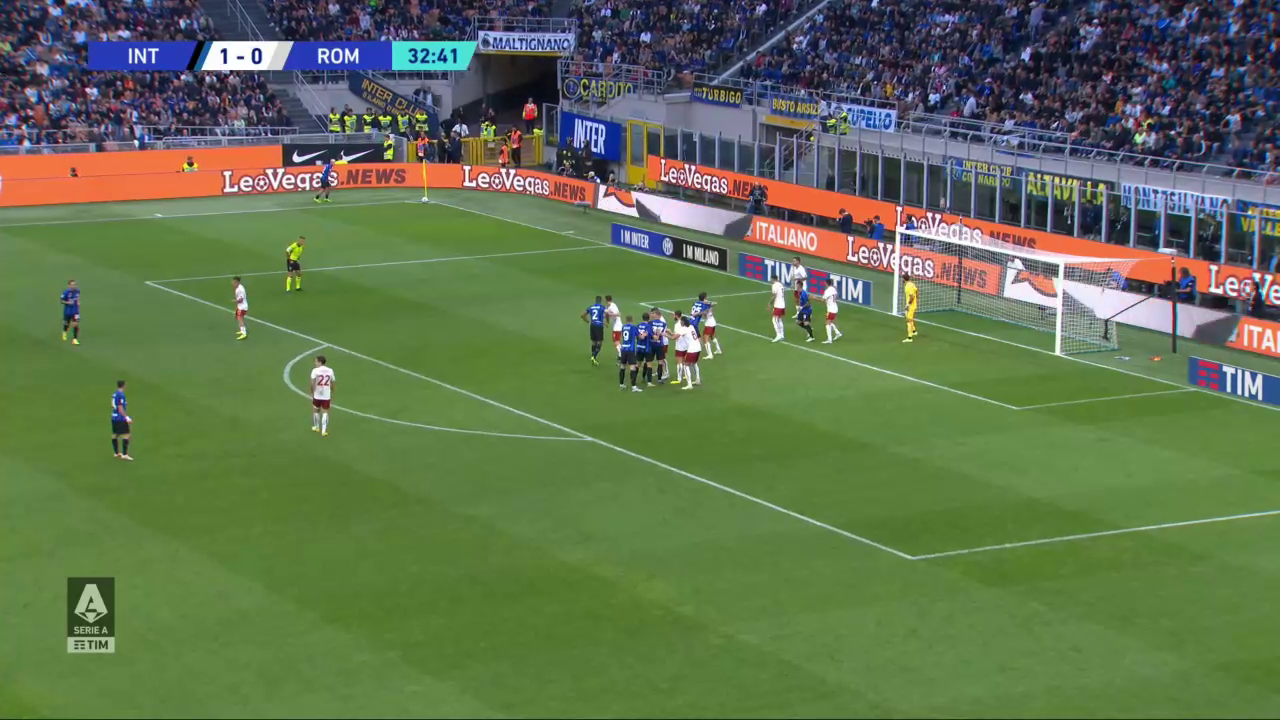
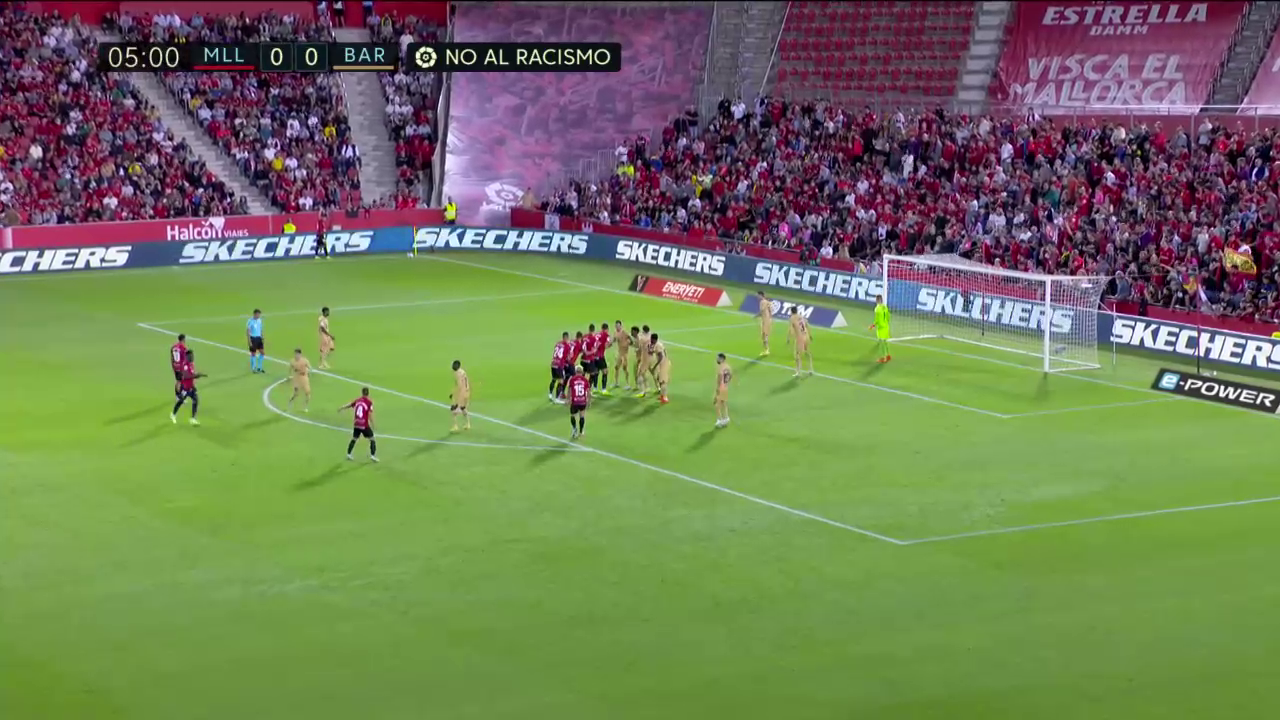
A stack is a queue of attacking players used to create confusion for the defending team, who won't be able to identify the side from which each player is going to attack. As illustrated below, Džeko could have moved either to the left or to the right. Both Roma and Barcelona decided to defend with a horizontal queue. The horizontal queue benefited Roma by not marking a specific man, but marking whichever player comes from the right or the left. As useful as that was, it gave Inter the chance to decide which player to send to their best header, Džeko.
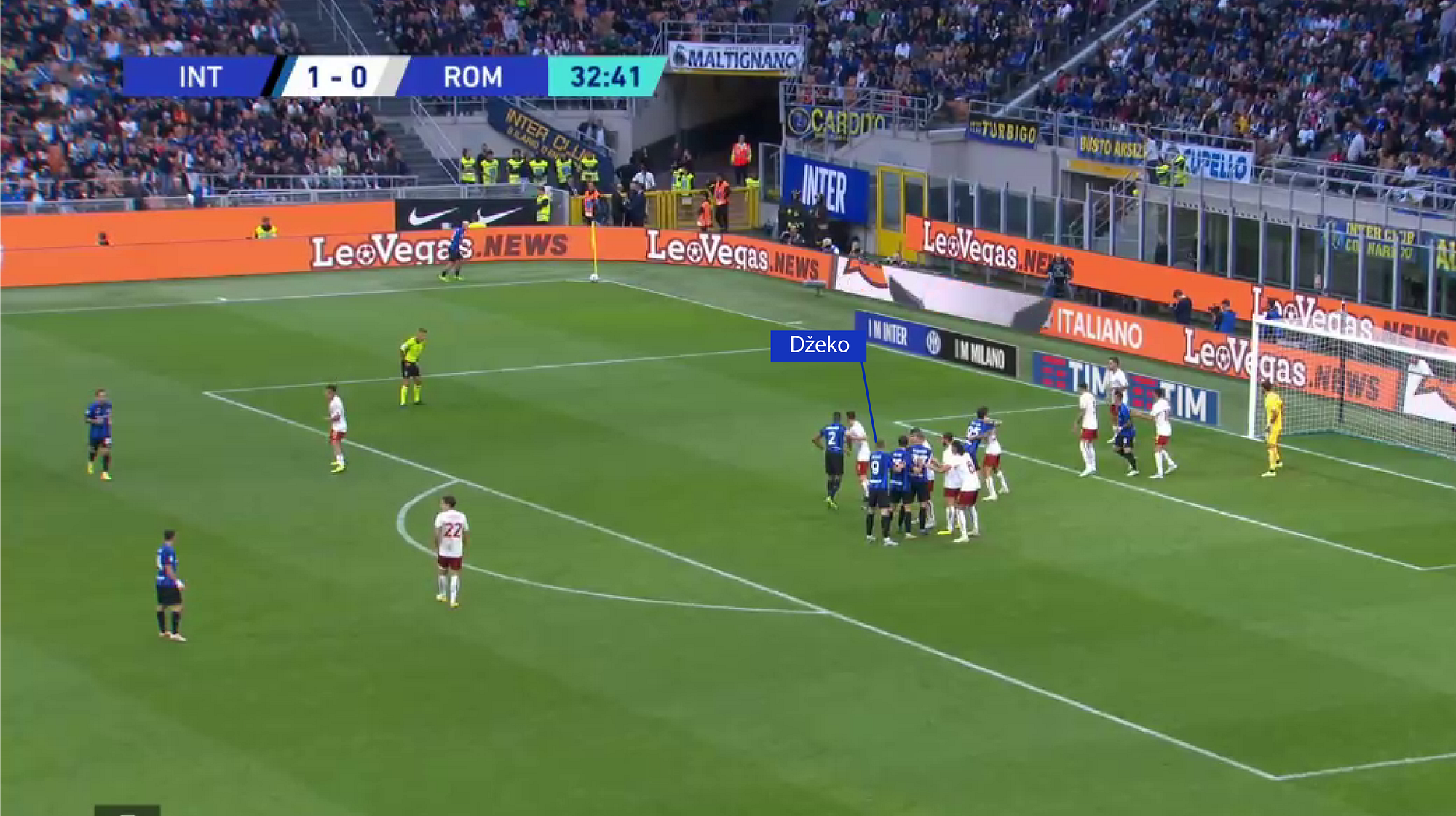
In the picture below Džeko moved left while delaying himself a bit.
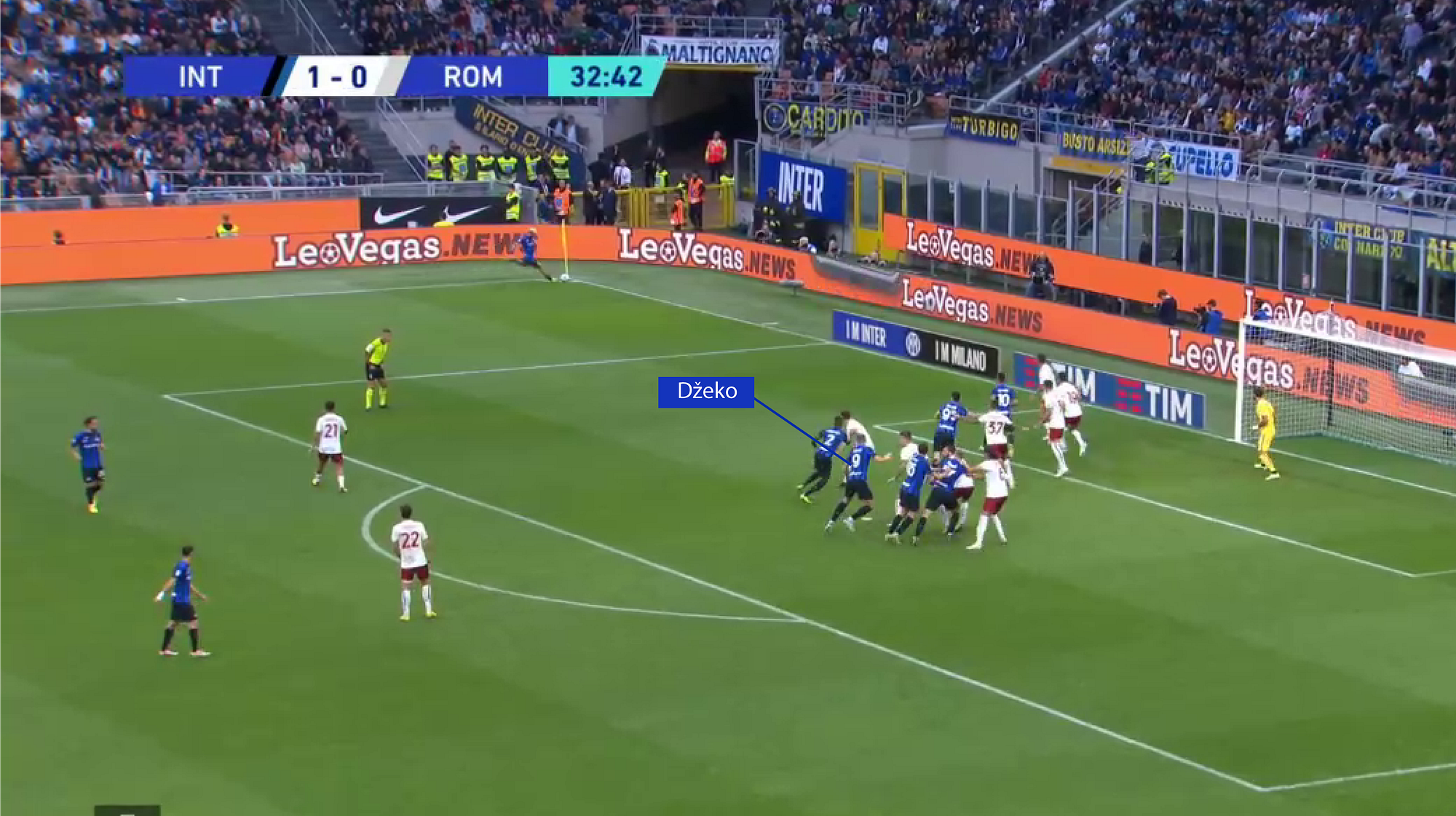
Then Džeko managed to get first contact on the ball. Knowing that Hakan Çalhanoğlu is the one delivering those crosses, Barcelona should be very worried.
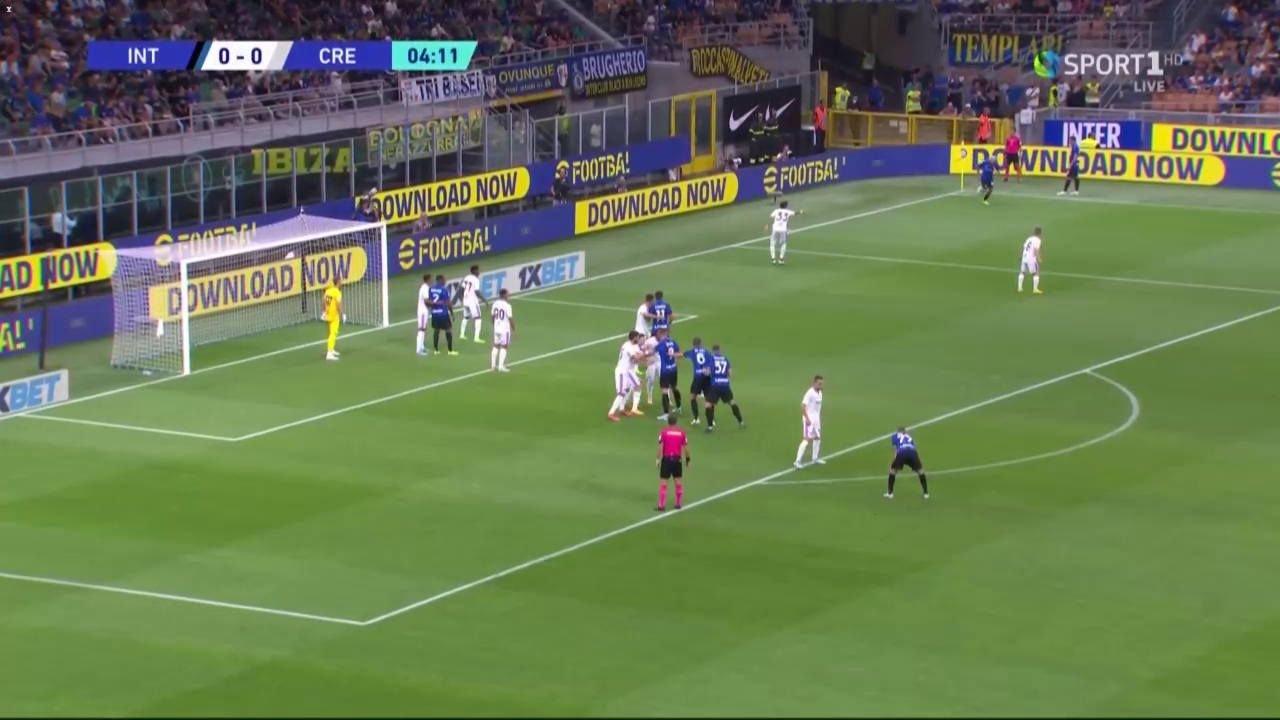
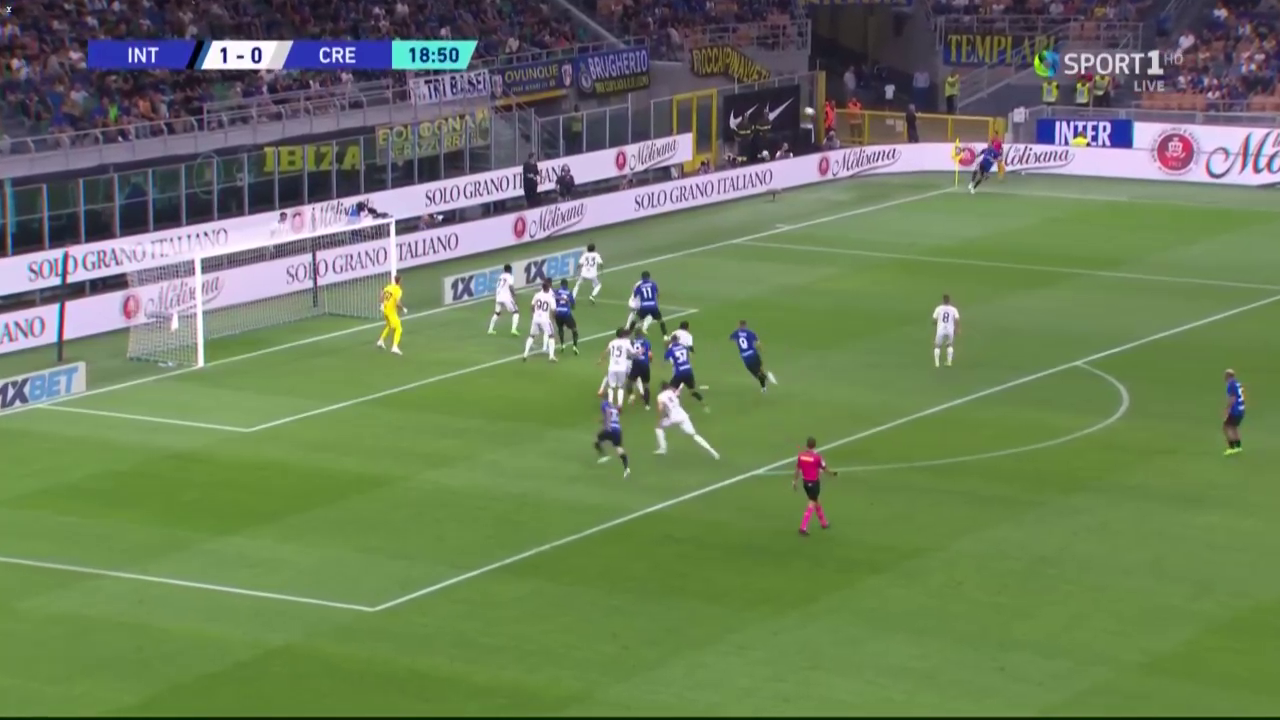
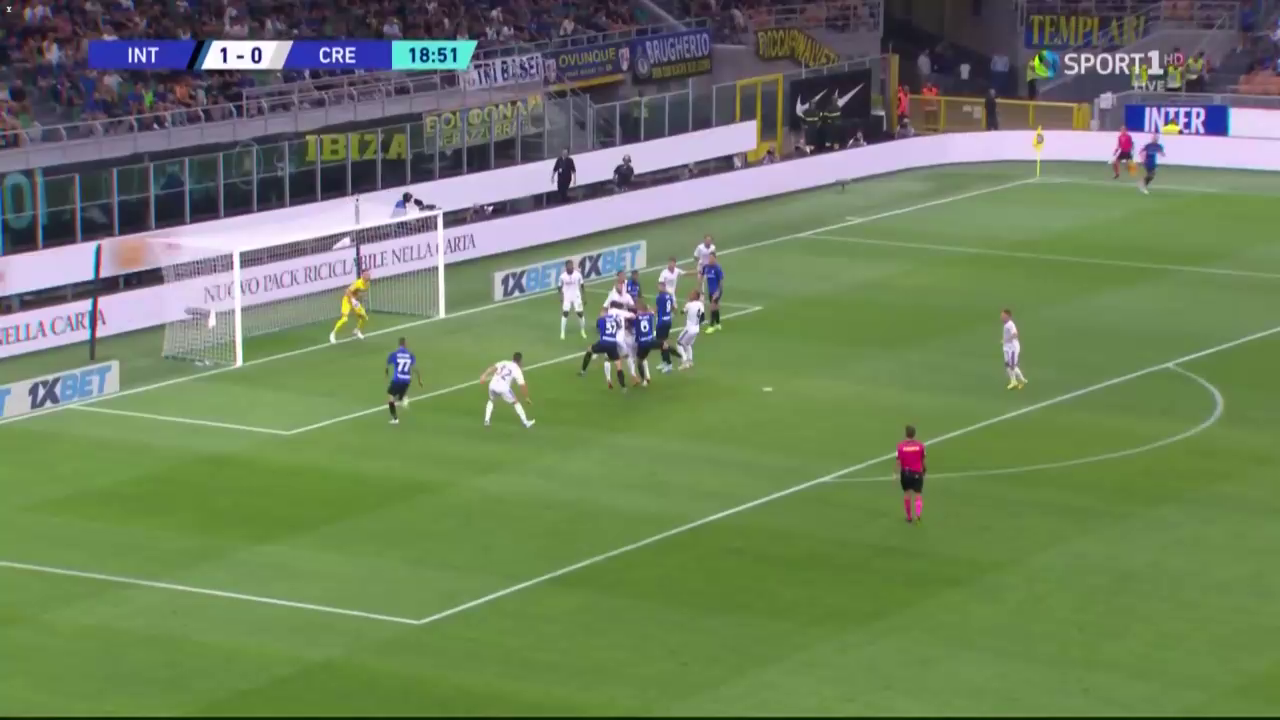
The three pictures below show that Inter Milan followed the same routine in the game against Cremonese.
The verdict
Nowadays man-marking is a very dangerous system to deploy, because it is susceptible to a range of dangerous situations. Leicester City and Leeds United applied this system last year and ended up among the 5 worst teams in the Premier League, conceding 16 and 11 goals respectively. It is worth mentioning that playing with a stack, like Inter did against Roma, or creating an orientation problem, like Bayern did against Barça, are not the only solutions. There is a complete set of solutions that can be implemented.
However, it might be late for Xavi to change his defensive routine. He should be afraid to play against Inter and revive bad memories of his time in San Siro back in 2010. In the future, a better strategy would be to follow in the footsteps of his master, Pep Guardiola.
Browse our collection of football analysis insights.