How Barça players' shape and movements limited their options
 By Ahmed Osama
October 7, 2022
By Ahmed Osama
October 7, 2022
Imagine you’re a football coach for a team, let’s call it team (A). In your team, you have some skillful and fast players, undoubtedly one of your aims as a coach is to try to provide them with convenient time and space and create some situations that allow them to use their skills and pace to make an impact on the game.
Now let’s imagine that you’re a coach for another team. This time we’ll call it team (B), and this team will face team (A), now you aim to stop your opponents from exploiting their abilities, which means that in the defensive phases of play, you will try to reduce the distance between your players, and make your team as compact as possible in a way that limits your opposition options and takes away any free space or time with the ball.
In the game between his team against Barcelona in the UCL group stage, Simone Inzaghi, Inter Milan’s head coach, tried to do exactly what you would have done as a team (B) coach. On the other side, Xavi Hernández, Barcelona’s head coach couldn’t find a way that would take the maximum out of his players and give the team superiority during the game.
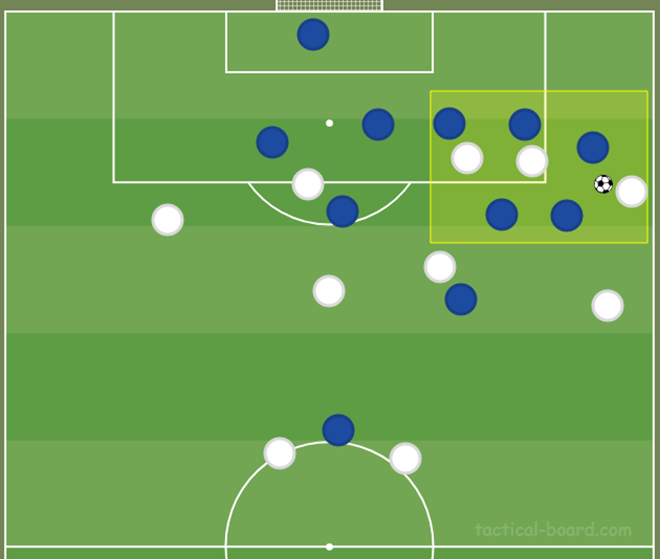
When facing a team that defends with many players in its defensive third, there are some ways that would help your players create spaces within your opposition’s defensive structure. First, if you have a skillful fast winger, when he has the ball on the flank, it’s important to keep his teammates away from him because when his teammates get very close to him that would invite more opponents to move towards him, making the area around him very crowded.
In the figure above, we can see that the winger has the ball, and his teammates are getting very close, with many defenders following them, and that reduces the time and space he has with the ball and vanishes any possible 1v1 situation, which is one of the most favorable situations for the players with these characteristics. However, when inviting many opponents to move to one side of the pitch, that means there are fewer defenders on the other side, which leads us to the second way.
The second way is using the full width of the field, which means that when the ball is on one side of the field, one player should commit to being on the other side close to the touchline as possible and doesn’t go inside toward the center.
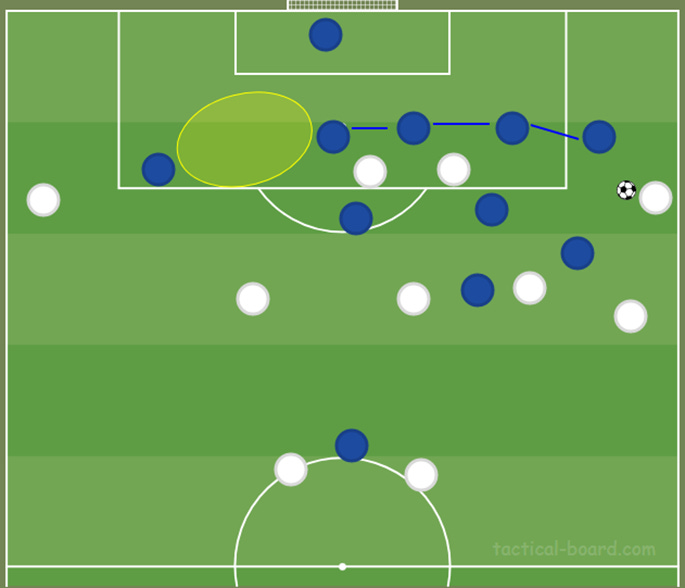
When the opposition defender takes his teammate and the space as references, which means the aim is to reduce the space and close any gap between each defender and his teammates, therefore a winger being on the other side of the ball would make the defender wonder, what is the right decision? Should he give up his references and move close toward the winger to reduce the time and space for the winger, as the figure above, especially if that winger has the skills and the pace that would hurt them? Even though, this movement could create a space within the team structure that could be exploited in many ways and cause many problems.
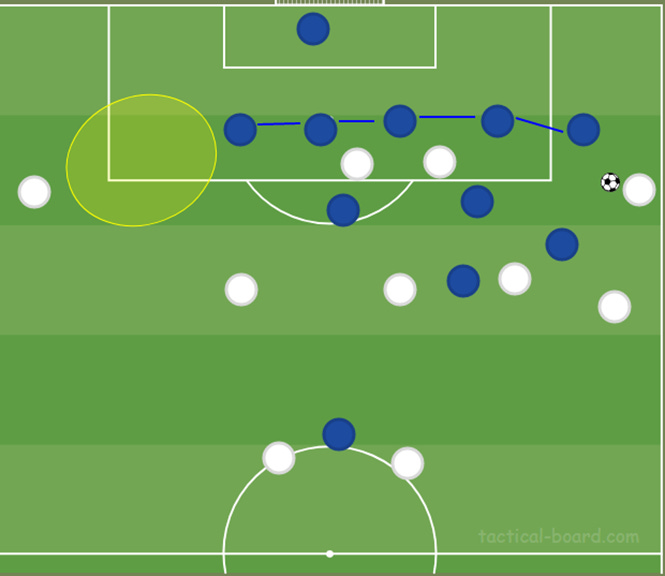
Or the defender chooses to stick with the references and take the risk of leaving a good winger with enough space and time with the ball.
Generally, in both ways, using the full width of the field and switching the ball, would force the opposition to shift from one side to the other, which means moving the tightly organized defensive structure around the ball by moving collectively from one side to the side that the ball goes to, that shifting could create a bit of chaos, which could be used to discompose the opposition and create a space within the opposition’s structure.
I would assume that you might forget that this piece is mainly about the game between Inter and Barcelona, but those previous lines were very essential to get a fuller understanding of what we are going to dive into in the next section, so without any further I do, let’s get back to the game.
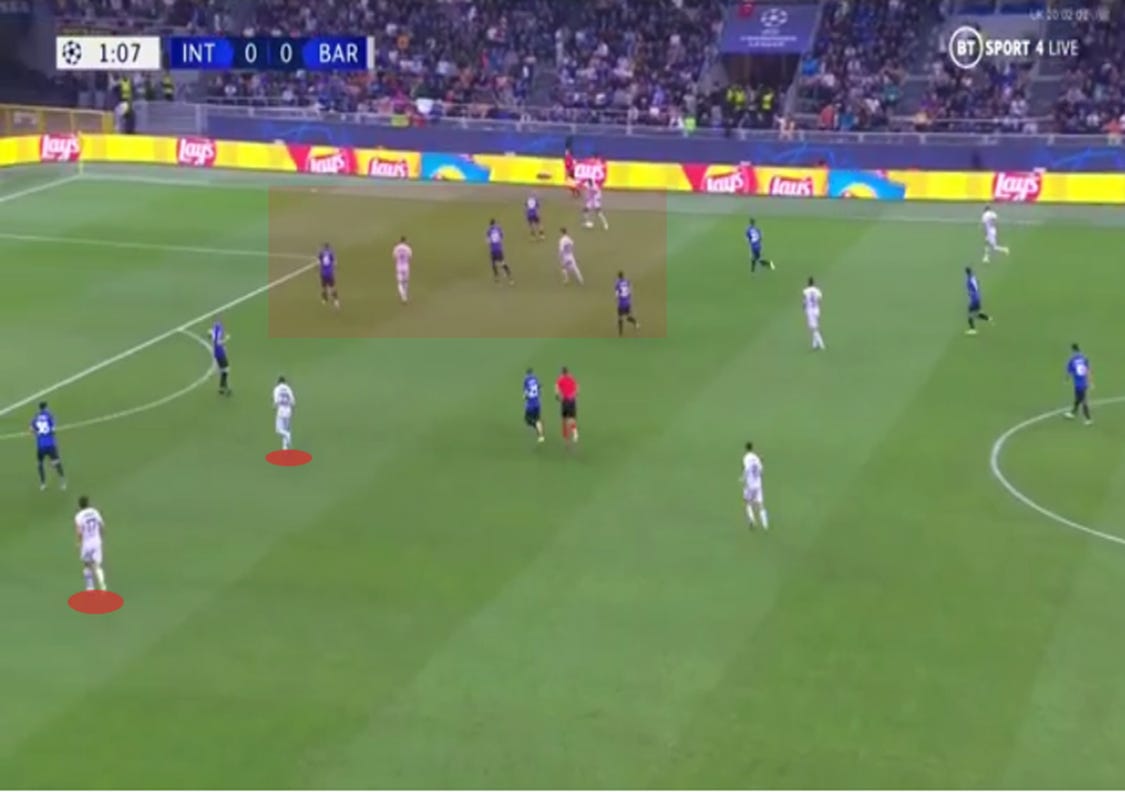
Dembele has the ball near the touchline on the right flank, we can see that Gavi and Lewandowski’s movement towards him invites more Inter players to the area around Dembele, in addition, we can see the position of Raphinha and Marcos Alonso and their movement towards the center, none of them gives any attention to being near the touchline on the other side of the ball to stretch the field.
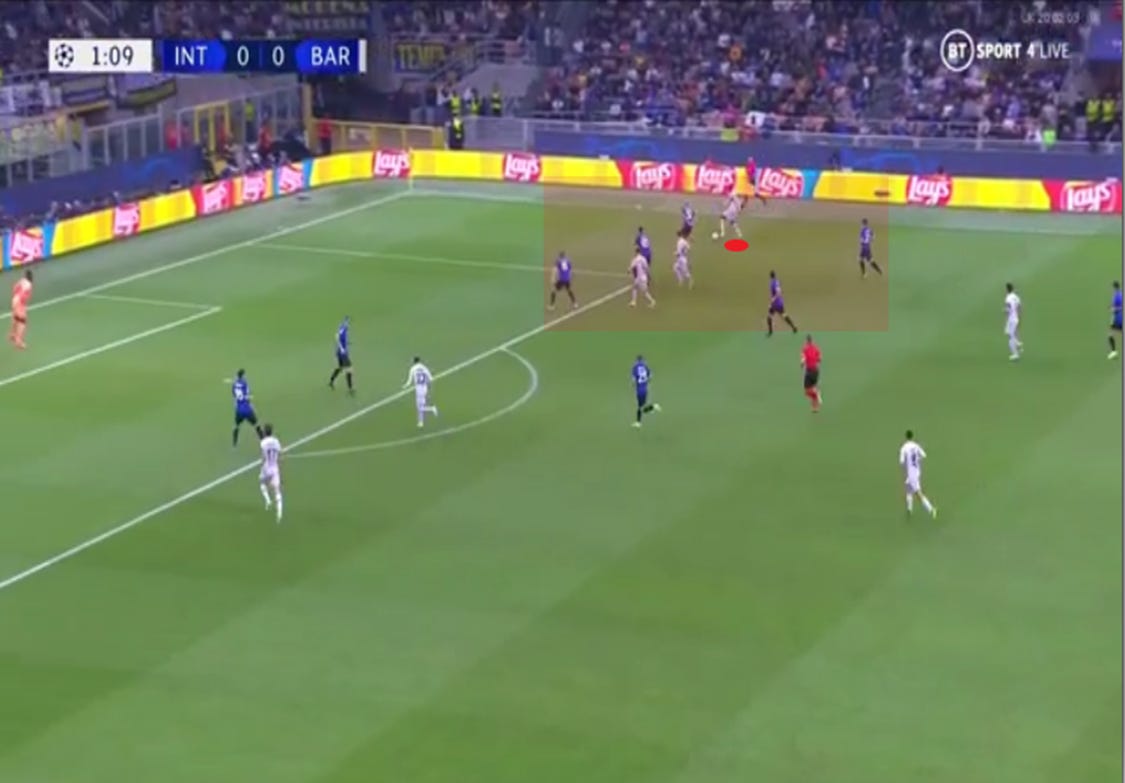
While progressing with the ball, Dembele finds that the more he advances with the ball the more the space fades away, and his options become limited, especially since Barça players don't stretch the pitch on the left flank as they should.
However, occasionally, Dembele had some space on the right flank…
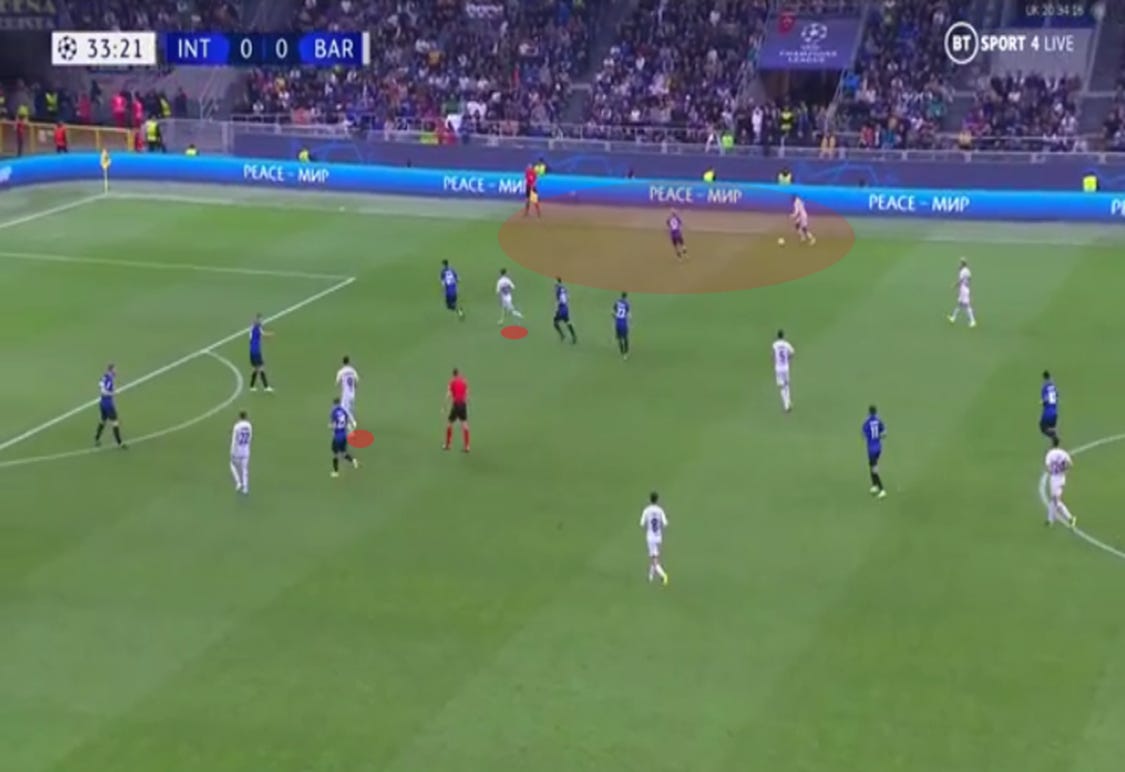
Here, while Lewandowski and Gavi are moving away from Dembele, that allows him to find the time and the 1v1 situation that he is looking for, thus he can try to get past the defender or advance with the ball and gain more space for his team.
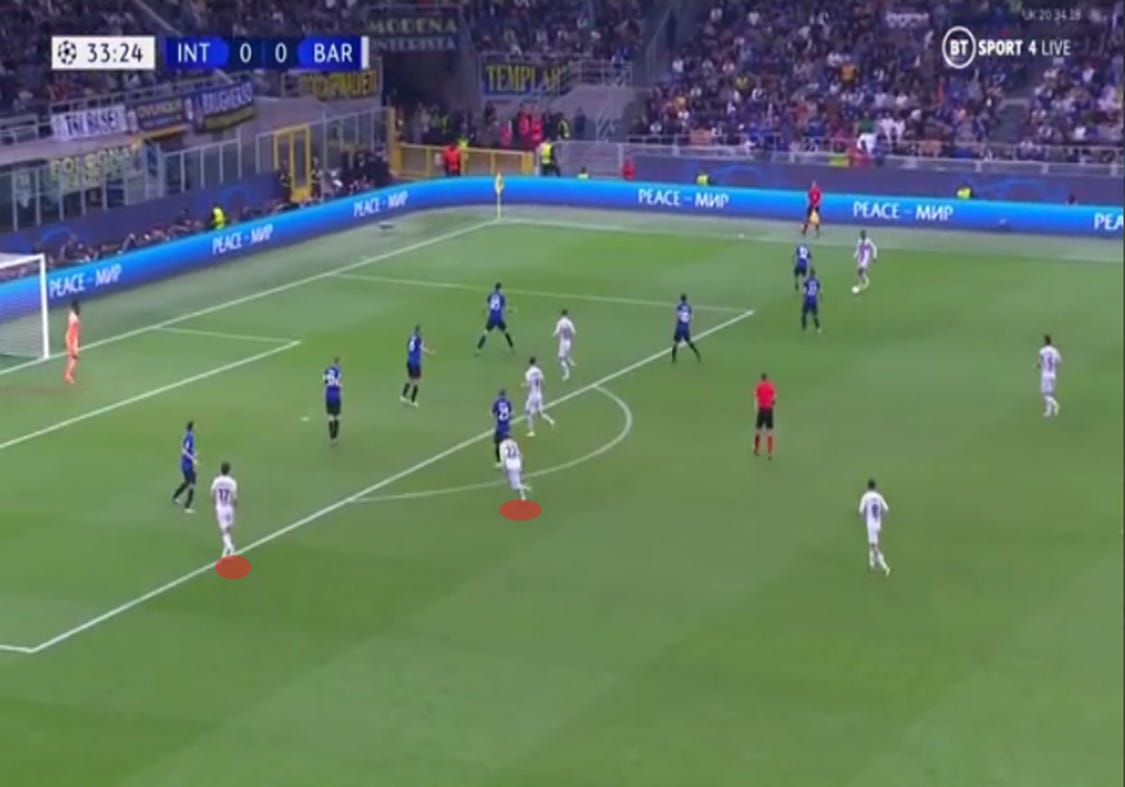
Dembele’s progression with the ball stole many Inter players’ attention, which means switching the ball to a free player on the other flank could create a serious situation for Barcelona, but again with Raphinha and Marcos Alonso’s positions, the problem still exists.
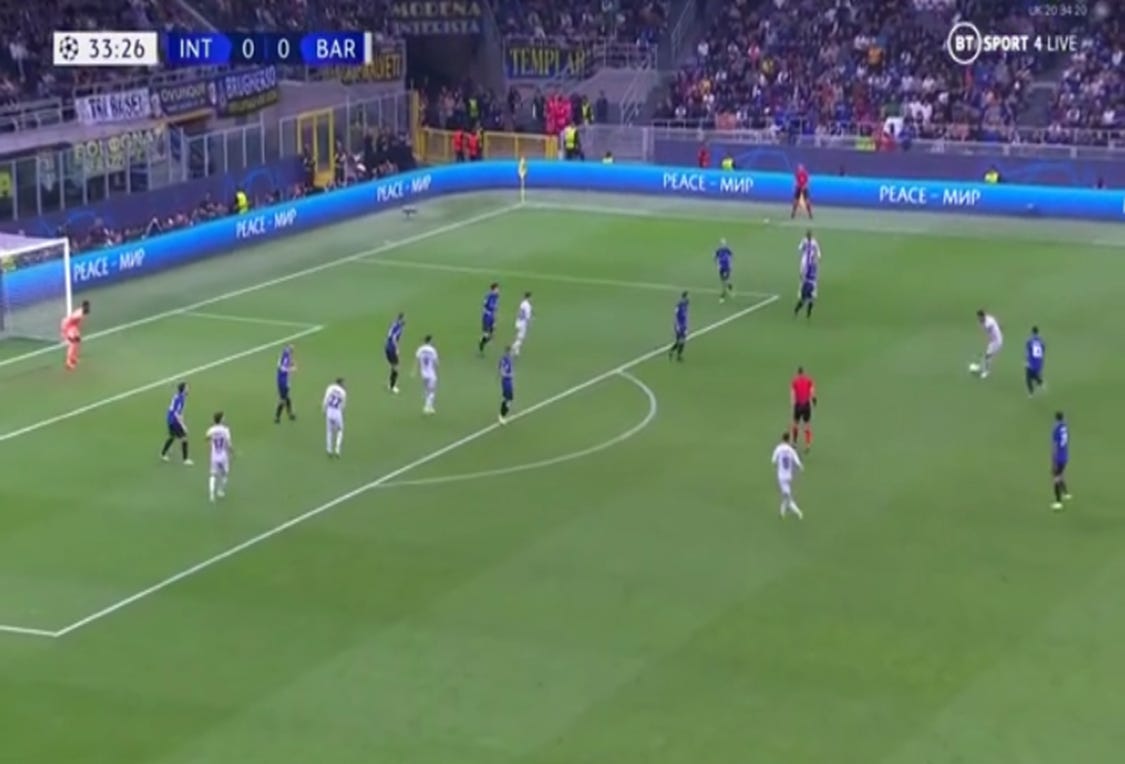
Dembele is passing the ball to Busquets who’s passing it to Pedri…
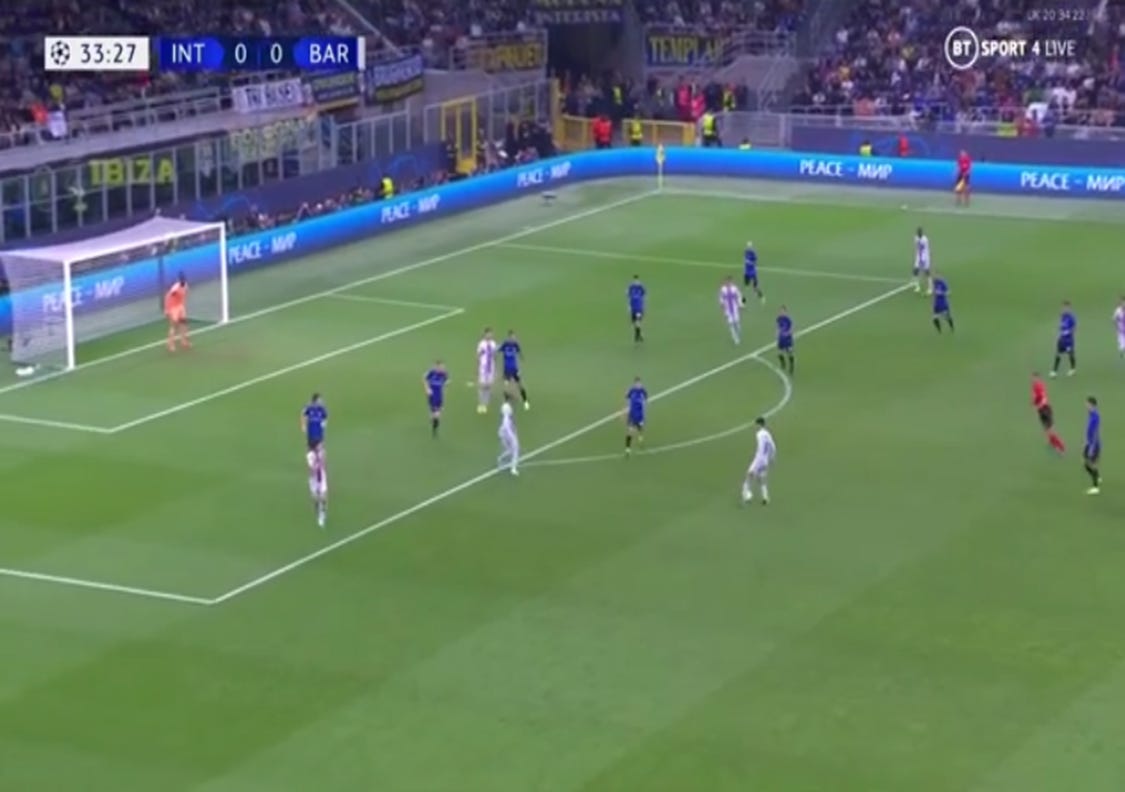
Pedri received and he couldn’t find an interesting passing option that could make a difference if he passes to him, that’s when Marcos Alonso and Raphinha started to adjust their body position and move to stretch the pitch.
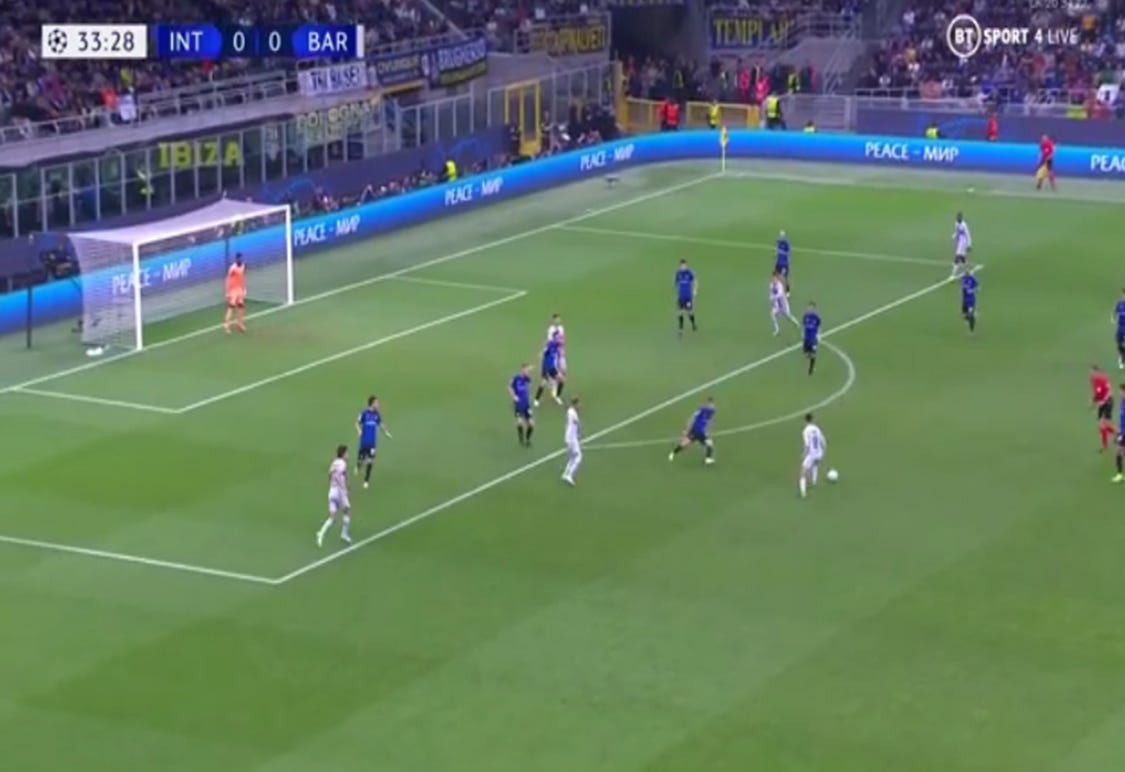
That late decision from both players gave Inter players the chance to shift from their left side to the right side with a strong and organized structure, which made it easy for them to take away any space that could be created by Barça players and close any gaps within their structure.
Someone could argue that Dembele already had some chances and was in 1v1 situations sometimes but he couldn’t exploit these situations and his decisions weren’t that good, that’s right. Sometimes the quality of one or few players could give a team superiority in the game, even though this team didn’t work collectively from a tactical point of view as they should, but in this piece, we’re going through Barcelona’s tactics against a team that defends with many players in its defensive third and relies on the attacking transitions, and after watching the game between Barcelona and Inter, especially in the first half we could see that Xavi didn’t provide his players with the shape and the tactics that could take the maximum out of them, and allow them to create spaces and gaps within their opposition structure. That’s not an absolute judgment on Xavi that he is a bad coach, I could understand that Xavi might have wanted to have more control over Inter’s attacking transitions and that might explain why he didn’t want his players to stretch the field at all. Cutting a part out of the main context and using it to judge a coach is not the right thing to do, and we don’t aim to pass any absolute judgment on football in this way.
Browse our collection of football analysis insights.